Maine high court upholds $750M statewide Medicaid transport contract to Colorado company
Aug 04, 2026 | 4:52 pm ET
Description
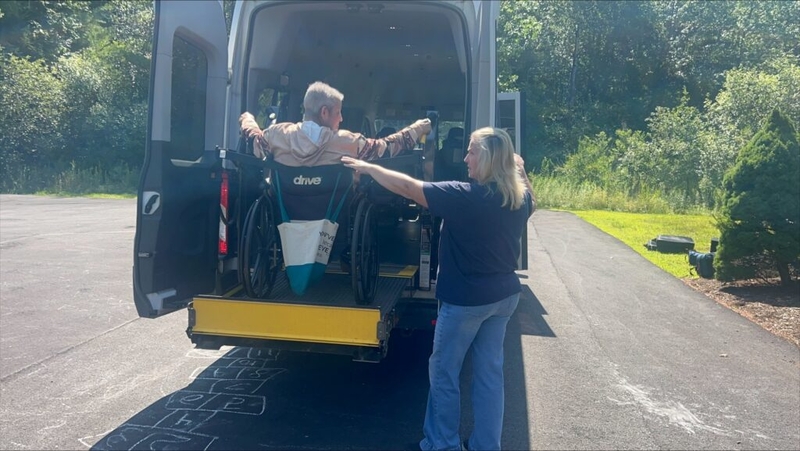
Penquis, a Bangor-based nonprofit, for years held a regional contract for non-emergency transportation for patients covered by Medicaid, known as MaineCare in the state. (Photo courtesy of Penquis)
The Maine Supreme Court Tuesday ruled against nonprofit Penquis, ending a years-long debate over the state’s contract for Medicaid non-emergency transportation. The ruling means the Maine Department of Health and Human Services will move forward with the 10-year, $750 million statewide contract with Denver-based Modivcare.
Kara Hay, president and CEO of Penquis, a Bangor-based nonprofit that serves low and moderate-income people throughout Maine, said in a statement that the ruling brings clarity, and that it will continue its transport services through the end of the year.
“Our priority is continuity for MaineCare members and for the transportation partners who make these rides possible every day,” Hay said. “We will work closely with the State, Modivcare and community transportation partners through the transition and beyond to support reliable, high-quality transportation services across Maine.”
The court had previously granted a stay in response to Penquis’ appeal, which meant the Modivcare contract has not gone into effect, and the previous transportation operators have been continuing service.
Once those services conclude, it will “result in changes to Penquis’ transportation staffing and operations. Penquis is working through these changes and will remain closely engaged with impacted employees, transportation providers, healthcare partners, and community organizations to support coordinated, reliable services,” the organization said.
Lindsay Hammes, spokesperson for DHHS, said in a statement that the department is glad the legal proceedings are complete.
“The Department’s focus has been, and remains, ensuring MaineCare members are able to get to their appointments without disruption, transportation providers are paid for their work and these critical services remain available for MaineCare members across the state,” Hammes said.
The Tuesday ruling focuses on the DHHS bidding process that began in 2023, to renew contracts in Maine’s eight transit regions for non-emergency transportation for patients covered by Medicaid, known as MaineCare in the state.
DHHS ultimately awarded Modivcare a contract to cover all eight regions. Penquis and Waldo Community Action Partners both previously held regional contracts, and both appealed the DHHS award — first to a Department of Administration and Financial Services appeal committee and then in state court.
The Supreme Judicial Court ruled against Waldo CAP in February, and Tuesday also ruled against Penquis.
“Simply put, there was scant evidence in the administrative record to support Penquis CAP’s claim of disparate treatment,” the court wrote in its decision.
Penquis had argued that the DAFS committee incorrectly held the appeal hearing before DHHS responded to all of Penquis’ information requests under the Freedom of Access Act. By not waiting for those requests, Penquis argued the organization was denied a “full and fair hearing.”
But the justices soundly rejected Penquis’ argument, and said it was “unpersuasive in any event.”
“Thus, even if Penquis CAP were somehow entitled to obtain additional evidence from DHHS, it has not shown that the records it requested were in any way relevant to its appeal,” the ruling stated.
Penquis also argued that the contract should be overturned because of several issues with the DHHS bidding and decision-making process.
But to overturn the committee ruling, the justices wrote that Penquis must show “that the record compelled the committee to find, by clear and convincing evidence, at least one ground for invalidating the awards.”
And while the DAFS committee found there were some irregularities, those did not reflect “fundamental unfairness” in the process, and the court agreed.
Ultimately, the court concluded that Penquis did not show “clear and convincing evidence” to invalidate the Modivcare award.
Modivcare did not respond to a request for comment on the ruling.
The earlier appeal by Waldo CAP similarly argued that DHHS violated the competitive bidding statute. But the court ruled in February that Waldo CAP’s argument was “misguided and assumes an overly narrow interpretation” of state law.
“This decision is obviously disappointing,” Waldo CAP President and CEO Donna Kelley, said in a February statement. “For more than a decade, our team provided valuable, high-quality customer service to the people we serve in Region 5.”
She added, “It was surprising and discouraging that the state chose an out-of-state corporation over a local nonprofit with a stellar performance record.”

Augusta, ME