State officials say Idaho’s wolf population dropped by about 100 wolves to 1,129
Jul 27, 2026 | 6:15 am ET
Description
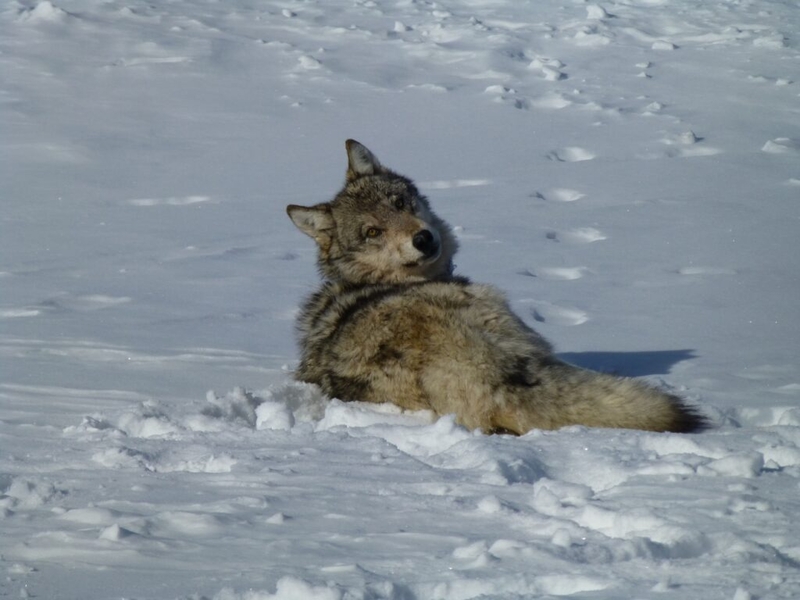
State officials in Idaho say the wolf population is down and they are trying to reduce it further through aggresive hunting and trapping. File photo courtesy of Eric Cole/U.S. Fish and Wildlife Service)
Idaho’s wolf population decreased to an estimated 1,129 animals in 2025 as state officials work to reduce the population through expanded hunting and trapping, Idaho Department of Fish and Game officials said this month.
Statewide, the wolf population is down by an estimated 106 wolves compared to the estimated 2024 wolf population of 1,235.
Overall, the state wolf population has been declining since 2020, when state officials estimated more than 1,650 wolves lived in Idaho.
Idaho Department of Fish and Game Wildlife Program Coordinator Cory Mosby said officials believe the wolf population is decreasing because of aggressive hunting and trapping.
“Our wolf population is decreasing statewide, and that is very much an intentional effort by the department,” Mosby said during a July 16 Fish and Game Commission meeting.
Mosby also said the number of livestock killed and injured by wolves is also trending downward.
Ghost wolves: As Idaho aims to reduce its wolf population, advocates worry counts aren’t accurate
While the wolf population is going downward, state officials want to see it reduced even more.
Over the past five years, the Idaho Legislature and the Fish and Game Commission have expanded hunting and trapping seasons and expanded the allowable methods used to kill wolves in an effort to further reduce the wolf population down to about 500 animals, state officials have said.
“In our plan, our objective is to reduce the statewide wolf population to around 500 animals,” Mosby said during the July 16 meeting. “That’s like our ultimate marching orders goal.”
Wolves are a native species that were killed off and driven to the point of local extinction in Idaho and the U.S Rocky Mountains by the 1930s through widespread poisoning and trapping. The U.S. government reintroduced wolves to Idaho and Yellowstone National Park in 1995 and 1996 using wolves captured in Canada, leading to one of the most successful and controversial wildlife recovery stories in American history.
Following a series of legal battles, wolves were removed from the Endangered Species List in Idaho in 2011, and Fish and Game opened a hunting and trapping season to reduce the number of wolves.
Wolf populations and the methods for estimating wolf populations are closely scrutinized by some wolf advocates who worry wolves are disappearing and have questioned the accuracy of previous methods Idaho used to estimate its wolf population, the Sun previously reported.
How does Idaho come up with its wolf population estimate?
Because wolves live in remote areas and can be difficult to observe closely, state officials estimate the wolf population every year rather than physically count each animal.
Over the last couple of years, Fish and Game officials have changed the way they estimate the state’s wolf population and when they time the estimate. Now, officials use a method that involves taking genetic information from a tooth from each wolf killed in Idaho and using it to help estimate the number of new wolves born each year and the statewide wolf population, the Idaho Capital Sun previously reported. The new method produces a wolf population estimate for May of the previous year.
That’s a change. Through 2023, officials used a series of trail cameras to produce a population estimate for August of the previous year.
Boise, ID