A tall tale about a deadly rat attack atop Pikes Peak spread around the world in 1876
May 29, 2026 | 6:00 am ET
Description
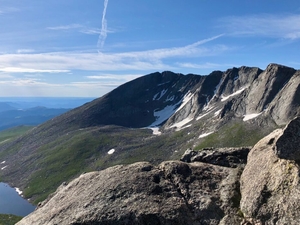
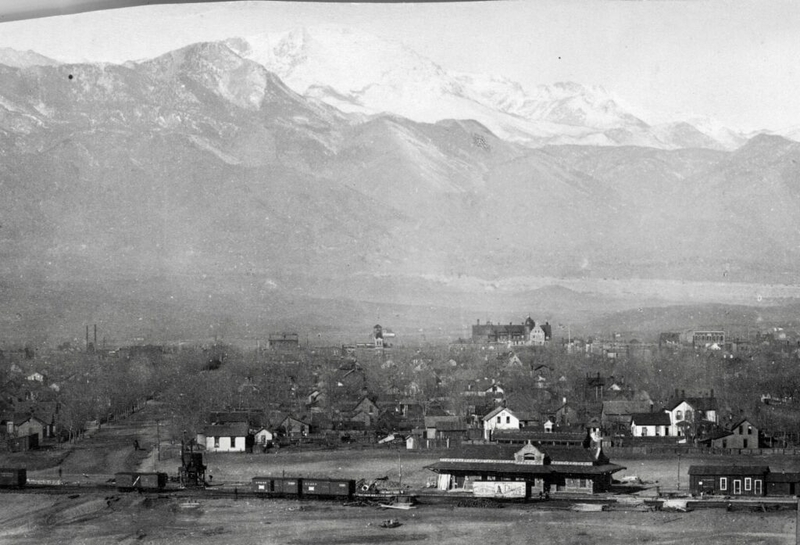
Pikes Peak and Colorado Springs are pictured in this 1880s photograph by William Henry Jackson. (Courtesy of Denver Public Library Special Collections, WHJ-783)
The sensational story made its way from Colorado Springs to Pueblo, where the daily Chieftain published the first account on May 27, 1876.

“ATTACKED BY RATS,” read the headline.
The Rocky Mountain News, which picked up the story in Denver the next day, opted for “RODENTS ON THE RAMPAGE.”
From there, the tale spread like wildfire to newspapers in the east and overseas, where it would eventually be translated into at least five different foreign languages. Years later, the Chieftain would still proudly refer to the “famous Pikes Peak rat story” — despite the fact that it was, from beginning to end, a hoax.
“The vast number of rats inhabiting the rocky crevices and cavernous passages at the summit of Pike’s Peak, have recently become formidable and dangerous,” the story began. “These animals have acquired a voracious appetite for raw meat, the scent of which seems to impart to them a ferocity rivaling the starved Siberian wolf.”
Though several other pioneers of the Pikes Peak region would later be credited with having helped originate the tall tale, its popularization in spring 1876 came about thanks to two men: Sgt. John T. O’Keefe, a U.S. Signal Corps officer posted to an Army weather station atop Pikes Peak, and Judge Eliphalet Price, a former Iowa state legislator who served as the Chieftain’s Colorado Springs correspondent under the pen name “Mucilage.”
Attempting to channel Mark Twain and other American humorists who mined life in the wild West for similarly outrageous material, Price claimed O’Keefe and his family had suffered a horrific nighttime attack by a horde of the carnivorous rats, which had been lured by the scent of a quarter of beef the sergeant had stored at the signal station. Price’s madcap, gruesome story ended with Sgt. O’Keefe badly maimed, his infant daughter killed, and Mrs. O’Keefe having narrowly escaped with her life by electrocuting hundreds of the rodents with a coil of wire attached to a battery.
In fact, the 19-year-old O’Keefe was unmarried and childless at the time. Though it’s unclear how much of Price’s story came from O’Keefe himself, he certainly played along with the hoax; for years afterwards, he showed visitors to the summit of Pikes Peak the grave supposedly belonging to his daughter, whose name variously appeared in written accounts at the time as Erin, Norah or Daisy. It was later reported that the grave in fact belonged to a burro.
The Colorado Springs Gazette — which, despite lying in the shadow of Pikes Peak, had played no role in disseminating the story — was soon forced to comment on its “palpable absurdity.”
“Strangely enough the ingenious fiction, copied into Eastern papers, is obtaining credence as a true narrative,” said the Gazette. “We have received from New York one letter of inquiry, and from another source have been requested to contradict the story.”
“There was a grain or two of truth in the narrative … We understand the locality is not free from the common vermin, rats,” the paper continued. “But the legs of the valiant O’Keefe encased in stove-pipe — Mrs. O’Keefe with the scroll of zinc round her body — her baby devoured by rats — the throwing of the electric wire over her husband — all the details of the fight, are inventions of the author’s imagination.”
The stir caused by the rat story inspired O’Keefe to continue inventing tall tales in the years to come, including an 1880 account of a supposed volcanic eruption of Pikes Peak. This time, the Gazette fell for it, or perhaps was in on the joke: “It is evident that the eruption has but just begun and should it continue any length of time there is no doubt but that Colorado Springs will meet the same fate as that which destroyed the flourishing cities of Pompeii and Herculaneum,” the paper reported.
When O’Keefe was transferred away from the Pikes Peak weather station the following year, Gazette editor H.P. Scott and other leading citizens of Colorado Springs held a banquet in honor of the “well known prevaricator of Pikes Peak,” drinking toasts to his “mendacious genius.” O’Keefe later became a firefighter in Denver and died there in 1895, leaving behind a wife and son.
Selected sources
- The Pueblo Chieftain, May 27, 1876
- Davidson, Levette Jay. “The Pikes Peak Prevaricator,” Colorado Magazine, Nov. 1943

Denver, CO