Environmental groups seek to block oil and gas drilling in Conecuh National Forest
Jul 24, 2026 | 3:29 pm ET
Description
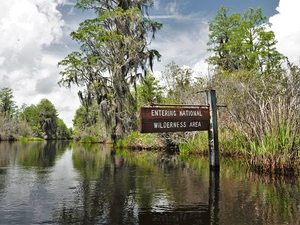
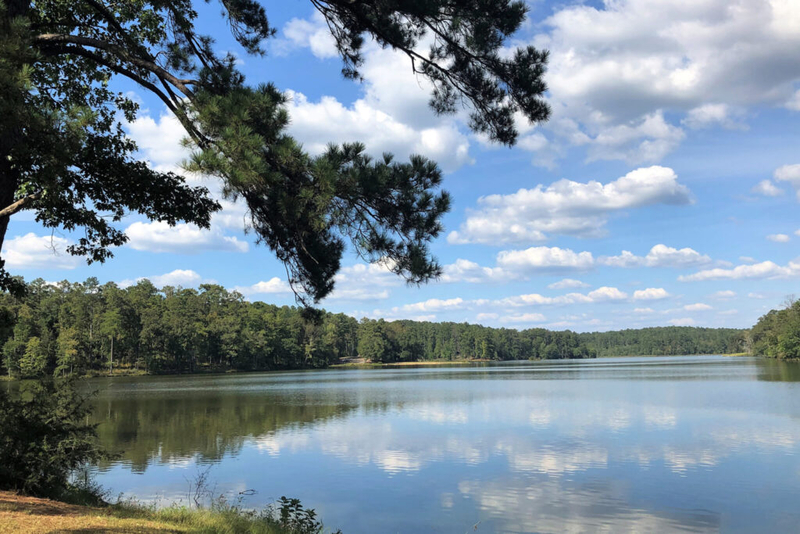
A lake in Conecuh National Forest. Environmental groups have filed an appeal to stop oil and gas drilling in Alabama’s Conecuh National Forest, saying it violates the Endangered Species Act. (U.S. Forest Service)
Two environmental groups Thursday asked the U.S. Department of the Interior to prevent companies from drilling for oil in the Conecuh National Forest along the southern border of Alabama.
The Center for Biological Diversity and the Alabama Ornithological Society alleged that the decision by the Department of the Interior’s Bureau of Land Management to open about 2,000 acres of the national forest to oil and gas leases violated the Endangered Species Act and the National Environmental Policy Act.
“It’s appalling that the government is barreling forward to sacrifice the Conecuh National Forest to the oil and gas industry for profit,” said Lindsay Reeves, senior attorney with the Center for Biological Diversity in a statement. “Alabamians hike, camp and swim all across these public lands and it’s disturbing to see the Trump administration trying to turn them into frack fields.”
Messages seeking comment were sent to the U.S. Department of the Interior and the Bureau of Land Management on Friday.
The Bureau of Land Management in 2021 published a study on possible oil and gas activities for the Conecuh National Forest. Those findings were then used by the U.S. Forest Service to publish an Oil and Gas Leasing Availability Analysis in 2025 to determine whether parts of the forest would be closed off for oil and gas leasing.
The U.S. Forest Service in February opted to allow possible oil and gas drilling on all the land within the Conecuh National Forest.
The environmental groups argue that the Bureau of Land Management’s decision violates the Endangered Species Act because the agency did not consult with the U.S. Fish and Wildlife Service about the potential impact of allowing oil and gas drilling for endangered species living within the forest, relying instead on what it called a “deficient consultation” drawn from a 2004 impact study.
“This biological assessment contains one single, generic paragraph about the impacts that leasing 81,300 acres of national forest would have on nineteen threatened and endangered species – ranging from insects to mammals to mussels and fish – that occupy entirely different habitats on the Conecuh, as well as the federally-designated critical habitat of seven species,” the filing says. “No individual species impacts are discussed.”
Nine endangered species residing within the forest have been added since the 2004 study, according to the filing, including the Escambia map turtle, the Choctaw bean, the fuzzy pigtoe and two freshwater mussel species.
The filing also alleges that the Bureau of Land Management did not consider a host of factors when it only used the findings from the U.S. Forest Service study, such as noise pollution, changes to air quality from vehicle traffic, water usage and groundwater drawdown.
The filing states that an impact study is needed for the forest.
“On a statewide scale, it supports a disproportionately high percentage of Alabama’s fish and mussels,” the filing said of the Conecuh National Forest. “It has significant national and global importance for biodiversity, particularly of fish, turtles, mollusks, and crayfish.”
Montgomery