Ending 287(g) in Maryland is a victory but the work isn’t over
Feb 19, 2026 | 6:17 pm ET
Description
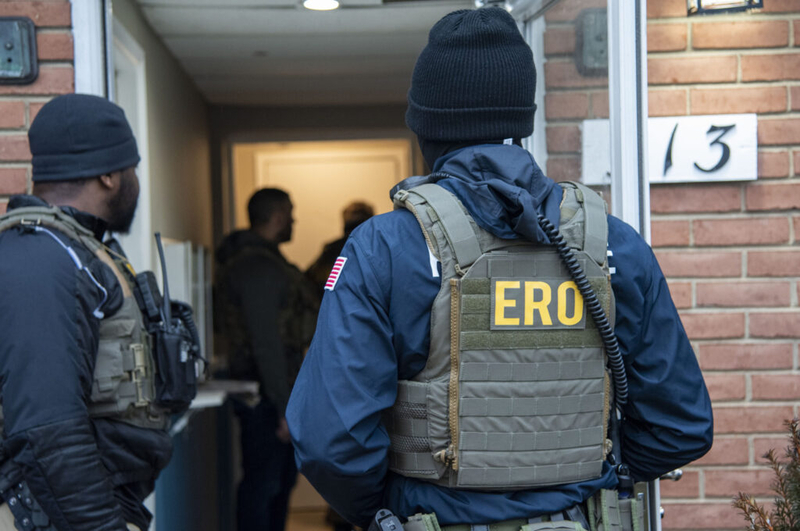
ICE and other federal agencies, including the ATF, conduct an enhanced enforcement operation in Baltimore in January 2025. (Photo courtesy U.S. Immigration and Customs Enforcement)
The Maryland General Assembly just took a historic step by voting to end 287(g) agreements across the state. For more than a decade, immigrant families and advocates fought to dismantle this program, which deputized local law enforcement as federal immigration agents, undermined public safety, eroded trust and fed the mass deportation machine.
This victory did not happen by accident. For years, We Are CASA made ending 287(g) a legislative priority because we knew this program could be weaponized at scale. Our members and partners rallied, organized, and shared their stories as part of a broad coalition that understands the harms of a public policy that turns routine encounters with law enforcement into a deportation pipeline.
Ending 287(g) is transformative. It reflects the leadership Maryland communities deserve and affirms a fundamental principle for a brighter future of our country where local governments do not serve as extensions of Immigration and Customs Enforcement. But this achievement must be understood in the context of the challenges our communities currently face. It is a strong foundation, not the finish line.
We are closing one of the most visible pipelines between local law enforcement and ICE. But federal immigration enforcement still relies on quieter but equally harmful forms of local cooperation, including voluntary notifications and transfers, information sharing, and handoffs that happen outside of public view. Without additional statewide protections, Marylanders remain vulnerable to being pulled into the deportation machinery without due process.
Your opinion matters
Maryland Matters welcomes guest commentary submissions at [email protected].
We suggest a 750-word limit and reserve the right to edit or reject submissions. We do not accept columns that are endorsements of candidates, and no longer accept submissions from public officials or political candidates.
Opinion pieces must be signed by at least one individual using their real name. We do not accept columns signed by an organization. Commentary writers must include a short bio and a photo for their bylines.
Views of writers are their own.
As our state’s largest immigrant community-based organization, We Are CASA sees the consequences of these policies long before they appear in headlines or political debates.Through our community hotline, we have received hundreds of calls from impacted residents over the last year reporting problematic ICE encounters. These calls reveal a clear and consistent pattern.
Families describe loved ones taken into ICE custody after local agencies shared their information, extended detentions without a judicial warrant, or were transferred from correctional facilities with little transparency. These cases rarely resemble the high shock value arrests that dominate national coverage. Instead, they unfold quietly through administrative processes that funnel people into deportation.
The numbers speak for themselves. The Department of Homeland Security’s most recent data reveals that fewer than 14% of people arrested by ICE last year had violent criminal records. Maryland reflects that reality. Many residents transferred to ICE custody have never been convicted of any crime. Some are transferred while charges against them are still pending, and well before they have had a day in court.
At its core, this is a due-process issue. When state and local agencies facilitate transfers or share data before a case is resolved, they are choosing to bypass Maryland’s legal system.
That is why we need the Community Trust Act. Ending 287(g) was essential, but Maryland residents are still vulnerable to ICE’s overreach. The Community Trust Act establishes uniform rules so local agencies know the limits of when and how they may engage ICE absent a judicial warrant or legal mandate. It provides standard rules, transparency and accountability ensuring that Maryland’s commitment to public safety and due process is not left to individual discretion.
In the absence of clear statewide protections, local governments across Maryland have stepped in. Howard, Prince George’s, Baltimore, and now Montgomery County have adopted local versions of the Community Trust Act, with Baltimore City poised to follow soon. These actions reflect a growing consensus that continued cooperation with ICE only undermines trust and public safety.
But basic protections should not depend on ZIP code. That point was crystalized when Frederick County Sheriff Chuck Jenkins recently admitted he intends to continue working with ICE to advance federal enforcement priorities, with or without 287(g). His remarks exposed a simple reality: Maryland residents remain vulnerable if there’s a patchwork approach to this challenge.
We are all being called to meet this moment with clarity and courage as the fundamental rights, safety, and dignity of Black, Latino/a/e, Afro-descendant, Indigenous and immigrant communities are under attack. Maryland’s General Assembly deserves credit for showing both clarity and courage by ending the 287(g) program. But their work is not finished.

Annapolis, MD