Dying At Home Is Harder For These Hospice Patients Stuck On Oʻahu
Jun 08, 2026 | 6:01 am ET
Description
Photo courtesy of Honolulu Civil Beat
When a bout of pneumonia put Robert Granger in the hospital on Moloka'i in December 2024, an emergency room doctor called for an air ambulance to send him to a better-equipped hospital in Honolulu.
For Granger, who had lived on Moloka'i for four decades, it was a well-worn 36-minute flight. Boarding an aircraft to see a doctor is a widely accepted way of life in rural Hawai'i.
Doctors at The Queen’s Medical Center on O'ahu treated his lung infection. But Granger’s health quickly deteriorated. When it became clear that the 84-year-old patient was likely to die soon, a nurse began the process of discharging him from the hospital to enroll in hospice care.
Before he slipped into semiconsciousness, Granger voiced very clear instructions about his wish to die on Moloka'i. A hospice bed had been set up for him at his home 5 miles east of Kaunakakai. But there was no straightforward way for his family to get him there.
Taking an air ambulance back to Moloka’i was out of the question. Insurance companies typically do not provide medical-evacuation coverage unless a patient’s condition is life-threatening and local facilities cannot provide adequate treatment.
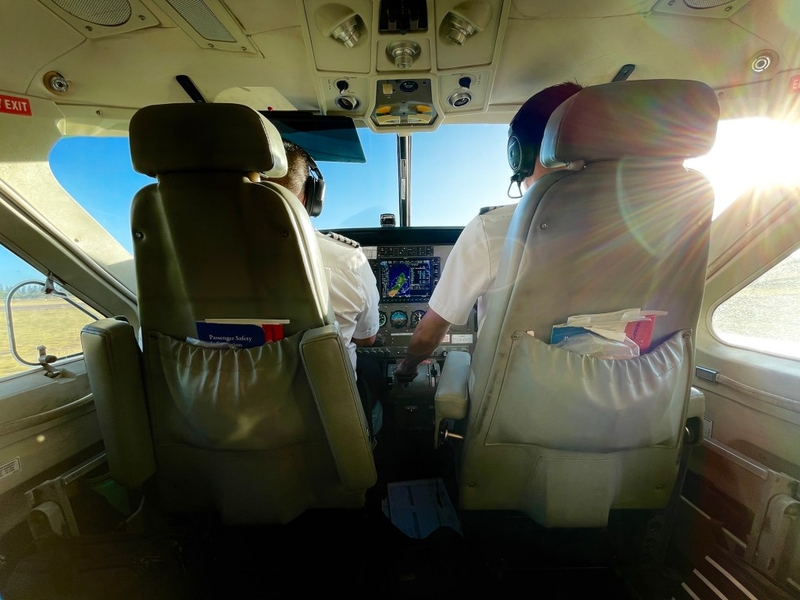
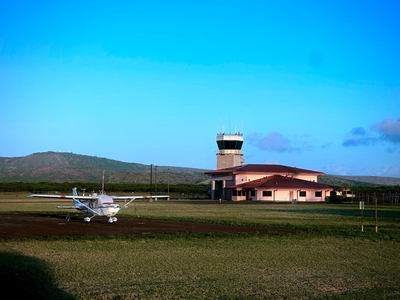
Yet Granger’s condition was too fragile for a commercial flight. Mokulele Airlines, the lone public air carrier that serves Moloka'i, requires passengers to be able to take a few steps to board its small planes.
Even if Granger could miraculously manage to walk onto the nine-seat Cessna, his family wouldn’t have been able to buy him a ticket. All of the airline’s flights to Moloka'i were booked solid for several days.
So Granger’s family spent over $4,000 to charter a plane. Coordinating a private flight to Moloka'i, just 26 miles southeast of the state’s Honolulu medical hub, took four days, which turned out to be all the time Granger had left. About an hour after he arrived home, Granger died surrounded by family, neighbors and friends.
“I think he had been just trying to hang on,” Elizabeth Johnson, Granger’s widow, said. “When he knew he was home, he let go.”
'The Biggest Heartbreak'
Granger’s uncertain journey to arrive in his chosen destination for death is an emotional portrait of the difficult realities of small island life.
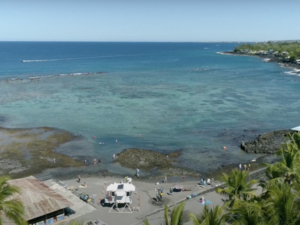
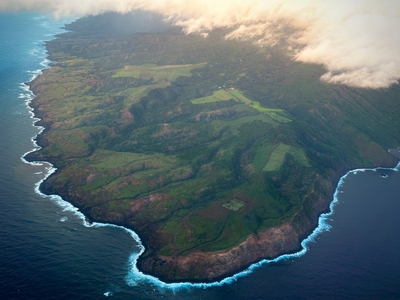
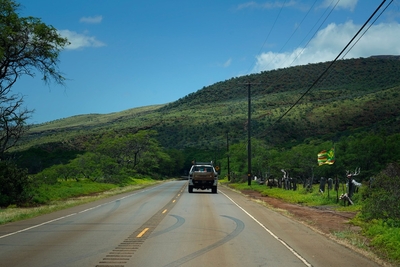
Moloka'i is a largely unspoiled volcanic island 8 miles northwest of Maui with craggy mountains, windswept beaches, towering sea cliffs and bone-dry ranch lands loaded with the inch-long thorns of gnarled kiawe trees. Dirt roads, wooden churches, family farms and ancient fishponds define the landscape.
The island, which is shaped like a fish, is devoid of fast food chains, traffic and nightlife. There are fewer vacationers — the island has just one hotel — and more Native Hawaiians here than anywhere else in the state. Moloka'i is only 40 miles from all of the tourist dollars in Waikīkī on O‘ahu but it could just as well be a world away.
Decades of anti-development politics and activism have squashed Moloka'i’s economic growth, making it more difficult to recruit healthcare workers to the island of 7,400 residents, where housing is expensive and career options are narrow.
Even for those who hope Moloka'i stays this way, there are plenty of reasons to leave: a college degree, a good-paying job, a doctor appointment, a nursing home, even childbirth. Transportation on and off the island is limited to a single, generally unreliable airline.
“It takes a special person to live on Moloka'i,” Kimberly Svetin, president of family-owned Moloka'i Drugs, said. “So it's sad when, for healthcare reasons, they can't stay. I think for me the biggest heartbreak is when someone is air ambulanced off-island and wants to pass away here and is not able to get back.”
Hospice Maui CEO Melanie Dwyer said it happens several times a year, when a hospice patient who sought off-island medical care wants to return home to die but finds themselves stranded. The nonprofit provides palliative and end-of-life care to residents of Maui, Moloka‘i and Lānaʻi.
“Our unique island geography is nothing new,” Dwyer said. “If we cannot provide them with the treatment they need in their local community and they have to fly elsewhere to get it, then we should also be getting them back home.”
'It Really Matters'
In Hawai‘i, where it’s common for people to fixate on where others were born and raised, a person’s place of death is another important identity marker. This is particularly true for some Native Hawaiians who trace a long lineage in certain rural areas whose populations have been ravaged by a century of displacement.
Yet Moloka‘i has few medical resources to support people approaching the end of life. Healthcare on the island, which measures 38 miles long and 10 miles wide, is limited. Although many people there say they do not want to leave their island home as they age, Moloka‘i, which heavily relies on fly-in physicians to bolster healthcare services, has few options to help them stay.
Moloka'i has no nursing homes or assisted living facilities. There is no local provider of comprehensive in-home nursing care. Aging residents typically must board a plane to access long-term care on O’ahu or Maui.
The island has about 75 resident deaths a year. About a quarter of them occur off-island. It’s not clear how many residents who die away from home would have spent their last moments on Moloka'i if it weren’t for the combined effects of healthcare shortages and transportation hurdles.
Of course, not all Moloka'i residents have the same wish to die on the island. But it’s a compelling request that has become more common with the expansion of home hospice care nationwide.
“A lot of Moloka‘i people, they don’t want to live a longer life if they’re going to have to leave Moloka‘i — they would rather have a shorter life,” said Maui County Council member Keani Rawlins-Fernandez, who lives on Molokaʻi. “I don’t know of a family that hasn’t been affected by not having long-term care on island and I don’t know of a family who isn’t wishing to have their final breaths on Moloka‘i.”
The issue affects residents from other neighbor islands, but the problem is especially bleak for people from Moloka‘i, which has among the most limited elder care resources and transportation options in the state.
In rare cases, insurance companies have paid for medevac transport to fulfill a patient's wish to die at home. It happened earlier this year when AlohaCare, which serves primarily Medicaid and some Medicare clients, covered costs to fly a dying patient to their home in Maui County from The Queen’s Medical Center in Honolulu.
Hospice staff and the patient’s family sent the insurer thank-you cards.
AlohaCare chief medical officer Dr. Gary Okamoto said in a statement that the insurer will sometimes make an exception to its coverage rules to support a patient's desire to receive end-of-life care on their home island.
“Sometimes getting home, it seems very brief, but for the families, to have your whole extended ohana around you, it really matters for people,” Dwyer said. “The death of a loved one is very similar to the birth of a loved one in that way. People remember every detail. It stays with them for years after they've said goodbye.”
Home By Any Means: Fishing Boat, Private Flight
Some older residents who leave Molokaʻi in search of better healthcare go to great lengths to return home to die.
Moku Buchanan, a longtime Molokaʻi mortician, recalled one determined resident who made a perilous sea crossing to Molokaʻi from Oʻahu on a small fishing boat. The 26-mile Kaʻiwi Channel that separates the two islands is considered one of the roughest ocean passages to navigate in the state.
Buchanan counts several families over the years who have hired a private plane, but he notes that most residents don't have the money to charter a flight.
“I wish I was a millionaire,” Buchanan said. “I would build a care facility for the older folks on Molokaʻi so they wouldn’t have to leave.”
Hawaiʻi economists have found that a rural ZIP code is one of the strongest predictors of poor health outcomes for people in Hawai‘i. The finding published in a June 2025 report by the University of Hawaiʻi Economic Research Organization underscores just how tightly bound a person’s wellbeing is to their place of residency.
Molokaʻi has the state’s lowest household incomes and highest unemployment. Its population is predominantly of Native Hawaiian ancestry, a group with significant socioeconomic disparities. Native Hawaiians face high rates of food insecurity and chronic disease, studies show.

Roughly two-thirds of Moloka‘i residents rely on government health insurance. In Hawai‘i, doctors who serve Medicaid and Medicare patients receive some of the nation’s lowest reimbursement rates, sometimes lower than the cost of providing care. The discrepancy makes it difficult to recruit and retain medical staff in the state’s rural areas.
The island would need to grow its supply of doctors by 83% to meet patient demand, said Dr. Kelley Withy, a physician at the University of Hawaiʻi’s John A. Burns School of Medicine, who oversees an ongoing study of the state’s medical workforce needs.
It’s long been customary for Molokaʻi patients to fly to hospitals and treatment centers in Honolulu, where the state’s medical resources are concentrated. But the Covid-19 pandemic worsened rural health access, slashing flights to Molokaʻi and reducing the number of public airlines servicing the island from three to one.
It’s since become a logistical nightmare to get to off-island medical appointments, many residents say. It’s also more expensive. Doctors who routinely traveled to the island to prop up medical care have stopped coming as fewer flight options and more frequent flight delays have raised the risk of being stranded overnight.
Flying to the doctor, however, will likely always be part of the equation. It's widely accepted that a population as small as Molokaʻi cannot sustain most medical specialists. There’s a significant cost to keeping cardiologists or neurologists on deck, especially if they sit idle most of the time.
Sean Ibara, a spokesman for The Queen's Health Systems, declined interviews for this story. The health network runs six Hawaiʻi hospitals, including The Queen's Medical Center in Honolulu and Molokaʻi General Hospital in Kaunakakai.
Molokaʻi General Hospital President Janice Kalanihuia said in a written statement that the hospital strives to assist island residents who wish to receive end-of-life care on the island but noted that air transportation options for these patients is extremely limited.
For a time the hospital had 21 long-term care beds. The unit shut down in 2008 due in part to staffing challenges.
“Not having long-term care is a biggie and I don't know how to fix it,” Donna Gamiao, a Moloka’i hospice nurse, said. “The population is small, we’re mostly a welfare island, we rely heavily on government funding, we don't pay many taxes. I don’t know how it would work without an outside agency supporting the bottom line.”
'If I'm Going To Die, I Want To Die Here'
Some residents turn down off-island medical care as the end of life nears.
That was the case for Harvey Place. Doctors in Honolulu had already treated his cancer with chemotherapy and radiation. But the cancer was advancing.
“A lot of people are not ready to die,” his widow Jan Place said. “If you have that determination to fight, fight, fight until you're out of options, you're inevitably going to have to go to Honolulu because we don't have all of those medical resources here. But Harvey said, 'I’m not going to fight this anymore. If I’m going to die, I want to be here.’”

Staying on Molokaʻi may have shortened his life. But to leave would have meant parting with the things that made life worth living.
Two fly-in palliative care nurses from Hospice Maui visited the Places at their Molokaʻi home during the summer of 2023 for about an hour up to three times a week. But the brunt of the work — intimate, constant, exhausting — fell to Jane Place. She was her husband’s primary home caregiver for three months until his death at age 70.
Looking back, Jan Place said she is grateful that she was able to help him achieve his wish to die in familiar surroundings. She credits hospice workers, as well as her own physical and mental stength.
“The thought of sending him off-island never even occurred,” Jan Place said. “I just wouldn’t risk him dying away from home. I knew I'd take care of him until the day he passed no matter what the cost of that.”
Options narrow for people without family.
Catherine Aki, a 74-year-old substitute teacher, lives alone in her two-story home on Molokaʻi. She suffers from age-related macular degeneration, an eye disease that is eroding her vision. Over time, she is expected to become blind.
When she can no longer live without assistance, Aki said she will be forced to move to Maui, where she has two daughters, eight grandchildren and nine great-grandchildren. She has no on-island relatives.
Beyond proximity to family, Maui offers something that Molokaʻi lacks: The option to hire in-home care professionals who can help with bathing, cooking and waning mobility.
“It feels sad,” Aki said. “I’ve lived here more than half of my life. I raised my children here. And it’s my hope to live here as long as I can. There’s this other part of me that knows I’ll be in good hands if I’m on Maui because they have services there.”
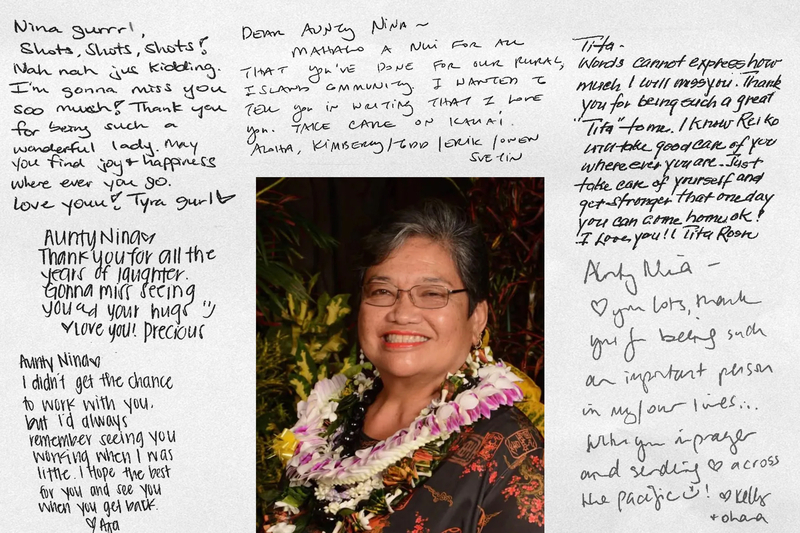
Svetin, the drug store owner, counts the island’s disappearing elders by the number of prescription transfer requests for off-island pharmacies. She estimates that about a dozen aging residents move off-island each year in search of better healthcare services.
Lolita “Nina” Tanora Greenleaf was one of them. Born and raised on Molokaʻi, she was sure she'd live out her life on the island. She was so proud when she paid off her mortgage after decades of work as a pharmacy buyer and cashier.
Her dream to age in place was stolen by a stroke when she was 70. Paralysis left her bedridden and in need of constant care.
Greenleaf is a widow with no children. She had friends to help with small tasks around the house and keep her company, but no on-island family to take on the heavy lifting of caregiving.
So in early 2024, Greenleaf's closest relative, a niece, moved her into her home on Kaua'i. It's unlikely that she'll ever return to Molokaʻi.
“We had to coach her to understand that it was for the better to leave," Reiko Muratake, Greenleaf’s 50-year-old niece-turned-caregiver, said. "Because on Molokaʻi, where do you go? There’s no solution other than family.”
Civil Beat's health access reporting is supported in part by the Atherton Family Foundation.
Honolulu, HI