The dramatic rise of homeschooling: Should we be for or against it?
Mar 06, 2026 | 6:00 am ET
Description
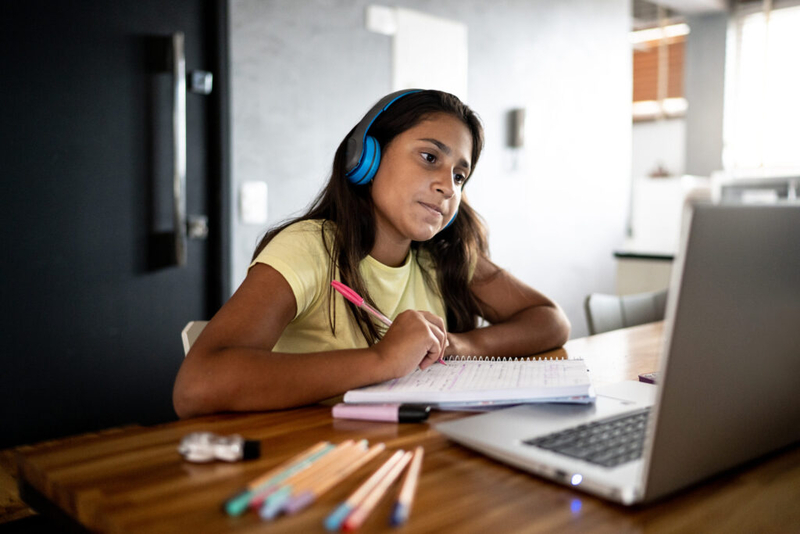
The number of homeschooled children has grown steadily since the pandemic, writes Kalman Hettleman, but they continue to fly mostly under the radar and the pros and cons are hard to gauge. (Stock photo by FG Trade via Getty Images)
Nationally, more than 3 million children are homeschooled. In Maryland, it’s around 43,000, about a 50% increase since the pandemic. Yet, the homeschooling phenomenon has largely escaped policy analysis and discussion.
More attention is warranted. Is homeschooling good for kids? And is it good for the public interest, especially the future of public education?
State laws regulating homeschooling vary enormously. Maryland seems more or less in the middle of states in balancing parental rights and responsibilities.
Maryland requires notice of intent to homeschool, the teaching of regular school subjects, and a portfolio of the child’s work to be reviewed by the local superintendent. It doesn’t, as most states do, allow homeschoolers to participate in public school sports or other activities. It also doesn’t, as some states do, compel testing of students, close supervision, and parents’ minimum teaching qualifications.
Here’s a thumbnail balance sheet of the pros and cons of homeschooling.
Pros: parental choice, individualized instruction, a safe and caring environment, and opportunity to nurture cultural and religious beliefs.
Cons: limited peer interactions, lack of diversity, lack of opportunities for extracurricular pursuits, and income lost by parents. Further, an expert at the American Enterprise Institute details significant occurrences and risks of child abuse in homeschooling.
The first step in judging homeschooling is to clear away many false stereotypes. So says Angela Watson, arguably the nation’s leading expert on homeschooling, who directs a homeschool research lab at the Johns Hopkins Institute for Education Policy.
Your opinion matters
Maryland Matters welcomes guest commentary submissions at [email protected].
We suggest a 750-word limit and reserve the right to edit or reject submissions. We do not accept columns that are endorsements of candidates, and no longer accept submissions from public officials or political candidates.
Opinion pieces must be signed by at least one individual using their real name. We do not accept columns signed by an organization. Commentary writers must include a short bio and a photo for their bylines.
Views of writers are their own.
She points out that the composition and motivation of homeschooling parents are far different than the popular perception. For example:
- Parents vary widely on race, income, political party and religion.
- Most homeschooled children are in and out of public schools through grades K-12.
- Many parents send some of their children to public schools while homeschooling others.
Against this background, we return to the question of whether homeschooling benefits children and benefits the public interest.
Data and research on student performance are scant. Watson explained to me that research is in short supply because states do not require data collection on student performance. Further, it’s extremely difficult to run randomized trials that compare the proficiency of homeschooled children to non-homeschooled children.
The public interest is even harder to gauge. It involves trying to measure how homeschooling affects the historic role of public schools in building social cohesion through shared national identify, norms of civic engagement and equal opportunity.
True, most homeschoolers have interactions with peers: for example, parent co-ops for instruction, recreation and field trips. Socialization can also be enhanced by state regulations that permit homeschoolers to participate in public school classes, sports and other activities. Past legislation introduced in the Maryland General Assembly to allow participation in athletic activities hasn’t passed, and several bills (with doubtful chances of passage) have been introduced this session.
Maryland could also, like some states, reimburse local districts for costs incurred in serving homeschoolers.
On the other hand, Maryland should adopt mandatory testing which would hold parents accountable for student outcomes. And it could be the first state to require reporting of test scores, subject to privacy guardrails.
On both sides of the parents’ rights and responsibilities ledger, the state role should be strengthened.
Nonetheless, revisions won’t come easily. Large homeschooling lobbies compete — one open to strengthening state regulation, the other generally opposed to any regulatory supervision. Moreover, the state Department of Education already has its hands more than full with its implementation of the Blueprint.
Still, homeschooling is snowballing and the law should be reviewed in the near future.
One final note. In the long run, our nation is so in need of social cohesion (especially under the Trump regime) that homeschooling should be abridged. The same can be said of mushrooming vouchers and tax credits for parents.
Of course, the reality is that such limitations would be a political pipe dream until our nation significantly improves public education.
To put it mildly, we have a long way to go. In the meantime, the right to homeschool should be protected.
We now need a new policy and political path to ensure homeschooled children are safe at home and receive high-quality instruction.
Annapolis, MD