Data centers, widely opposed, might not be long for this world
Dec 01, 2025 | 7:00 am ET
Description
Imaginima/Getty Images
Record-setting economic development projects aren’t what they used to be.
New auto assembly plants create thousands of new jobs and generally receive an enthusiastic welcome in Michigan, which prizes high-paying, blue-collar jobs. Economists say one assembly plant job leads to the creation of about four spin-off jobs, spreading wealth throughout the region where that plant is located.
Automakers have typically been among the biggest capital spenders in Michigan. But the latest headline-grabbing project, said by Gov. Gretchen Whitmer to be the “largest one-time investment in state history,” is not an auto plant. And everyone hates it.
Well, maybe not everyone. But the announcement of a $7 billion-plus data center in Washtenaw County’s Saline Township has created an uproar among local officials and residents. And it is slated to create only about 400 permanent jobs. It would be Michigan’s first hyperscale data center.
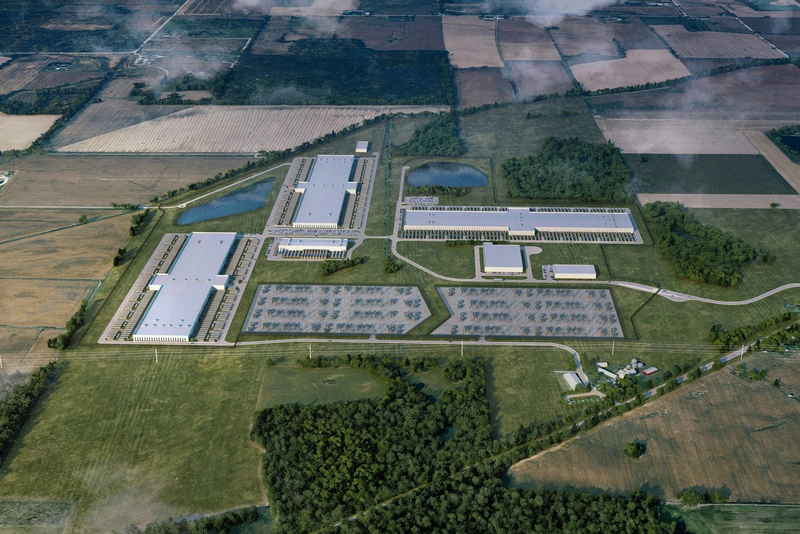
State Attorney General Dana Nessel has jumped into the controversy, asking the Michigan Public Service Commission to slow DTE Energy’s roll in fast-tracking a contract to provide electric service to the Saline Township center.
Massive data centers, which can cover millions of square feet and suck up enough electricity to power a large city, are being built all over the world to power artificial intelligence models that promise (or threaten) to change the way we work and live.
In Michigan, outrage isn’t just aimed at the Saline Township center, known as “Stargate,” being developed by Open AI, Oracle and Related Digital. Residents and environmental groups are mobilizing against more than a handful of data center projects across the state.
Kalkaska residents beat back a data center proposal in late November. And Howell Township has enacted a six-month data center moratorium because of residents’ pushback against them.
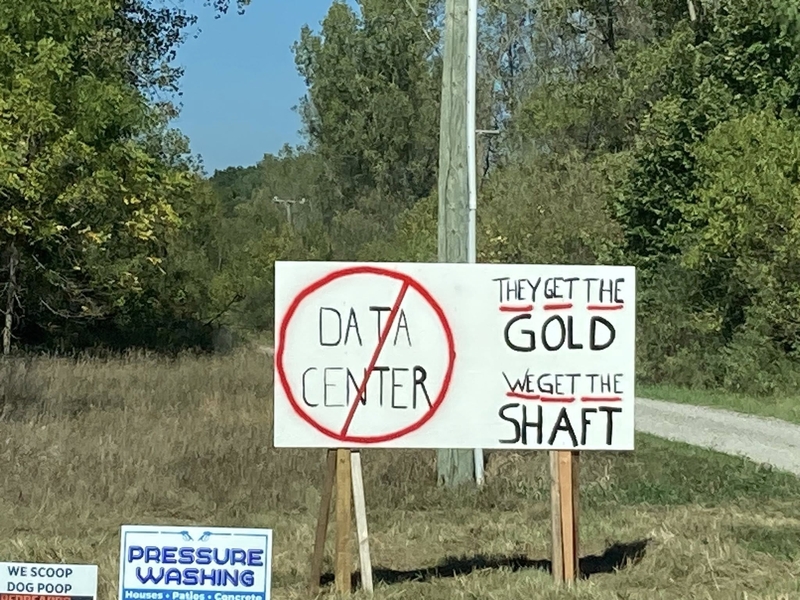
Opposition to data centers focuses on fears that they will lead to skyrocketing electric rates for nearby residents, dry up water supplies needed to cool the tens of thousands of tightly packed computer servers inside the centers and destroy the rural character of places where many of the centers are locating.
But the overarching worry about data centers is their role in powering a boom in potentially destructive artificial intelligence. AI’s backers cite a variety of potential benefits, including the ability to find cures for diseases, boosting worker productivity and powering tremendous economic growth.
AI also could wipe out humanity, not something desired in economic development projects.
Even the leaders of AI companies say they’re not exactly sure what they’re unleashing.
Sam Altman, the CEO of OpenAI, has warned that the technology could spur massive fraud, create lethal bioweapons used by bad actors and free itself from human control. OpenAI is the creator of the wildly popular ChatGPT chatbot that can spit out answers to queries and mimic human writing.
And while some experts say AI could create new jobs we haven’t even thought of yet and might not displace all that many current jobs, others predict massive losses as many human functions are taken over by the technology.
Microsoft co-founder Bill Gates said earlier this year that he thinks humans won’t be needed “for most things” in 10 years.
It’s no wonder that just 17% percent of U.S. adults in a recent Pew Research Center poll said they think AI will have a positive effect on the country over the next 20 years.
Nevertheless, the builders of data centers and AI are pushing ahead, spending hundreds of billions of dollars on data centers in a battle for supremacy in AI, which they believe will bring them untold riches.
The so-called “Magnificent Seven” stocks—Apple, Amazon, Alphabet (formerly Google), Meta (formerly Facebook), Microsoft, Nvidia and Tesla—make up more than a third of the S&P 500’s total market value. All seven companies are heavily involved in AI projects.
Massive AI spending is propping up a sluggish U.S. economy, leading to fears that an enormous AI bubble could burst and take down much of the rest of the economy.
And it’s possible that Michigan’s bet on data centers might not pay off. Those of us who have lived here for decades know that many of the auto assembly and parts plants state policymakers have worked to attract ultimately closed, due in part to work being outsourced to other countries.
And while it seems implausible now, something similar could happen with data centers. Amazon founder Jeff Bezos and other AI pioneers say hyperscale data centers could go where none have gone before: to the moon.
“We will be able to beat the cost of terrestrial data centers in space in the next couple of decades,” Bezos said at a recent tech conference in Italy.
Moon-based data centers would run on solar power, which would be essentially free, Bezos said. Data center information would be beamed back to Earth.
That would be the mother of all outsourcing.
Lansing, MI