Community air monitoring project finds South Memphis is regularly exposed to unsafe air pollution
May 29, 2026 | 6:01 am ET
Description
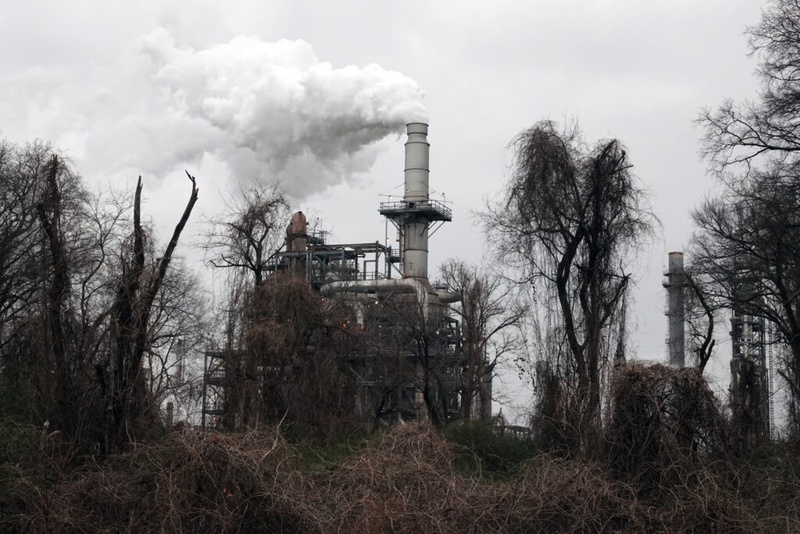
A report using data collected by air monitors hosted by residents of South Memphis found that average levels of fine particulate matter, particles in the air that are linked to lung and heart issues, often exceeded standards set by the U.S. Environmental Protection Agency. (Photo by Karen Pulfer Focht)
Residents of South Memphis neighborhoods are being regularly exposed to air pollution levels that exceed the Environmental Protection Agency’s standards for public health, according to a community air monitoring project report released May 21.
This is the latest development in the majority-Black community’s continuing fight for stricter pollution limits and enforcement in the increasingly industrialized area that is now home to a refinery, manufacturing facilities, power plants and xAI’s Colossus data center and the gas turbines that power it. Just across the state line, additional data centers and power plants are taking shape in Mississippi and Arkansas.
The Center for Engagement, Environmental Justice, and Health INpowering Communities (CEEJH INC) partnered with local advocacy organization Memphis Community Against Pollution to distribute PurpleAir monitors to residents of South Memphis. These are small, lower-cost air monitors that measure fine particulate pollution, but they are not EPA-approved for regulation.
These organizations took the matter into their own hands because South Memphis has not had a government air monitoring site for more than a decade.
The Shelby County Health Department, which is responsible for enforcing federal Clean Air Act requirements in the Memphis area, plans to reopen a South Memphis monitoring site in June.
While an EPA air quality map and trends tracker show particulate levels remaining in the “good” and “moderate” range in Memphis over the last several months, the PurpleAir monitors found the average concentration of fine particulate matter at three test sites in South Memphis exceeded the EPA’s annual standard during all times of day from Nov. 11 to March 11.
“The absence of ‘safe windows’ means that vulnerable populations—children, older adults, outdoor workers, and individuals with pre-existing health conditions—remain at risk regardless of daily activity patterns or time spent indoors versus outdoors,” the report said.
Velsicol brokering chemicals years after Memphis plant closure
Particulate matter, a mix of tiny solid and liquid particles in the air, can come from sources like construction sites or fires, or they can form from reactions between chemical pollutants released from power plants, industrial operations and vehicles, according to the EPA. Inhaling these fine particles has been repeatedly linked to heart and lung issues, including aggravated asthma, irregular heartbeat, decreased lung function, heart attacks and premature death in people who are more sensitive to exposure due to heart or lung disease.
Pollution levels often remained higher than the EPA standard overnight and during non-commuting hours, when traffic volumes, and therefore pollution, are usually lower, the report states. This suggests continuous background pollution from other sources, including nearby industrial operations.
Continuous exposure to these particles poses serious long-term health risks, according to the EPA. The report found higher particulate concentrations “pervasive” across South Memphis, but noted residents in the Westwood/Whitehaven area saw levels higher than the EPA standard nearly 75% of the time, suggesting residents there “are experiencing near-continuous exposure to … concentrations above levels considered protective for long-term health.”
Shelby County Health Department spokesperson Joan Carr stated in an email that the data in the report cannot be compared to EPA standards because PurpleAir monitors “do not meet strict EPA regulations.”
While the EPA has not approved PurpleAir monitors for regulatory purposes, the agency does support participatory air monitoring projects and has published guidelines and corrective equations to calibrate data from PurpleAir devices.
Researchers followed those guidelines, locating PurpleAir monitors alongside EPA-approved monitors at Shelby County Farms for a month to test their accuracy and precision, CEEJH INC Director of Research and Policy Vivek Ravichandran told the Lookout.
A deeper look into the report’s findings
The PurpleAir monitors measured concentrations every hour of particulate matter less than 2.5 micrometers in diameter, a size identified by the EPA as posing the greatest health risks, because particles can get deep into people’s lungs and may make it into the bloodstream. For comparison, a single grain of fine beach sand measures about 90 micrometers in diameter.
The monitors measured particle concentrations at three locations: Boxtown Road (Boxtown), the intersection of Ford Road and West Brooks Road (Westwood/Whitehaven), and Brentwood Drive (Southhaven).
The EPA lowered its annual standard for these fine particles from 12 to 9 micrograms per cubic meter in 2024 “to provide increased public health protection.” Average concentrations topped 15 micrograms per cubic meter in the Westwood/Whitehaven area from November to March, the report found.
Concentrations exceeding EPA standards were also found at Boxtown Road and Brentwood Road, demonstrating that elevated levels are “pervasive across South Memphis,” according to the report.
Groups petition EPA to act as ozone levels in Memphis exceed national health standards
“Exceedances occurred across multiple consecutive days, often spanning large portions of the day rather than being confined to short peaks, which has implications for chronic exposure risk,” the report said.
Researchers also measured concentrations of larger particles and ozone levels using QuantAQ Modulair multi-pollutant air monitors, similarly finding days that exceeded EPA limits.
Ozone is created when pollutants react when exposed to sunlight. From 2022 to 2024, ozone levels at four of the five government monitors in the greater Memphis area exceeded EPA standards.
Ozone levels tested by researchers in the South Memphis area over the last six months did not consistently exceed standards set by the EPA and the World Health Organization, but peak concentrations did surpass these standards about every five days.
Researchers noted that ozone formation tends to be lower in winter months because of reduced sunlight and lower temperatures. They plan to continue ozone level data collection in spring and summer months to see if the levels remain within the standards.
The May 21 report is the second installment of ongoing research funded by foundations including The Sierra Club and The Rockefeller Foundation, Ravichandran said.
CEEJH INC is continuing to work with Memphis Community Against Pollution to expand air monitor placement to sites in Mississippi and Arkansas. The group plans to issue a follow-up report in several months that will consider wind direction and speed to better understand where particulate matter is coming from.
Nashville, TN