In Chittenden Southeast Senate primary, incumbents and challengers alike pivot platforms to affordability
Aug 06, 2026 | 2:08 pm ET

Description
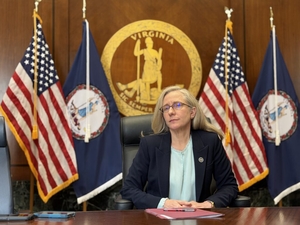
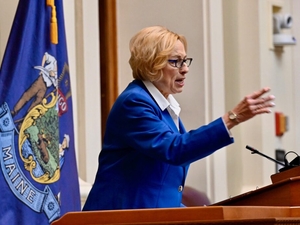
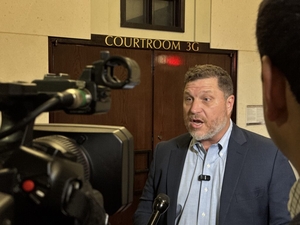
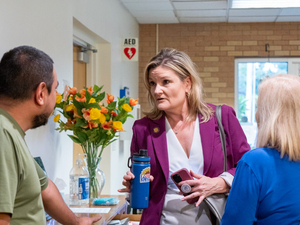
Clockwise from top left: Sen. Thomas Chittenden, Joanna Grossman, Elizabeth Hunt, Sen. Ginny Lyons and Sen. Kesha Ram Hinsdale are candidates seeking a seat in Chittenden Southeast Senate district and competing in the Aug. 11 Democratic primary. Photos by Glenn Russell/VTDigger and courtesy of the Hunt and Grossman campaigns.
When the three Democrats representing the Chittenden Southeast Senate district first ran as a united incumbent bloc three primaries ago, they cited a need for experience amid high political turnover.
Now, that turnover has only deepened in the Vermont Senate. But new candidates see it as a reason for fresh leadership rather than consistency. As a result, a competitive primary this year has incumbents and challengers alike focusing more on economic development as voters express greater frustration over affordability.
“I never thought I would be the person to run, and that started to change last year when the political climate seemed to get more dire,” candidate and political strategist Joanna Grossman said.
Federal funding cuts hitting the state, frustration over Vermont’s sweeping education reform law and a perceived lack of small business representation in the Senate all pushed Grossman, a longtime campaign manager but first time candidate, to run. She joins pediatrician and fellow political newcomer Elizabeth Hunt on the ballot, facing off against the three incumbent Democrats — Sens. Thomas Chittenden of South Burlington, Ginny Lyons of Williston and Kesha Ram Hinsdale of Shelburne, who have cross-endorsed each other in an effort to hold their seats. The five candidates, who all made themselves available for interviews, are vying for three seats in the Aug. 11 Democratic primary. Two Republicans — Bruce Roy and Javen Sears — are running in the GOP primary.
In the wealthy blue district — which spans Bolton, Charlotte, Hinesburg, Jericho, Richmond, St. George, Shelburne, South Burlington, Williston, Underhill and the southern tip of Burlington — healthcare, education and small business ownership have emerged as top issues for all candidates. The focus on affordability has left topics like gun control and climate change that once drew candidates’ attention to take a backseat. But the candidates differ in their vision for what this economic change looks like and what policies fit best to address them.
The Issues
Some Vermonters this year have paid double or more than what they previously paid for health insurance amid the expiration of federal health insurance subsidies, demographic challenges and soaring underlying hospital and prescription drug costs. That’s made healthcare affordability a key issue for voters, the candidates said.
A veteran Senator in the race, Lyons introduced a bill last session, S.190, aimed at addressing the issue by fast-tracking the state’s ability to use a tool called reference-based pricing to lower what hospitals charge for certain services. That effort would have targeted two groups of insurance customers: public school employees and people buying plans on Vermont’s Affordable Care Act marketplace. Gov. Phil Scott vetoed the bill this June, but even challengers of Lyons in the race applauded her efforts with the bill.
“It’s an interest in healthcare,” Lyons said, describing voters’ focus this year. “I think it’s a result of the work that I, in particular, have done and others have done to raise the issue about what we can do and how we can reduce some of the administrative burdens and increase some of the access to care, particularly primary care across the state.”
READ MORE
A former biology professor and current chair of the Senate Health and Welfare Committee, Lyons said her unique background as a scientist and her long experience in the Senate are why she is best to address the issue of healthcare affordability.
But Hunt, the pediatrician, who is largely supportive of Lyons’ bill, believes the steep healthcare-related affordability challenges facing Vermont require a new perspective. She has seen the concern firsthand while working with children and families, an experience that she said pushed her to run. To address healthcare costs, she’s proposed an examination of the Green Mountain Care Board, the state’s main healthcare regulator, to audit how money is spent by the board and how it can be more effective, as well as expanding Vermont’s Blueprint for Health, a program that invests in primary care clinics.
For Grossman, who is the community relations director at Phoenix Books, the impacts of rising healthcare costs have been particularly seen in small businesses. She said she would have pushed for a bill, H.585, introduced last session, that would have advanced site-neutral billing, a policy that sets payment for certain medical services equally regardless of the hospital setting.
While working for the local bookstore chain, Grossman said she became focused on supporting small businesses. She pointed to her opposition to a proposed Amazon warehouse in Essex as a moment that illuminated her interest in economic development.
The warehouse, Grossman believes, would have been “actively displacing Vermont businesses and Vermont retailers” and “devastating to the Vermont economy.”
Chittenden, who also described himself as pro-business and is vice chair of the Senate Finance Committee, holds the opposite position. To him, the facility presented an opportunity to “bring in-state supply chain efficiency and private funding for infrastructure upgrades while making delivery of goods more affordable for both Vermont consumers and Vermont small businesses that use Amazon regularly,” he wrote in an email to VTDigger.
Their differences on the issue highlights a larger distinction in how the two candidates view being pro-business. Grossman describes herself specifically as pro-small business, while Chittenden said he wants more state politicians to realize that “medium and large businesses are good for Vermont too.”
While Chittenden said he has always been a “pro-growth” candidate, his Senate platform, compared to previous years, has shifted from a focus on gun control and climate change to a prioritization of economic growth.
“I will say the results of the 2024 election put that conversation into a place where it was harder to advance sensible reforms,” he said of gun control and climate change policies, referencing Republicans gains in the Vermont Senate two years ago.
For Chittenden, tax burdens, including housing costs, are why small businesses are struggling — an issue he extended to the education system.
“If we want property tax relief, we need to restructure our system in a sensible way that Vermonters can afford,” he said. “And that’s what the big conversation has been over the last two years.”
Education dominated the last legislative session, as Gov. Scott and the Legislature agreed to an education reform compromise that seeks to facilitate voluntary school district mergers. Chittenden, who voted for the legislation, said he supports the push to improve equity for students no matter where they live but has also criticized the bill for overriding local control of school spending. Lyons also voted yes on the controversial bill, but has emphasized that it will require ongoing local work.
For Ram Hinsdale, who voted yes as well, the bill presented an opportunity to “bend the cost curve,” but looking ahead, she said she is most interested in investing in technical education. Technical education centers in the district faced a rise in student demand that they were unable to meet this past school year, according to data from the Center for Technology, Essex, one of the two career and technical centers in Chittenden County. Hinsdale said she is focused on finding solutions to meet that demand, describing technical education as a “lucrative” path.
That, alongside housing, are her biggest priorities, she said.
Chittenden County has seen historically low rental vacancy rates in recent years. Though that rate has risen this summer, indicating a slightly healthier rental market, the rate is still an issue, and younger Vermonters report rising costs steering them away from homeownership.
Across the board, the candidates said they support the construction of higher density units as a solution. Grossman said she wants to make sure Vermont residents get their first choice of units on the market, while Hunt believes land could be used more efficiently to support housing demands.
Ram Hinsdale cited a need for better use of state and federal dollars for housing programs amid a crackdown on federal spending from the Trump administration.
“I look back at the pandemic when we had federal dollars to pay for the motel program,” she said, referencing the state’s program that pays for some people who are homeless to stay in hotels. “We didn’t stretch those dollars as far as we could have because the governor’s team did not negotiate the price of those motel rooms.”
This climate of uncertainty with federal funding has led Grossman to see Vermont as a refuge, one that needs to become more economically self reliant to be preserved.
“We’re seeing federal overreach encroaching here in Vermont. We need to shore up Vermont. We need to protect it,” she said.
While Grossman and Hunt believe these unique challenges require a new voice, Chittenden, Ram Hinsdale and Lyons believe it’s all the more reason why experience is needed in the race.
“I have grown a tremendous respect for seniority and service and longevity,” Chittenden said.
Read the story on VTDigger here: In Chittenden Southeast Senate primary, incumbents and challengers alike pivot platforms to affordability.
Montpelier, VT