Kansas’ Democratic, GOP nominees for governor seek unity — except with each other
Aug 06, 2026 | 3:32 pm ET
Description
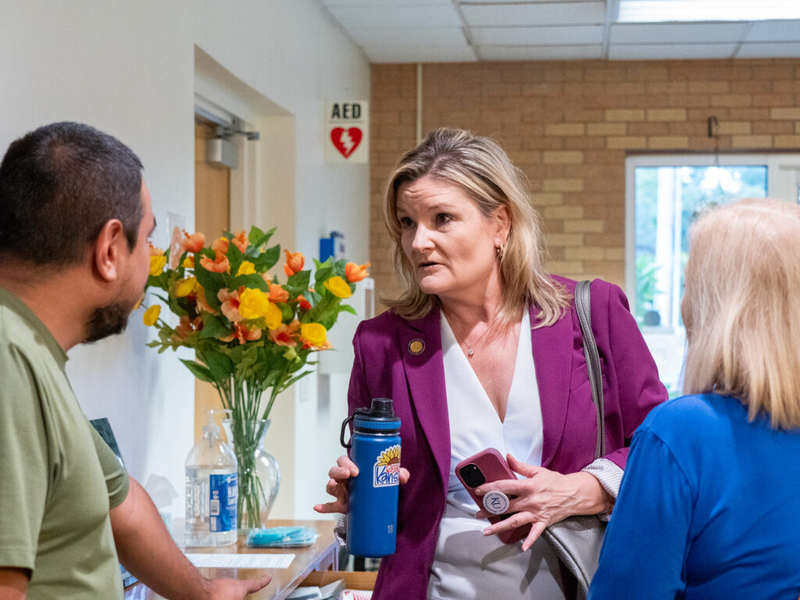
Sen. Cindy Holscher arrives at an Oct. 13, 2025, forum on redistricting at Shawnee Mission Unitarian Universalist Church in Lenexa. Holscher, who won the Democratic Party's nomination for governor, says Republican gubernatorial nominee Ty Masterson, a senator from Andover, is an extremist conservative. In turn, Masterson is labeling Holscher a leftist extremist. They meet Nov. 3 in the general election to determine who replaces Gov. Laura Kelly. (Photo by Sherman Smith/Kansas Reflector)
TOPEKA — Republican Ty Masterson and Democrat Cindy Holscher preach the gospel of political unity while opening the three-month odyssey to determine Kansas’ next governor by casting their partisan rivals as political extremists.
The gestures of goodwill were designed to bring comfort to voters who didn’t make Holscher or Masterson their first choice in the Tuesday primary election. These obligatory calls for togetherness didn’t inhibit Masterson nor Holscher from urging voters to stand against their major party rivals.
Holscher and Masterson received blessings from second-place finishers in the respective primary campaigns — businessman Phillip Sarnecki on the GOP side and state Sen. Ethan Corson on the Democratic side — after votes were tallied. Masterson said he spoke with Sarnecki and other prominent GOP candidates, while Corson said in a statement he wished Holscher well during the general election campaign.
“We’ve got to come together in this state,” said Masterson, who is a state senator from Andover. “I’m asking all Republicans, independents and commonsense Democrats to join me in the effort to take back Kansas.”
He went on to condemn Holscher’s record as a state legislator and to describe her as a “left-wing extremist.”
“Cindy Holscher would be the most radical progressive governor in the history of Kansas,” Masterson said. “I serve with Cindy Holscher in the state Senate, and I’ve seen firsthand just how far to the left she is.”
Holscher, an Overland Park lawmaker who prevailed without the endorsement of Democratic Gov. Laura Kelly, thanked primary opponents Corson and Overland Park Mayor Curt Skoog for their “commitment to our state and for their willingness to serve.” Kelly endorsed Corson in the primary.
“Our party is stronger because of the debate we had, and I look forward to working alongside them in the months ahead,” Holscher said. “From this moment forward, we are united, and as we turn our attention to November, the stakes couldn’t be higher. Our state cannot afford another extremist like Ty Masterson.”
In a step toward electoral harmony, Kelly made a peace offering to Holscher after she worked diligently to assist Corson’s bid for the Democratic nomination.
“We cannot let Kansas go backwards,” Kelly said. “I ask all Kansans, regardless of political party, to unite and move our state forward by electing Cindy Holscher this November. If Ty Masterson is elected, he will take our state back to the dark days of Sam Brownback, to the days of chronically underfunded schools, fiscal mismanagement and crumbling roads and bridges — the very problems I ran for governor to solve.”
Kelly is completing her second and final term as governor after defeating Republican gubernatorial nominee Kris Kobach in 2018 and GOP gubernatorial nominee Derek Schmidt in 2022.
“For decades, Laura Kelly has tirelessly served the people of our state, and I’m grateful and honored that she has endorsed our campaign,” Holscher said. “As governor she has moved our state forward while blocking a host of disastrous policies put forward by extremist Ty Masterson.”
She said Kelly understood the urgency of mobilizing Democrats, independents and Republicans to make certain Masterson didn’t ride President Donald Trump’s endorsement to victory on Nov. 3.
On Election night, Masterson thanked his family and campaign staff for handling the primary contest the “right way.” He said his campaign didn’t put out “negative garbage” against his GOP challengers on the primary, but acknowledged political action committees and dark money groups did.
“I can’t go without thanking President Trump. He loves this country,” Masterson said. “Occasionally, God raises somebody up that kind of becomes greater than themselves, right, and does more than a single human being can do.”
Unofficial results reported by the Kansas secretary of state’s office show Masterson received 43% of the vote in a seven-candidate Republican primary. Sarnecki netted 22% while state Insurance Commissioner Vicki Schmidt had 14% and Secretary of State Scott Schwab had 11%. Holscher collected 49% of the Democratic Party vote with Corson earning 39% and Skoog receiving 13%.
Topeka, KS