High turnout shaped Michigan primary, boosting El-Sayed and Lawrence to victory
Aug 06, 2026 | 3:49 pm ET
Description
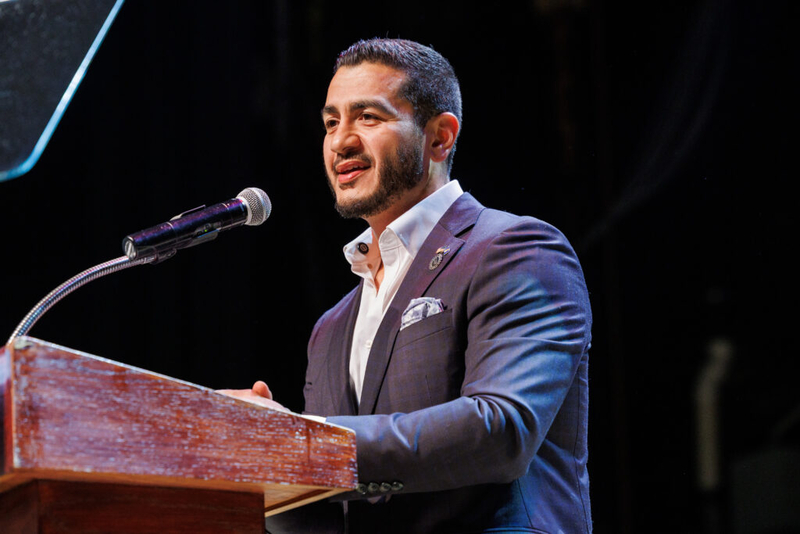
Former Wayne County Health Director Abdul El-Sayed speaks at an election night watch party in Detroit, Mich., on Aug. 4, 2026. The Democratic primary for U.S. Senate was too close to call at the time he spoke. (Photo by Andrew Roth/Michigan Advance)
More than 2.5 million voters in Michigan turned out to cast ballots in the Aug. 4 primary election, about half of whom voted in the U.S. Senate primary contest that carried Abdul El-Sayed to victory as the Democratic nominee over U.S. Rep. Haley Stevens of Birmingham.
The high voter turnout, the highest for a Michigan midterm primary since 2022, certainly benefited El-Sayed, but also created other interesting observations from those watching the race, like a serious gap in vote totals between Democrats who voted in the gubernatorial primary — which elected nominee Jocelyn Benson — and the number of people who voted in the Republican side of the race, who ultimately chose John James as their nominee.
According to preliminary data on the Michigan Department of State’s online voter data dashboard, which is still being populated throughout the week with new info, the last count on Thursday morning showed that 26.5% of the state’s registered voters, or 1.94 million people turned out based on information available. That number is likely higher and will be reflected soon, as clerks upload their electronic pollbook data, which they have seven days to do after a given election.
Active registered voters this year totaled 7.35 million residents, the dashboard shows. A little more than 1.38 million people returned absentee ballots, around 139,000 voted early before Tuesday and more than 427,000 voted in person on Tuesday.
Although the 2024 cycle saw record turnout, the best comparison with the 2026 primary totals is the 2022 midterm primary cycle, which saw 2.1 million voters cast ballots in an election that also featured a gubernatorial primary election. The difference was that there was no U.S. Senate election that year, and turnout was mostly motivated by control of the state Legislature and for partisans choosing their fighters on the GOP side of the gubernatorial race, as Gov. Gretchen Whitmer was the incumbent and faced no primary challenge.
With El-Sayed and Stevens on the ballot, and James, a congressman from Shelby Township, versus businessman Perry Johnson, Michiganders were eager to vote this year.
Corwin Smidt, an associate professor of political science at Michigan State University, in an interview with Michigan Advance, said turnout appeared the way it did because new voters were animated to either vote for or against El-Sayed. Turnout was lower than the higher numbers seen in general elections, however, because Michigan’s August primaries are open and there is a lack of available data on who votes how and for which party in primaries.
Still, the fact that people were generally upset with the state of things motivated higher turnout than in previous midterm cycles, Smidt said.
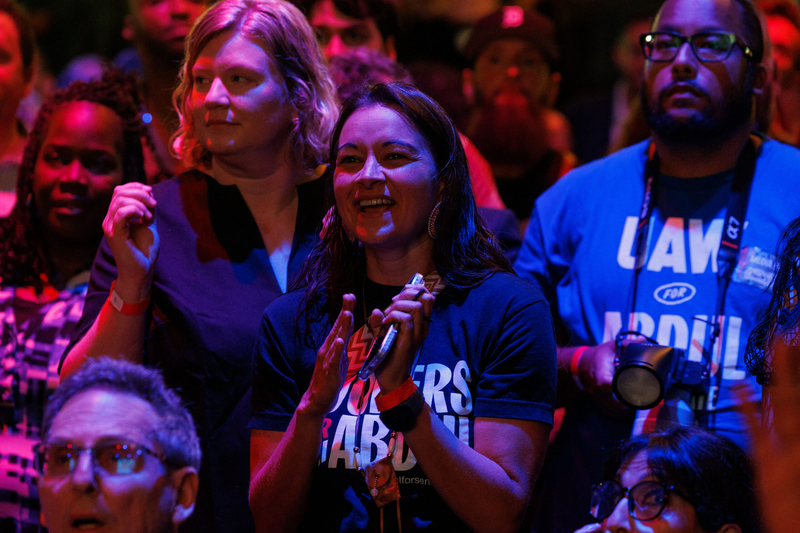
U.S. Senate primary by the numbers
There were 1.5 million votes cast in the Democratic U.S. Senate primary race alone, and that included votes for state Sen. Mallory McMorrow (D-Royal Oak), who was still on the ballot after she dropped out of the race in early July.
John Sellek of Harbor Strategic told the Advance on Thursday that the only other time Michigan has, in the last 20 years, seen this level of turnout was when U.S. Sen. Bernie Sanders (I-Vermont) was on the ticket.
“So it’s unique, but it is a sign of real difficulty for Republicans currently taking the blame for high prices, tariffs, the war and more,” Sellek said.
To his point, he noted an election night observation that the last time there were 1.5 million votes in a Michigan Democratic primary was in 2020, with Sanders seeking the nomination against eventual President Joe Biden. That contest wasn’t close, and not like the 1 percentage point margin of victory that El-Sayed eked out against Stevens. The race was that close, however, when Sanders was on the primary ballot in 2016 against Hillary Clinton, in which Sanders won the primary and Clinton would go on to be the nominee.
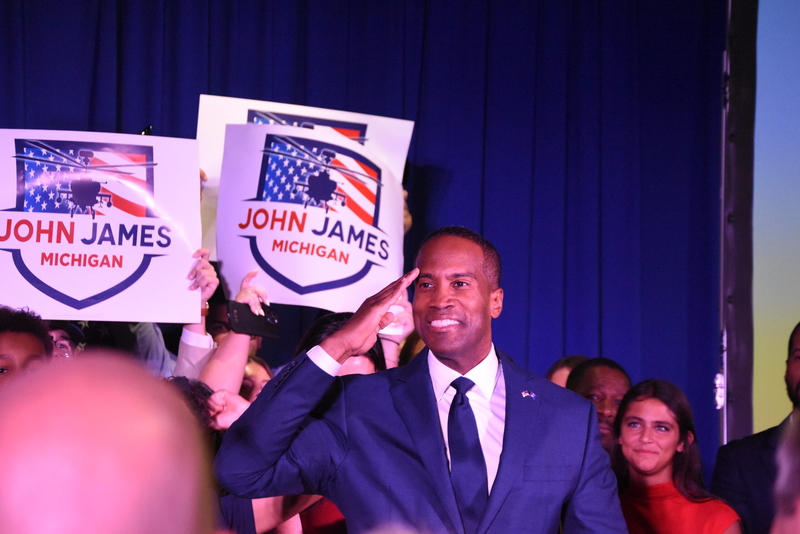
“The animating conflict in the Democratic Party has not abated,” Sellek posted on X Wednesday, when the race between El-Sayed and Stevens was still too close to call.
Comparatively, many more Democrats were engaged this year, and El-Sayed’s contest had much to do with that. But what led to his success?
Many comparisons to Sanders’ 2016 campaign and El-Sayed’s had proliferated as votes were tabulated on Tuesday and into Wednesday morning, including correlations to how El-Sayed either mimicked or grew Sanders’ coalition to defeat Stevens.
Keys to El-Sayed’s success
POLITICO noted that El-Sayed had won nearly 60 percent of the vote in counties where at least 30% of adult residents hold a bachelor’s degree, whereas Stevens won more than 50% of the vote in counties where less than 30% had a college degree or education.
Sellek observed that non-college voters in mid-Michigan and in the state’s northern counties were all won by Stevens, and that Sanders swept those in 2016. He also noted that those were counties where Trump excelled in 2016, potentially showing a sign of weakness there for El-Sayed later.
Some of the high educational attainment areas that El-Sayed dominated were Grand Rapids, Kalamazoo, Ann Arbor and Lansing, all of which have nearby state universities, carrying those communities by more than 20 points.
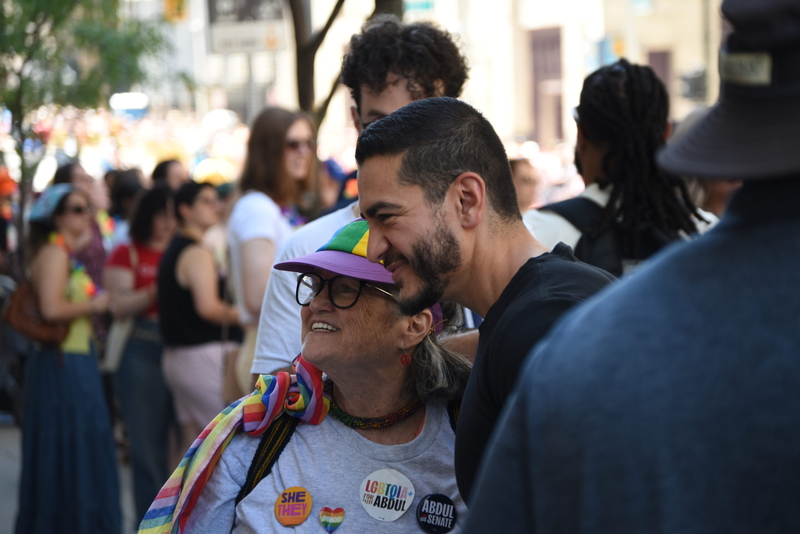
El-Sayed also did exceptionally well on the West Michigan coastline and Traverse City “cherry coast” region, carrying both Grand Traverse and Leelanau counties by roughly 20 points. That was indicative of El-Sayed’s ground game, according to organizers who spoke to Michigan Advance during El-Sayed’s victory night watch party in Detroit, as he spent significant time in those areas amassing volunteers.
Smidt, however, said those 2016 dynamics were much different, including the coalition that Sanders had built as a presidential candidate.
Smidt agreed that based on what he saw from the data, El-Sayed did make the most inroads in West Michigan, and in Ottawa County, which is among the fastest growing voting counties in Michigan.
“It’s attracting more college-educated, higher-income people who vote more often,” Smidt said. “Sort of the Chicago or former urban transplant who decided Grand Rapids is enough of a compromise between Midwest and urban life.”
MENA voter totals need a closer look
Although some Arab voters may have been motivated to vote for El-Sayed due to his Egyptian heritage, Smidt said researchers don’t have a great read on the Middle Eastern-North African, or MENA, vote in Michigan.
Looking deeper into that bloc later, and with El-Sayed’s victory in the books, might help researchers better understand the swings in their voting habits.
“Our estimate in 2024 is maybe it was 1.7% of the electorate, and that electorate you could argue swung the vote from Harris to Trump,” Smidt said. “There’s great surveys of Arabs after Sept. 11, 2001 of them being 50-50 Republicans and Democrats in Michigan. After Trump won in 2016, they became really solidly Democrat. After Gaza had become an issue, it’s a totally different coalition.”
Smidt said he was most interested in understanding how the Oakland County Chaldean community — mostly a Christian community that immigrated from Iraq — voted in the election and if they swung toward El-Sayed, as they were more likely Republican voters in decades past. But the community’s politics don’t necessarily align with tight allegiance to their regional neighbors of Israel, which was a big factor in the U.S. Senate primary with the American Israel Public Affairs Committee spending big on Stevens’ behalf.
What El-Sayed benefitted from most, Smidt said, was turnout from communities that don’t usually vote, with increases in places like Dearborn.
“It was new voters coming out to punish,” Smidt said. “I think right now we’re dealing with a question of, ‘How much now does the disaffection matter?’ Or is Abdul El-Sayed too liberal for some of these people even though he sort of appeals on maybe ethnic grounds or just personal background?”
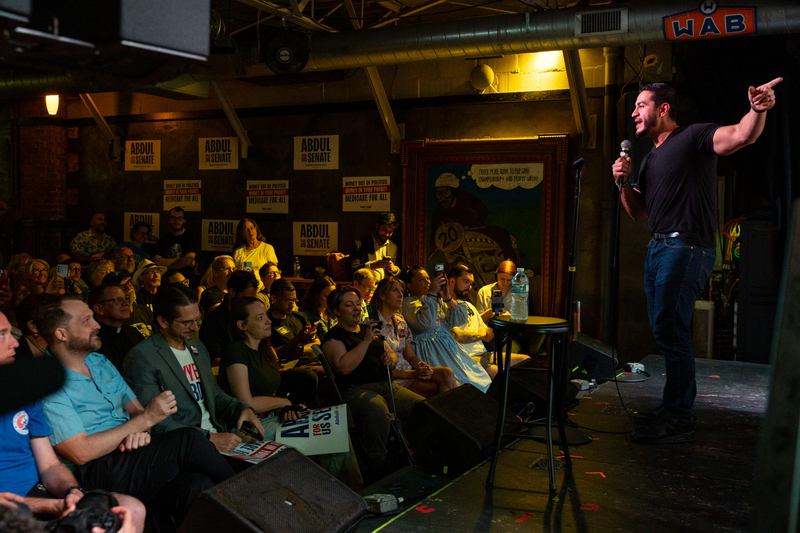
That was certainly the case for Ali Taleb, a 33-year-old physician who moved from Oklahoma about a year ago.
Speaking to Michigan Advance on Tuesday outside his polling location at the Dearborn Administrative Center, Taleb said he’s not a regular voter but wanted to cast his ballot for the Senate race.
“I’m excited to vote for Abdul El-Sayed,” Taleb said, adding that he’s become more supportive of democratic socialism in the last few years, as he sees most politicians “still relying on corporate donations and AIPAC donations.”
Taleb said the Democratic Party at large is “kind of a mess,” highlighting their foreign policy stance.
“They’re trying to shift away from Israel in a way where it kind of seems like it’s artificial. It’s not like they’re listening to people. It’s more like they’re seeing what’s more popular right now.”
Gubernatorial race by the numbers
Around 1.1 million voters cast ballots in the 2022 GOP gubernatorial primary, whereas around 1 million voted for Whitmer, according to Gongwer News Service. In 2026, a whopping 1.49 million people voted for Benson, whereas more than 928,000 voted in the GOP race that saw James win the nomination.
A good mix of political consultants and Michigan journalists noted that the gap between those vote totals was staggering – a difference of more than 500,000.
That said, Andrea Bitely, of Bitely Communications and the former spokesperson for Mike Duggan’s former gubernatorial campaign, noted that the gap in votes shouldn’t be seen as an enthusiasm gap between Republicans and Democrats going into the general election. It just signals a weak primary ballot for the GOP this year.
“Just looking at the raw number of voters doesn’t give you a full perspective on what Tuesday’s turnout says about enthusiasm,” Bitely said. “There is definitely an enthusiasm gap between the two parties, but it’s not as significant as what we saw this week. The Democratic side of the primary ballot contained the most-watched US Senate battle in the entire country. Meanwhile, the Republican side of the ballot had fewer primaries that were truly impactful. John James had the nomination mostly locked up, and aside from the 8th District, there weren’t any truly significant primary races.”
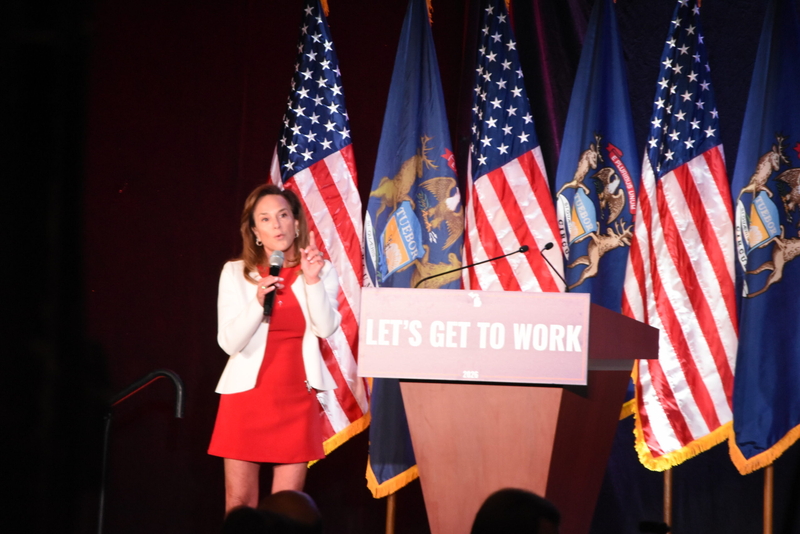
Bitely clarified that it was the GOP who had less significant primary matchups, as the Democrats were locked in serious battles throughout the evening, including the 7th Congressional District contest between Will Lawrence, who won and was crowned as the Democratic nominee over Bridget Brink and Matt Maasdam.
Dennis Lennox, a Republican political communications consultant, however, said that it was certainly worrying.
“We see a trend nationally and now in Michigan, where Republican voters aren’t enthusiastic or engaged,” he said.
James vs. Johnson offered slim pickings, lack of cohesion
Smidt agreed that the Republican electorate in Michigan lacked glue, and that Trump has acted as a sort of containment field to keep some of its bloc in check. Some of that had to do with instability within the party over the last decade.
“That said, they have two of the best candidates that they can hope for now, with John James and Mike Rogers,” Smidt said of their offerings heading toward the general election, even though their options were slim. “That is something that at least gives them some sense of stability and continuity, only in the sense that these guys have run before. While there are some people upset, I don’t really know what about.”
Those who voted for Johnson or any of the candidates still left on the ballot after dropping out have cited controversial votes from James in Congress or the fact that, prior to being elected to the U.S. House, James previously lost Senate races in 2018 and 2020 against Democratic Sens. Debbie Stabenow and Gary Peters.
Smidt chalked that up less to a seething anti-James coalition in the primary as opposed to a general lack of cohesion among the GOP, even with Trump still dictating some of the bloc’s voting habits. Those divisions were less solidified than say the Democrats who split over El-Sayed and Stevens, as their latter’s divisions were more hard policy based.
Lawrence prevailed because he did the work
While much attention was on El-Sayed and James, Lawrence’s win in the 7th Congressional District primary also made waves. Lawrence is a political and climate activism organizer who has made a name for himself within his community without having held office before. His opponents had only moved to the district shortly before they planned to run for the seat.
Brink netted key endorsement from Michigan’s teachers while Maasdam had support from Slotkin. The two carved out a more center-left lane; however, spent much of their energy and time attacking each other and ultimately served to split votes between them.
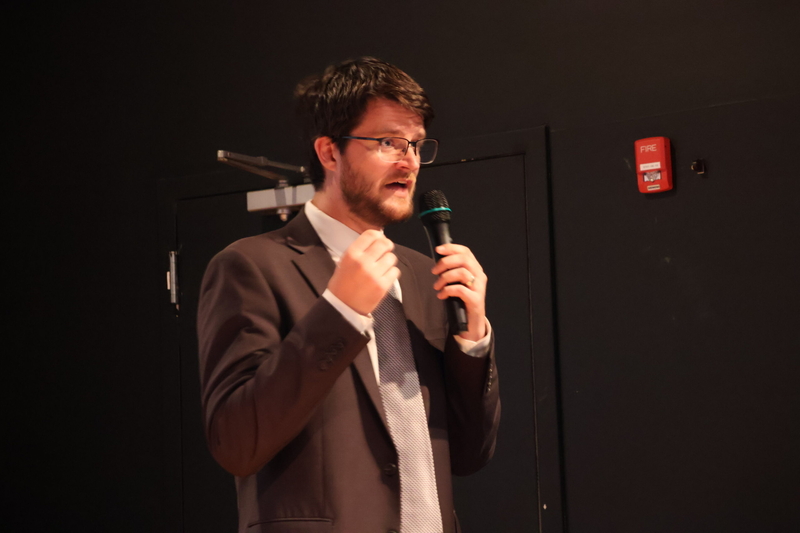
Meanwhile, Lawrence was working hard with an army of volunteers winding through the 7th Congressional District knocking on doors to get him elected.
Simon Schuster of Bridge Michigan noted that much of the discourse leading up to the election had focused on Lawrence’s progressive ideology and past controversial comments he made about Black leaders in the Democratic establishment as a hedge to progressive forward progress. That was short-sighted, Schuster posted on X Tuesday, as “Lawrence’s ground game and organizing ran circles around Brink and Maasdam, and honestly, those likely had an even larger impact on his rout tonight.”
Smidt agreed that Lawrence was a good candidate with appeal and that Brink and Maasdam never materialized into full-fledged candidates ready to move on.
“Not that they wouldn’t have been good representatives,” Smidt said. “Those two things don’t necessarily align. You have to credit Lawrence for the fact that he’s out stumping already. That shows he’s got some energy.”
Lawrence will now face Republican U.S. Rep. Tom Barrett of Charlotte in the general election.
Barrett on election night also noted that Brink and Maasdam may have vastly underestimated Lawrence, but his team won’t.
I want to congratulate @WeWill2026 on winning the Democratic primary tonight. We welcome him to the race and unlike @AmbBridgetBrink and @MattMaasdam, we will not underestimate him.
— Tom Barrett (@tombarrettmi7) August 5, 2026
Lansing, MI