BLM investigates copper line removal near Wyoming sage grouse leks, historic trails
Apr 30, 2026 | 1:22 pm ET
Description
Photo courtesy of WyoFile
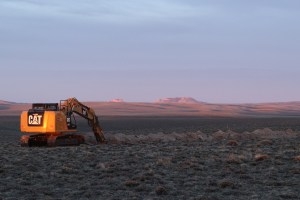
Lander resident John Coffman was out at sunrise on a Friday in early April for a routine-to-him springtime activity — volunteering to count strutting sage grouse — when he happened upon an unanticipated scene.
A big excavation project was underway out in the endless expanse of sagebrush along the drive to the lekking grounds he’s been assigned.
“I didn’t have a clue what was going on,” Coffman told WyoFile. “I came around the corner, in between a bunch of different leks I was counting, and was like, ‘What the heck is this!?’”
The incongruent and curious heavy equipment, which was idle in the early morning hour, even merited mention in Coffman’s blog, The Pine Divine.
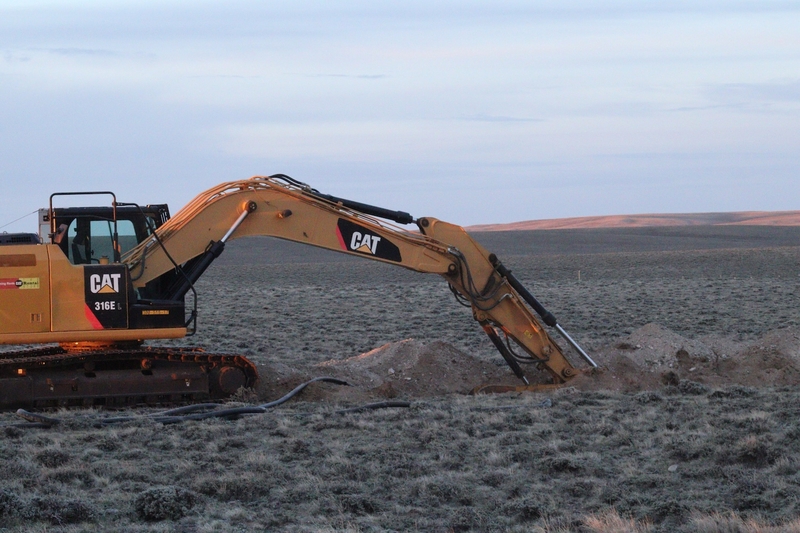
“Near the main road, I found 40,000 lbs of a CAT 316E excavator and a 100-yard line of soil and sage ripped out in front of it,” Coffman wrote in a post. “No one was around, and I stopped and stared.”
Later, Coffman dialed up rancher friends with allotments in the area. They didn’t know anything about it.
He also called up employees of the Bureau of Land Management, inquiring about the crews with trucks labeled “National OnDemand, Inc.,” excavating through the sagebrush. They, too, were drawing a blank.
“Nobody seemed to know what it was,” Coffman said.
Although it wasn’t his intent, Coffman’s calls touched off a federal law enforcement probe into the digging, which was allegedly unauthorized.
BLM-Wyoming spokeswoman Allegra Keenoo told WyoFile in an email that the activity is currently under investigation and that the agency cannot provide comment.
The active case has made some waves. Tom Christiansen, a retired Wyoming Game and Fish Department sage grouse coordinator, heard that the line removal work took place in BLM’s Rock Springs and Lander field offices, and possibly also the Pinedale Field Office.
“Apparently, it’s really close — within six-tenths of a mile of some leks — which wouldn’t be allowed,” Christiansen told WyoFile. “Obviously, it’s during the nesting time.”
The excavators Coffman documented weren’t “terribly close” to the leks where he was grouse counting, and birds weren’t showing signs of distress.
“It was particularly close to the Continental Divide Trail,” he said.
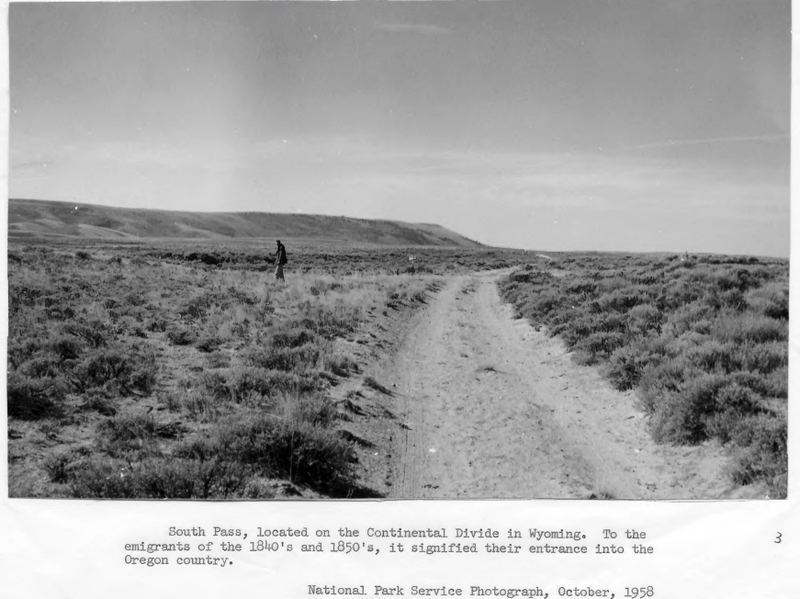
That’s significant because Continental Drive trails in the South Pass area were used by Oregon-bound emigrants in the 1840s and 1850s and have been protected by the National Historic Preservation Act for more than half a century.
The bureau’s hotly debated and still-in-flux resource management plan for that area also included a 1.1-million-acre rights-of-way exclusion zone that includes some historic trail corridors. BLM-Wyoming officials declined to specify what potential violations are being investigated.
A call and email to National OnDemand, Inc., were not returned on Wednesday. Major telecommunications companies have been excavating and removing legacy lines across the country. The copper inside the lines is valuable, but some of the effort has been spurred by environmental concerns. Degradation of lead-coated cables, for example, has spurred worries of contaminated sediment in Lake Tahoe.
Cheyenne, WY