Arkansas’ largest city approves new data center ordinance
Jun 03, 2026 | 5:05 pm ET
Description
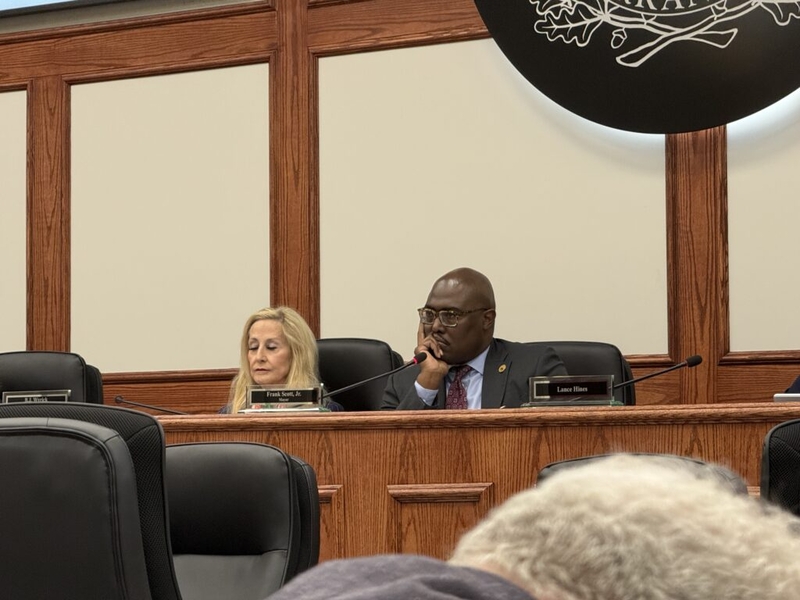
Little Rock Mayor Frank Scott Jr. listens to a speaker during a June 3, 2026 Board of Directors meeting, where directors approved a data center regulation ordinance. (Photo by Ainsley Platt/Arkansas Advocate)
Little Rock’s legislative body unanimously approved data center regulations Tuesday night during an hourslong meeting that included much criticism of a proposed $1 billion project backed by Google.
Concerns about environmental impacts, utility costs and a lack of transparency have sparked pushback against data center projects across the country, including in Arkansas, where five such projects are in various stages of development.
The Little Rock Board of Directors approved changes to the city’s industrial zoning ordinances in a voice vote, with no audible dissent. Directors Antwan Phillips and Ken Richardson, the latter of whom has not attended a board meeting in over two years, were absent.
Arkansas Explained: Understanding the data center boom and debate
The nearly five-hour meeting was packed with local residents who provided feedback on the ordinance and Google’s plans to build a 300,000-square-foot data center in the Port of Little Rock. Mayor Frank Scott Jr. proposed the ordinance amid significant online pushback against the centers last month.
Many residents implored the directors to delay voting on the regulations in favor of a temporary moratorium on data centers while stronger regulations were developed. Several criticized the process that brought the data center to Little Rock as lacking transparency, and warned of consequences for elected officials at the ballot box.
Tobias Peoples, who asked for a moratorium, said trust in government is low, and that Little Rock officials would have to make “pretty major concessions” to get city residents on board with the Google project. If they don’t, and utility rates go up, he said the data center and elected officials will be the first thing people blame.
“They’re immediately going to think about the mayor and the board of directors that let it happen. Whether or not that’s grounded in reality doesn’t really matter,” Peoples said. “That’s the way people are going to feel, and that’s the way that they’re going to vote.”
Despite requests for a moratorium, the directors opted to move ahead, with several stating that having some regulation was better than nothing.
Mayor Frank Scott, Jr. emphasized the ordinance could be strengthened as the city learns more about the Google data center, and said it wasn’t possible for local governments to ban data centers outright. He pointed to a law that mostly pertains to cryptocurrency mining operations, Act 851 of 2023, as the reason — a law that has already been a source of angst for legislators over its restrictions on local control.
“I want to encourage people, pay attention to the Legislature. I won’t be surprised what may happen in January because of this debate right now,” Scott said.
Proposed data centers in central Arkansas have prompted impassioned pushback, even as supporters of the centers have tried to assuage fears that they will harm locals. Pulaski County, which doesn’t have zoning regulations like Little Rock does, tried to pass land use regulations for data centers last week. After approving a data center moratorium last Tuesday, officials announced two days later it hadn’t actually passed due to a vote counting error.

The data centers have been lauded by state and local officials as some of the largest economic investments in the state — if they end up happening.
Google representative Laurel Brown emphasized Tuesday that the Port of Little Rock center was not a done deal.
“A final decision to build is only made after all diligence and public reviews are complete, and, candidly, we have not reached that point,” Brown said.
Many residents expressed suspicions Tuesday that Google and utility companies wouldn’t follow through on the pledges they have made regarding the project.
Richard Mays, a former Environmental Protection Agency attorney who was acting chief of the agency’s enforcement arm in the 1980s, warned that when it came down to profits or protecting the environment, companies would choose the former. He said that was why a strong regulatory ordinance was necessary.
“I learned in that experience that companies may always say that they’re good stewards of the environment, and then go out and really get occupied with their one goal in life, which was to improve their bottom line,” Mays said.
George Wise, president of the local Sierra Club chapter, said he didn’t believe promises from Entergy Arkansas Director of Public Affairs John Bethel that electric bills wouldn’t increase to pay for data center demand and infrastructure.
“I heard Mr. Bethel say, ‘Oh, we pledge that rates won’t go up.’ What’s a pledge? What’s a pledge? I don’t believe it,” Wise said.
Little Rock