Changes in store for Louisiana colleges under new state laws
Jun 03, 2026 | 5:50 pm ET

Description
An oversized chair sits outside the McNeese State University's campus shop on Nov. 18, 2025.(Photo: Wes Muller/LA Illuminator)
Public universities in Louisiana are walking away from the 2026 legislative session with more authority to increase tuition and fees as well as the ability to punish those responsible for aggressive hazing incidents.
Lawmakers also opened the door to Louisiana leaving the organization from which its college programs have received their academic stamp of approval and possibly joining a conservative alternative.
These and other notable changes are in store for higher education in the state.
Tuition and fee control
House Bill 1084 by Rep. Chris Turner, R-Ruston, would allow colleges and universities to increase tuition and fee amounts for any program.
It expands power granted in 2024 to the state’s four higher education systems to charge differential tuition for high-cost programs. Differential tuition lets schools charge more than their base tuition for more expensive academic programs, such as lab-heavy programs in science or engineering.
Under Turner’s bill, schools could increase the cost of a program or fee no more than 10% per year. Schools are also required to submit annual reports to their system board, the Board of Regents and the legislature about how much they raised costs.
Gov. Jeff Landry has not signed Turner’s bill, but it would become law next week if he takes no action. If enacted, schools can begin raising tuition and fees in January.
Deepfakes to become punishable
Senate Bill 347 by Sen. Regina Barrow, D-Baton Rouge, adds deepfakes to the definition of power-based violence, allowing college students and employees to be punished for harassing others with them.
Deepfakes are becoming more accessible with the rise of artificial intelligence. Many services available online can take an authentic image of a clothed person and produce a picture or video that appears to show them naked or even engaged in sexual activity.
Power-based violence occurs when someone asserts power to control or intimidate another person. It is more expansive than sexual misconduct or other offenses under Title IX, the federal law that prohibits sex-based discrimination in college settings.
Current law also prohibits “nonconsensual observation of another person’s sexuality” without their consent, which includes voyeurism, “peeping Tom” behavior and revenge pornography, which is when private images are disclosed without permission.
The governor has signed Barrow’s bill into law.
Punishing violent hazing
House Bill 738 by Rep. Dixon McMakin, R-Baton Rouge, seeks to make it easier for Louisiana colleges and universities to punish individuals and organizations that engage in hazing that results in serious harm or death.
It would clear up legislation McMakin got approved in 2024 to require schools to abide by a higher standard of evidence in any student discipline case where the punishment is longer than a 10-day suspension or expulsion.
Before 2024, administrators could hold a student responsible if the evidence suggested it was slightly more likely than not that they violated school policy. Even if there was conflicting testimony, a student could be punished if evidence tipped the scale just past the 50% likelihood.
Now universities need clear and convincing evidence, a standard used in some court cases. The higher threshold requires evidence that points to the student’s guilt being substantially more probable than not, and it might require multiple witnesses, photo evidence or other information to firmly convince administrators.
Clearing that bar can be difficult because, unlike in courtroom proceedings, school administrators don’t have as much power to gather evidence. They say the new standard has made it nearly impossible to hold anyone responsible for hazing.
Under McMakin’s new legislation, colleges and universities can use the previous, lower standard of evidence when a suspected hazing incident results in death, the substantial risk of death, unconsciousness, extreme physical pain, disfigurement or the loss or impairment of the use of a limb, organ or mental capacity.
Offenses that do not reach that threshold, even if they result in bodily harm or trauma, would still have to be decided based on the higher standard of evidence.
The bill awaits the governor’s consideration.
Regents’ duties, LUMCON oversight
Senate Bill 484 by Sen. Mark Abraham, R-Lake Charles, gives some, but not all, of the Board of Regents’ functions to other state agencies.
The legislation also requires the Board of Regents, which oversees all higher education in the state, to establish a fiscal warning system to alert campus leaders and lawmakers of pending financial distress at any institution. This follows fiscal crises at the University of New Orleans, the University of Louisiana at Lafayette and the UL Monroe.
In its original state, Abraham’s bill would have transferred the Louisiana Universities Marine Consortium to the LSU System. But after pushback from lawmakers who represent schools in the University of Louisiana System, Abraham agreed to set up a study committee that will examine LUMCON — which includes two facilities in coastal Terrebonne Parish — and make recommendations to the legislature ahead of next year’s lawmaking session.
Abraham’s bill has not yet been signed into law.
Accreditation
Senate Bill 304 by Sen. Rick Edmonds, R-Baton Rouge, would require the Board of Regents to develop policy that would allow schools to switch from the Southern Association of Colleges and Schools Commission on Colleges to another accreditor.
Landry has signed the bill into law.
The measure was introduced at the recommendation of Republican Gov. Jeff Landry’s Task Force on Public Higher Education Reform, on which Edmonds served. The group suggested Louisiana’s schools seek membership in the Commission for Public Higher Education, a conservative accreditor founded last summer that’s seeking expedited recognition from the U.S. Department of Education.
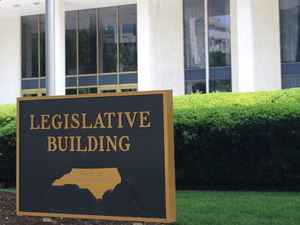
University systems in six other states — Florida, Georgia, North Carolina, South Carolina, Texas and Tennessee — are already part of the new group.
Edmonds’ bill stops short of requiring membership in the Commission for Public Higher Education. Instead, it allows schools to seek accreditation from an organization recognized by the U.S. Department of Education that promotes standards such as workforce outcomes, educational quality and affordability.
His legislation also requires that an accreditor “ensures appropriate accountability through a rigorous annual review of the faculty.” No accreditation groups currently require annual faculty reviews as part of their principles.
Edmonds, who is running for Congress, said the goal of annual reviews is not to pick on faculty but to keep abreast of whatever issues might be present.
His law also prohibits schools from using accreditors whose standards require a violation of state law. Edmonds didn’t name a particular law that concerned him, saying only that public universities belong to the people and must follow the law.
Conservative politicians have taken issue with traditional accreditors at times because of their standards related to diversity, equity and inclusion. They also require safeguards intended to limit the influence of external forces, including politicians, in public higher education.
Baton Rouge, LA