Pa. moves closer to chip-enabled cards for SNAP enrollees
Jun 03, 2026 | 5:46 pm ET

Description
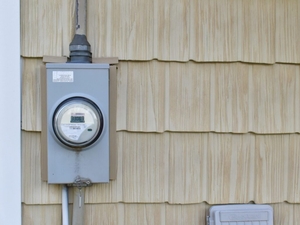
Chip-enabled cards for Pennsylvania's SNAP beneficiaries, like the Maryland version pictured above, could soon be a reality in the commonwealth. (Photo by Bryan P. Sears/Maryland Matters)
Each month, more than $300 million in food assistance dollars is awarded by the state Department of Human Services (DHS) to eligible enrollees, but millions end up in the hands of criminals who “skim” card numbers to steal benefits.
Debit and credit card companies largely pivoted to cards with small computer chips along one edge in addition to the traditional magnetic stripe. This chip creates a unique code for each transaction, preventing skimmers attached to card readers from recording card information.
But that same protection hasn’t yet been added to Electronic Benefit Transfer (EBT) cards distributed to the more than two million Pennsylvanians who rely on the Supplemental Nutrition Assistance Program (SNAP) to purchase food.
Some legislators want to change that.
Red states target SNAP fraud, errors under threat of costly federal penalties
House Bill 2540 would require the state to offer chip-enabled cards to enrollees by January 2028. It’s co-sponsored by Reps. Dan Williams (D-Chester) and Doyle Heffley (R-Carbon).
“There’s nothing worse than somebody (being) in the checkout lane with their groceries and find out that somebody has stolen their access card. This is going to really go a long way to improve that,” said Heffley.
A DHS spokesperson shared that implementing chip-enabled cards would take six or eight months, at a cost of roughly $14 million. The state would be responsible for $6.92 million with $7.09 million available in matching federal funds if approved before an October deadline.
“For families relying on SNAP benefits to put food on the table, a stolen benefit can mean going without groceries. Unlike traditional bank customers, they often have limited options for recovery,” added Williams.
The proposal passed on a unanimous vote out of the House Human Services Committee on Wednesday after legislators adopted an amendment to guarantee one free chip card to each SNAP beneficiary. It will now be considered in the House chamber.
Like other debit or credit cards, SNAP users will still be able to swipe a chip-enabled card if a cash register isn’t equipped with the right card reader.
The problem with skimming
In May, the House Democratic Policy Committee held a more extensive hearing on fraud in taxpayer programs like SNAP and Medicaid featuring State Inspector General Michelle Henry, who detailed skimming and commonwealth efforts to deter benefit theft.
Perpetrators often work in teams at checkout counters in grocery or convenience stores, Henry said, with one distracting a cashier while the other installs a skimmer in as little as four seconds. Then, whenever someone swipes their EBT card at that terminal, their card and pin number are recorded in the device.

Someone uses a bluetooth connection to connect with the skimmer in a few days, or even weeks, and collects that information to use it for their own gain. SNAP enrollees eventually try to swipe their cards only to discover a zero balance.
“With no resources, families must turn to already stretched thin food banks to make it through the rest of the month. These are the Pennsylvanians, the most vulnerable residents, and they did nothing wrong,” Henry continued.
In a “unique” arrangement, Henry said the state has a proactive skimmer response team that immediately responds to identified skimmers and educates retailers on how to discover, and report, such devices. She credited that group for protecting $8.3 million in benefits across more than 16,700 EBT accounts.
The state has additionally rolled out an official EBT app that beneficiaries can use to lock their accounts when they aren’t using their card, blocking skimmers from using the information. DHS Secretary Val Arkoosh said users could unlock their cards while waiting in a checkout line to minimize exposure time.
“It doesn’t prevent the stealing of the information,” Akroosh said at the May hearing. “It prevents anyone from stealing their money.”
Deploying chip-enabled cards
But rolling out chip-enabled cards hasn’t been swift or “didn’t go well” in other states, Arkoosh said. The U.S. Department of Agriculture has designated just two companies as EBT vendors for states to use.
California started issuing such a card last year, reporting an 83% reduction in theft when compared to previous EBT cards. New Jersey, Maryland and Virginia are also pivoting to newer card technologies, meaning Pennsylvania vendors accepting EBT cards near those borders will need to be prepared.

“I believe that the technical issues have largely been solved. I didn’t want us to embark on this before we were confident that it would work, but I think we’re there now and that is something that could be considered in terms of a budget allocation,” Arkoosh said in May.
She noted that the state’s budget for SNAP will grow — with some saying the price tag could be as much as $800 million — after Congress voted last year to shift more administrative costs to the states.
Because of those changes, the cost to the state for chip-enabled cards increases after Oct. 1. After that date, the state would be responsible for $9.66 million of the $14 million in costs, rather than splitting it evenly with the federal government.
According to a December DHS report, chip-enabled cards cost roughly $5 each, roughly twice the cost of current cards. One million Pennsylvanians use EBT cards, meaning it’ll cost $5 million to replace every card.
The state has also estimated costs for advertising the new cards to both beneficiaries and the 38,000 vendor locations that accept the benefits. County assistance offices will also need $3 million to acquire new card printers. Total administrative costs came in at around $6.5 million.
That line item could be reduced by not getting as many county-level printers, which means that replacement cards may not be immediately available in some areas.
However, the five-page report concludes that “the success of implementation is heavily dependent on securing the buy-in and providing education to EBT retailers and retail associations.”
Vendors are not required by federal law to have chip-enabled readers.
“While nationwide retailers are well-positioned to adopt a national standard for SNAP (chip-enabled cards), smaller state- and regional-level stores may lack the capacity to upgrade their existing equipment to support the new standards,” the report continued.
Harrisburg, PA