Lower turnout, shifting loyalties may drive results in GOP primary runoff for South Dakota governor
Jun 03, 2026 | 5:10 pm ET
Description
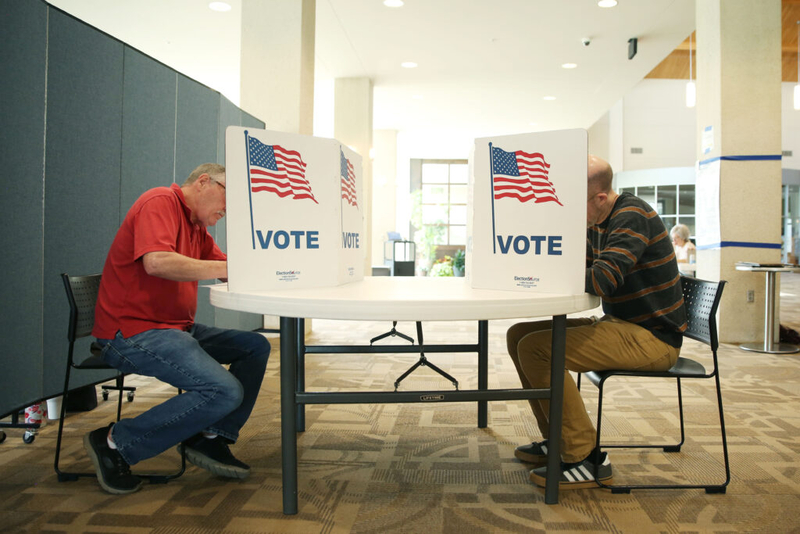
Voters fill out their ballots at a Sioux Falls polling place during the South Dakota primary election on June 2, 2026. (Photo by Makenzie Huber/South Dakota Searchlight)
The dust from Tuesday’s primary election has barely settled, but two of South Dakota’s governor hopefuls are back in a full sprint toward a July 28 special election — the first runoff in state history for a party’s gubernatorial nomination.
Advanced voting for the Republican runoff begins June 12, and ballots must be printed listing current Gov. Larry Rhoden and political newcomer Toby Doeden by June 10. Voter registration is open through July 13.
Political experts are still digesting Tuesday’s results and weighing factors that could shape the runoff — chiefly the potential for lower turnout and which of the finalists will draw support from backers of the two eliminated candidates.
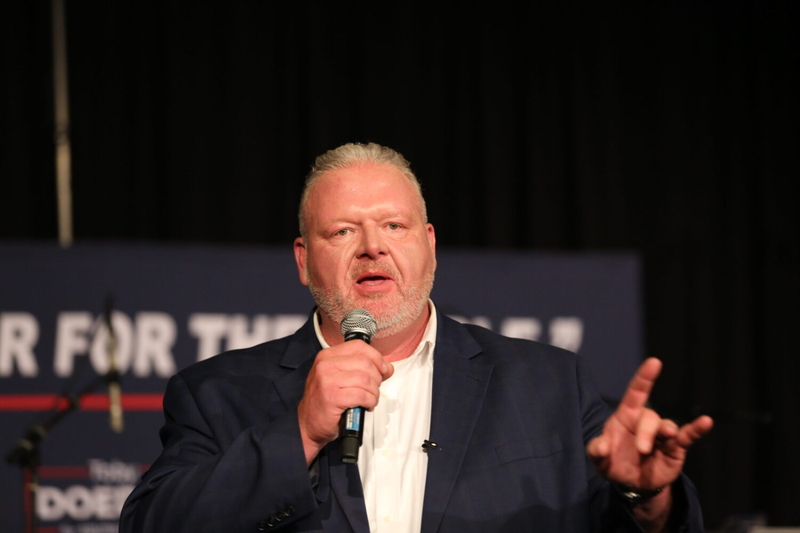
Doeden, a vehicle dealership and rental property owner from Aberdeen, led primary results with 31% of the votes, according to unofficial election results on the Secretary of State’s website. He was followed by Rhoden at 25%.
U.S. Rep. Dusty Johnson and state House of Representatives Speaker Jon Hansen earned 23% and 21%, respectively. South Dakota’s Republican primary is closed to independents and voters registered with other parties.
Doeden’s lead was unsurprising for Julia Hellwege, the director of the Chiesman Center for Democracy and a University of South Dakota associate professor in political science.
The Chiesman Center and South Dakota News Watch polled voters several times ahead of the primary, as did KELO-TV and Emerson College. While Johnson took an early lead, Hellwege said, voter preferences gradually shifted toward Doeden amid a “fairly anti-government sentiment” among likely South Dakota voters.
Michael Card, professor emeritus of political science at USD, said he believed it would “be Dusty all the way” until the final days leading up to the election. By then, Card said it was easier to predict Johnson’s “fall from grace with voters” and their displeasure with negative advertisements attributed to his campaign.
Doeden and Rhoden advance to runoff in Republican governor primary, Johnson falls to third
Political analyst Drey Samuelson worked for South Dakota’s last two Democratic federal officeholders, former U.S. Sens. Tom Daschle and Tim Johnson.
Samuelson said he was also shocked that Johnson didn’t make the runoff, calling the congressman “the victim of the anti-incumbent spirit sweeping the country.”
Rhoden likely edged past Johnson by running on his gubernatorial record, Hellwege said, while Johnson struggled to shed the image of a “D.C. outsider” after serving in the U.S. House of Representatives for nearly eight years.
Primaries also tend to draw more partisan voters than moderate ones, Hellwege said.
A political action committee affiliated with Doeden sent a text message to Republican voters saying “if you hate President Trump and all that he stands for, Dusty Johnson is the candidate for you.” Trump’s support in the Republican Party remains strong even as his approval ratings have fallen more broadly in recent months. Johnson voted to certify the results of the 2020 election, which Trump lost, and supported the creation of an independent, bipartisan commission to investigate the rioters who attempted to stop the certification of that election.
“Doeden voters were always going to be the motivated voters, and those were always going to be the ones to turn out,” Hellwege said.
Turnout, whims of Johnson and Hansen voters a factor
About 43% of registered Republican voters cast their ballots Tuesday. That’s comparable to 42% in the 2018 gubernatorial primary and 43% in 2022.
Turnout for July’s special election will be lower, Hellwege predicted, which could skew results toward more partisan voters since they’re more motivated to participate than moderates.
“Motivation attrition is going to be greater. Special elections always have lower turnout,” she said.
Doeden finished with the most votes, but nearly 70% of Republican voters chose another candidate.
Doeden’s statements about wanting to “put an end to Dusty’s career” are likely to have largely alienated that base, Card said. If Johnson’s voters return for the runoff, they’ll likely shift toward Rhoden, Hellwege agreed.
“All of those Johnson voters now have a choice: Are they going to turn out? I think it’s going to be a question for those voters of whether they’re sufficiently motivated by not wanting Doeden to win,” Hellwege said.
Hansen voters could “move either way,” Hellwege said.
It’ll come down to whether or not they are driven out to vote, Card said, and it’s going to be “easier for Rhoden than Doeden” to ultimately secure enough votes to win over the majority of voters in the runoff.
Neither Hansen nor Johnson responded to Searchlight’s request for comment. Neither had endorsed Rhoden or Doeden as of Wednesday afternoon.
Influence of money, direction of messaging
Beyond voter shifts, Hellwege said Johnson’s and Hansen’s campaigns could influence the race by directing money toward their preferred candidate.
“That question is whether the Dusty camp is going to move their money toward Rhoden or if they’re going to save their money for the next race or future potential candidacy,” Hellwege said.
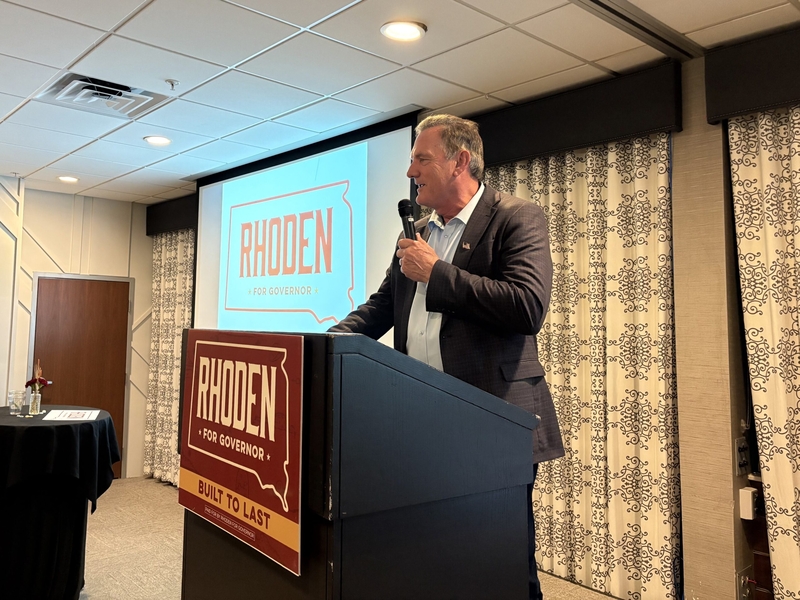
Johnson had $931,000 on hand two weeks before the election, according to his pre-primary campaign disclosure. Doeden had less than $220,000, having loaned his campaign $4 million. Rhoden ended the pre-primary reporting period with $169,616 but reported raising significant additional funds after the deadline.
“We outperformed the other three candidates very dramatically in the closing weeks of the last campaign,” Rhoden said. “So I think that we’ll be in fine shape to be able to present our message and move forward through this interim campaign.”
Rhoden said the one-on-one format lets him focus on his vision and offer a “clear contrast” between him and Doeden.
Doeden did not respond to a request for comment. In a speech to attendees at his Tuesday night watch party, he said the success broke institutional expectations.
“They said no outsider in South Dakota can break through three career, 20-year politicians,” Doeden said. “Well, guess what? You and I, we are doing it.”
Tuesday marked the first time a primary for a South Dakota party’s nomination for governor has gone to a runoff since a law requiring one was passed in 1985. Previously, when no candidate reached 35% in a crowded field, party delegates chose the nominee at a state convention.
The candidate who ultimately wins the Republican nomination for governor will advance to the Nov. 3 general election to face Dan Ahlers, who was uncontested for the Democratic nomination.

Pierre, SD