Alabama Senate committee approves bill restricting picketing, protests
Apr 07, 2025 | 8:01 am ET
Description
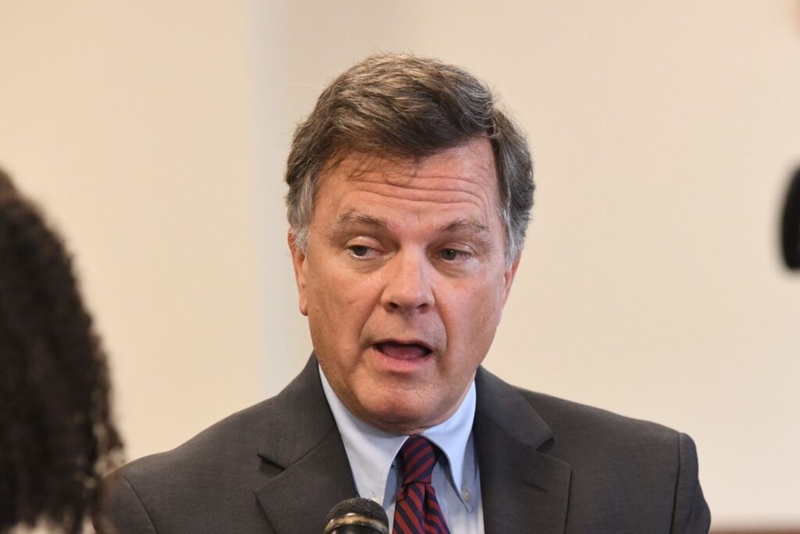
Sen. Arthur Orr, R-Decatur, the chair of the Senate Finance and Taxation Education Committee, speaks to reporters after a presentation on the state's fiscal condition on Feb. 5, 2025 at the Alabama Statehouse in Montgomery, Alabama. The Senate County and Municipal Government Committee Wednesday approved Orr's bill to set restrictions on picketing and protests on April 2, 2025. (Brian Lyman/Alabama Reflector)
A Senate committee approved a bill on Wednesday that restricts when, where and how a group can picket and protest.
SB 247, sponsored by Sen. Arthur Orr, R-Decatur, prohibits protesters from using noise amplifiers, being too close to the residence of the subject of the protest 30 minutes after sunset and 30 minutes before sunrise, and from blocking roads for the protest.
Orr filed similar legislation in the previous two legislative sessions. In 2023, the bill passed the Senate but did not receive a vote in the House. In 2024, it was indefinitely postponed in a Senate committee.
“The first version was filed in response to the Justice (Brett) Kavanaugh hearings where people went to his house and were demonstrating outside at all hours of the night,” Orr said. “I thought how intimidating would that be whether you’re an elected person or unelected it doesn’t matter.”
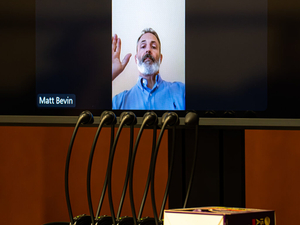
The Senate County and Municipal Government Committee heard from one critic of the legislation during a public hearing. Camille Bennett, executive director of Project Say Something, an advocacy group for change focusing on Black history and anti-racism training, said the legislation was too vague and unconstitutional.
“SB 247 is not only a bad bill but an assault on the First Amendment rights and voices of marginalized Alabamians,” Bennett said.
Bennett said peaceful protests will always be near a residence in rural Alabama.
“Alabama is the heart of the Civil Rights Movement. Black folk in Alabama understand the necessity of exercising our First Amendment rights as a pathway to freedom and navigation through white supremacist systems,” Bennett said. “We have apartments and residential housing within an earshot of any of our protests including parks and our local courthouse.”
Sen. Merika Coleman, D-Pleasant Grove, said that is especially true in cities like Birmingham that have lofts and apartments downtown.
“There’s so many lofts downtown so where would you actually go to have even a peaceful protest in downtown Birmingham and not be near a residence,” Coleman said.
Orr rebutted saying people can still protest in public parks and other areas.
“There’s plenty of places to make your sentiments known,” Orr said.
Coleman said the legislation could violate the First Amendment and warned against restricting the right to protest on the state level.
“I just don’t want us, especially right now, especially nationally when some people feel as if our First Amendment rights are being infringed upon, just being able to say what we believe,” she said. “I don’t know if we should be doing that on a state level as well, especially in Alabama.”
Sen. Linda Coleman-Madison, D-Birmingham, said the bill was too vague and suggested an amendment to set a limit on noise levels. The bill currently says that local law enforcement can deem what is too loud.
“It’s not specific so you allow the local governments to make that determination,” Coleman-Madison said.
The bill was approved 5-2. Coleman and Sen. Kirk Hatcher, D-Montgomery, voted against the approval, and Coleman-Madison abstained. It will now be considered by the full Senate.
Montgomery