Federal legislation pits energy development against conservation and historic preservation
Nov 24, 2026 | 10:47 am ET
Description
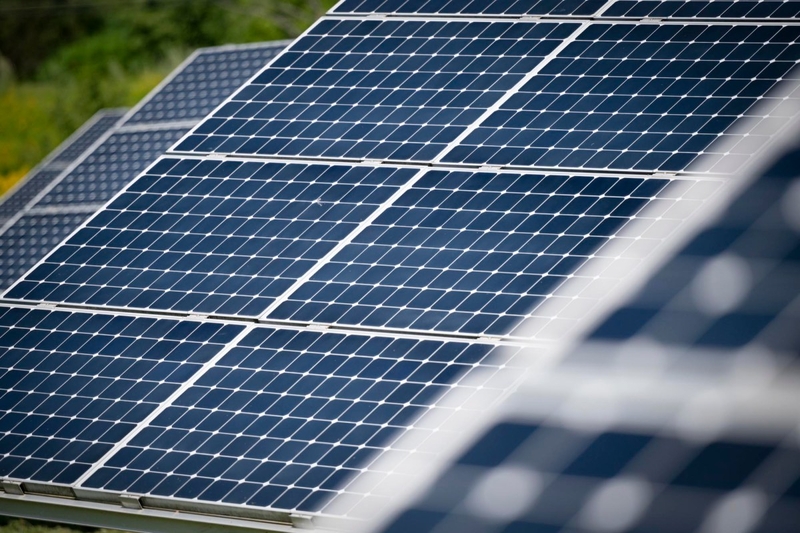
The solar array at Crossest Brook Middle School in Duxbury on Aug. 25, 2021. Photo by Glenn Russell/VTDigger
A megabill centered on permitting reform to streamline a wide range of federally-funded projects — called the Bipartisan American Affordability and Jobs Act — is dividing Vermonters.
The legislation — introduced Sept. 30 and sponsored by U.S. Sen. Shelley Moore Capito, R-W.Va., and U.S. Sen. Sheldon Whitehouse, D-R.I., along with Energy and Natural Resources Chair U.S. Sen. Mike Lee, R-Utah, and U.S. Sen. Martin Heinrich, D-N.M. — is aimed at advancing energy and transmission line development and modernizing project permitting.
The bill is now before the House of Representatives, after passing the Senate on Nov. 19, despite U.S. Sens. Bernie Sanders, I-Vt., and Peter Welch, D-Vt., voting against the legislation.
The third member of the Vermont delegation, U.S. Rep. Becca Balint, D-Vt., released a statement shortly after the bill’s passage in the Senate, encouraging her House colleagues to reject the legislation in favor of more “meaningful” permit reform that protects tribal sovereignty, historic preservation and the environment.
“This bill sacrifices environmental protections in the name of accelerating energy deployment and advancing infrastructure projects,” Balint wrote. “What’s more, there are too many giveaways to oil and gas development, undermining our efforts to transition to clean domestic energy deployment.”
Developers, the business community and energy transition advocates say the legislation would expedite energy, housing and other infrastructure projects that get bogged down by a prolonged permitting process and make such projects more affordable.
“A strong permitting process should provide meaningful opportunities while also ensuring decisions are made within a reasonable timeline,” said Amy Spear, the president of the Vermont Chamber of Commerce, which signed on to a letter of support for the bill spearheaded by the U.S. Chamber of Commerce. “Those objectives shouldn’t be mutually exclusive.”
Meanwhile the conservationist, historic preservationist and tribal groups say the rollback of bedrock laws protecting environmental and historic resources should not come at the expense of development.
Some of the controversial provisions of the nearly 500-page bill are broader exemptions of projects from review under the National Environmental Protection Act, the Endangered Species Act, the Clean Water Act and the National Historic Preservation Act of 1966. The bill would truncate timelines for public and tribal feedback and legal appeals against federally funded projects.
“I think that there would be an incredible loss of resources if this bill were passed,” said Giovanna Peebles, the former longtime Vermont state archeologist and state historic preservation officer. “It would be an existential threat to historic preservation, and certainly to archeology.”
To illustrate what’s at risk, Peeples pointed to the Chittenden County Circumferential Highway project — a proposed 16-mile limited access beltway — which was scrapped after historic preservation review led to the archaeological discovery of dozens of indigenous sites. And, Peebles said, there could be similar discoveries yet to be unearthed in Vermont.
‘Compromise bill’
Industry leaders such as Spear argue that the permitting reforms laid out in the bill would create a predictable and efficient regulatory environment, prevent costly project delays and allow developers to build more housing, affordable energy and modern infrastructure.
Predictability doesn’t mean limiting public participation, as that involvement is part of responsible development, said Spear, the Vermont Chamber of Commerce president, and the bill still can be amended to better achieve that balance.
Some environmentalists think that the streamlining of federally-funded projects is necessary to hasten a green energy transition.
READ MORE
“It’s a compromise bill,” said Jennifer Durgin, Vermont state coordinator for Citizens’ Climate Lobby, and it has received bipartisan support. She said the trade-offs are worth it to see the expansion of green energy projects and reduce greenhouse gas emissions.
“It’s also important to remember that no action is an action,” Durgin said. “The consequences of not taking any action mean that the planet gets warmer every year. It continues to drive erratic and extreme weather, such as the catastrophic floods, you know, that we have experienced in Vermont.”
A consistent, timely and predictable process that caps the timeline for legal challenges to energy projects at 150 days compared to a window of several years would be a boon to the state’s green energy developers and bring affordability for energy consumers, said Norwich Solar CEO Jim Merriam.
The bill has gained bipartisan support because developers such as Merriam have experienced a “misuse of the system” by people opposing and appealing projects that otherwise would go forward, delaying construction and adding unforeseen costs into projects, he said.
Jonathan Dowds, deputy director of Renewable Energy Vermont, said that the organization is supportive of the bill conceptually, but the federal permitting reform is “not likely to have an immediate impact on the Vermont energy mix.” Permitting reform is necessary at the state level to roll out more clean energy projects in Vermont, Dowds said.
‘Pretty devastating’
The bill is “pretty devastating” for environmental assets and historic sites, said Britta Tonn, the Vermont director of cultural resources for the engineering firm Vanasse Hangen Brustlin, Inc. The bill would “gut” the National Historic Preservation Act and other federal regulations established decades prior, she said, allowing federal agencies to take a “top-down approach” on projects regardless of the implications on a local community.
The bill presents a false dilemma in asking the public to choose modest emission reductions in exchange for weakening the National Environmental Protection Act, the Endangered Species Act and the Clean Water Act, said Zack Porter, executive director of the public lands advocacy organization Standing Trees.
“We are being asked to give up, you know, decades and decades and decades of hard-fought measures to protect clean air, clean water, endangered species,” as well as “the public’s right to know what the government is doing and to weigh in,” Porter said.
The federal permitting process for energy projects is complex, and there could be ways to improve the system, said Jenna Lapachinski, field service representative with the Preservation Trust of Vermont, but she argued the bill falls short of creating predictable outcomes for development.
It would be more beneficial to invest in personnel to facilitate reviews with stakeholders of federally-funded projects at federal agencies that have been understaffed and underfunded for a while, especially after massive job cuts under the Trump administration, she said.
The bill “puts a lot of power into the hands of the federal agencies to make unilateral decisions about what’s an adverse impact,” Lapachinski said. “We’re thrusting even more responsibility onto agencies that are just, you know, despite their best efforts, probably not well positioned to take that on.”
The bill was “rushed through the lame duck session” in the Senate, said Brad Campbell, president of the Conservation Law Foundation, and the bill’s sweeping changes should be considered by the newly elected Congress after they are sworn in.
If passed, the legislation would bar legal challenges during the duration of project development, which Campbell said would likely spawn litigation against the federal government if the bill is enacted in its current form.
The amendment the Senate approved earlier this month included provisions allowing tribal groups and states to serve as lead agencies on projects and requiring data center operators to pay for their share of electricity costs. Data centers will also benefit from streamlined permitting though, said Tonn.
Tribal advocacy groups say the amendment does not address concerns about meaningful consultation, and the bill would shorten the timeline for consulting tribes and cut back protections for sacred sites, among other concerns.
While Vermont is not currently home to a federally recognized tribe, southern parts of the state are the ancestral homelands of the Mohican tribe, and the tribe is consulted by federal agencies for projects in that area, said Vermont State Historic Preservation Officer Laura Trieschmann.
The nation needs to build clean energy infrastructure more efficiently to mitigate climate change and reduce Vermonters’ utility bills, Welch wrote in a statement to VTDigger. There are several issues with the bill package however, including the undercutting of the National Environmental Protection Act and “provisions that could open the government up to unprecedented financial liability,” according to the statement from Welch.
Welch introduced several amendments including protecting the judicial power to stop projects if environmental violations are found and excluding data centers from benefitting from permitting reforms, Welch wrote in a statement. Those amendments were not adopted before the final Senate vote.
Trieschmann said that she would expect reviews of federally-funded projects to be minimal if the bill becomes law in its current form given limitations on what is considered an adverse impact, so “even the most obvious of historic resources would be lost because (the federal government is) just not looking.”
Historic preservationists have previously found success after weighing in on a plan to demolish a “cornerstone” historic former hotel in St. Johnsbury through the historic review process laid out in the National Historic Preservation Act, said Lapachinski. As a result, the building instead was restored and converted into apartments for $17 million in 2022.
“We historic preservationists know the significance of climate change and weatherization, and how our buildings live and breathe,” Trieschmann said. “We want to be part of those conversations, and I think there’s ways to make it happen where there’s everyone at the table.”
Correction: Due to an editing error, a portion of this story was left out of the initial version.
Read the story on VTDigger here: Federal legislation pits energy development against conservation and historic preservation.
Montpelier, VT