Va. crime panel recommends tougher penalties for license plate reader misuse, stops short of ban
Nov 13, 2026 | 5:28 am ET
Description
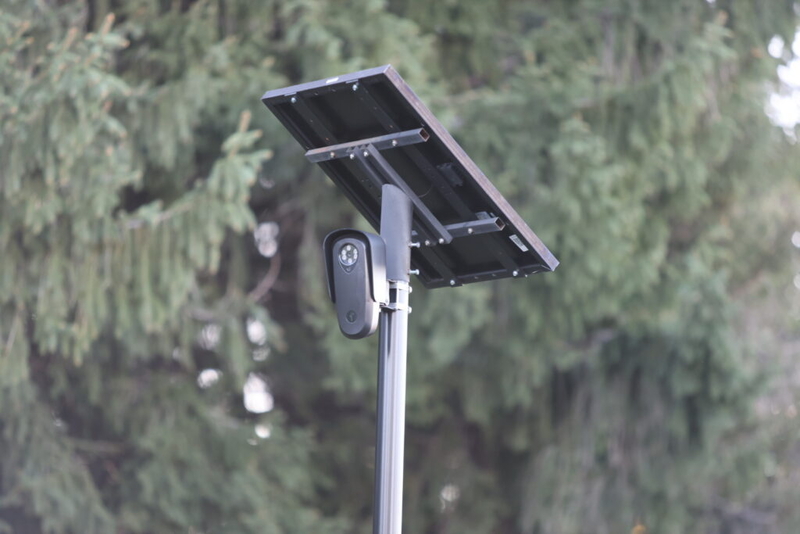
A view of an automated license plate reader. (Photo by Nathaniel Cline/Virginia Mercury)
New recommendations from the Virginia Crime Commission on governing automatic license plate readers will likely spark debate when lawmakers convene in January, as public calls for an immediate ban mount.
On Tuesday, the Virginia Crime Commission, which includes state lawmakers, recommended several changes to the ALPR state law focused on data sharing and penalties, but did not recommend a ban.
Cases of alleged misuse and local government disagreements over these crime-investigation tools have fueled proposals to ban the devices in the commonwealth. Earlier this year, Virginia Crime Commission staff found fewer law enforcement agencies were non-compliant with state law, but concerns remained, including prohibited data sharing in some cases.
Law enforcement agencies’ use of license plate reader data faces fresh scrutiny
“It’s important that there’s sufficient consequences, not just for individual police officers that are looking up their neighbors or boyfriends or girlfriends, or whatever, but also for the law enforcement agencies that don’t seem compelled to follow the laws that we pass,” Senate Majority Leader Scott Surovell, D-Fairfax, said at the meeting.
Hampton Commonwealth’s Attorney Anton Bell noted, however, that most ALPR violations do not involve personal misuse, such as accessing information about former partners. Instead, he said, they involve officers sharing information with other officers or agencies to address ongoing criminal activity.
“With this statute … we’re thinking of ex-boyfriends, ex-girlfriends, and they are accessing this information to use it in a nefarious manner, but that is not the majority of the violations,” Bell said. “The majority of the violations is a law enforcement officer giving that information to another law enforcement officer or agency to address a criminal act that is currently going on.”
As part of its ALPR package, the commission recommended that the General Assembly consider allowing data-sharing requests to be made electronically. State law allows data sharing under certain circumstances, but it does not allow electronic requests.
The commission also recommended treating each unlawfully shared record as a separate violation and establishing a $5,000 minimum civil penalty per violation, increasing the financial stakes.
The law establishes a Class 1 misdemeanor for intentional unauthorized access, use, or sharing of ALPR data, but does not include a financial penalty.
“There’s a lot of public concern,” said Bruce Cruser, commission member and an appointee of Gov. Abigail Spanberger, on Tuesday. “If we really want to try to address those concerns, we need to make the fine or the fee … it needs to reflect the importance of this violation.”
The commission voted to establish standards for officer decertification for unlawfully accessing or sharing ALPR data, with final procedures to be addressed during the legislative session.
In addition, the commission recommended expanding enforcement authority to local prosecutors and, in emergencies, allowing emergency data-sharing without a court order when there is an imminent threat of harm.
Ahead of the next General Assembly session, some lawmakers, including Sens. Glen Sturtevant, R-Chesterfield, and Lashrecse Aird, D-Henrico, have publicly expressed interest in banning the readers, signaling bipartisan interest in further action. Others have called for more transparency.
“The crime commission is proposing more guardrails for a surveillance system that never should have been installed in the first place,” Sturtevant said in a statement to the Mercury following the meeting.
“We tried guardrails last year, and we’ve already seen the abuses. But even if everyone followed the rules, these cameras would still be collecting information on where law-abiding Virginians drive. The government shouldn’t be building that kind of surveillance network.”
What’s next
Lawmakers will return to Richmond on Jan. 13 to discuss related legislation and proposals the commission endorsed, including a measure to allow attorneys to share unredacted records with defendants and procedures to scientifically test evidence discovered during the review.
They will also consider giving the panel authority to consult independent experts.
Lawmakers could also pursue reforms to clarify and streamline criminal record-sealing procedures, including a 30-day waiting period before automatic sealing takes effect.
They could also require individuals to petition the court to seal past misdemeanor dismissals, because electronic records cannot distinguish between complete dismissals and deferred dismissals involving admissions of guilt in serious cases.
Richmond, VA