National health experts dissect election wins, effects on healthcare policy
Nov 06, 2026 | 5:05 pm ET
Description
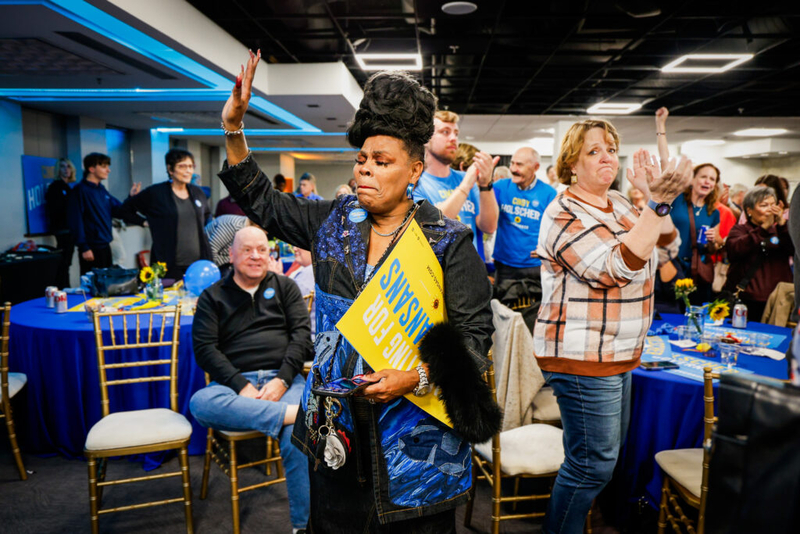
Janice Martin says, "Thank you, Jesus," after the news broadcast announced Adam Hamilton's win at Cindy Holscher's watch party Nov. 3, 2026, in Lenexa. As Democrats claimed wins across the country, political anaylsts began to consider what the new landscape in Washington, D.C., might mean for healthcare policies. (Photo by Baya Burgess/ Kansas Reflector)
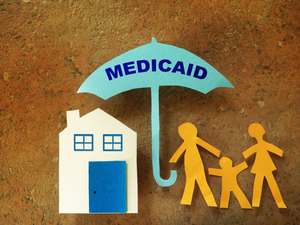
TOPEKA — A national health expert expects Democrats to quickly move to reverse Medicaid cuts passed in the One Big Beautiful Bill Act and to restore Affordable Care Act premium subsidies, which led to millions of people losing health insurance coverage.
“The size of this blue tsunami means huge expectations for Democrats, especially on healthcare because this was very much a healthcare election,” said Larry Levitt, executive vice president for health policy at KFF, a national nonpartisan healthcare policy institute, on a Thursday webinar during which KFF experts talked about what happens next after Tuesday’s election.
Healthcare was a key issue for Adam Hamilton, Kansas’ Democratic candidate and presumed winner of the U.S. Senate race against incumbent Republican Roger Marshall.
The big question as election results are finalized is whether Democrats can meet high expectations set for addressing healthcare issues, Levitt said.
Democrats will really only have the next year to make changes, because 2028 will be a presidential election year, in which Congress tends “not to do a lot,” he said.
“I would say the expectations for what Democrats can accomplish on healthcare should be tempered by the fact that President Trump will still be in the White House and has a veto pen,” he said.
Levitt still expects Democrats to promptly tackle the core issues of Medicaid and ACA premiums.
“I also expect President Trump to veto any bill that the Democrats pass to do this, if they are able to pass it,” Levitt said. “That takes us to the second path, which is kind of a game of 3D chess for Democrats to try to figure out what and how they can get President Trump to agree to restore some of these healthcare cuts.”
That could look like a delay of implementing ACA subsidy cuts or including Trump priorities such as health care savings accounts, he said.
A third path could look like “populist healthcare ideas” that might pull in bipartisan support, such as addressing drug prices, which tends to be popular with both sides, price transparency and breaking up big insurance conglomerates.
Amanda Seitz, Washington health policy reporter, said President Donald Trump shifted messaging several times in the first few days, appearing at times conciliatory and willing to work with Democrats, and then giving tours of his in-progress ballroom.
She said it’s doubtful Trump will go along with reversing cuts to Medicaid.
“Republicans really do view that as a signature achievement of this administration so far,” Seitz said. “However, I think we should be watching the rulemaking around Medicaid over the next couple weeks and months.”
The definition of Medicaid frailty is being challenged in court, and Medicaid work requirements are expected to go into effect Jan. 1.
“There’s going to be a lot of pressure now on this administration to take a look at that again, especially when you have state legislatures that are now turning Democratic as well,” Seitz said.
Democrats have created an 84-page working paper outlining healthcare policy, published by Politico in September, said Julie Rovner, chief Washington correspondent for KFF Health News. But she asked whether they have a plan to pay for what they outlined.
Levitt said that’s typically the sticking point on any legislation, and healthcare changes will be no exception.
“We’re talking about almost a trillion dollars over 10 years in the Medicaid cuts, hundreds of billions of dollars for restoring the ACA premium subsidies, and I think that’s going to be a big fight,” he said. “Probably a big fight among Democrats, even whether they should try to pay for it. Republicans didn’t pay for all of the tax cuts they passed, and if this is a bill that the president is likely to veto anyway, why fight over how to pay for it?”
However, Levitt said, Democrats are unified on those issues, as well as reversing tax cuts for wealthy people.
“That will be the first big fight, is whether Democrats pay for it, how they pay for it, and procedurally how they’re even going to proceed,” he said.
Rovner asked how sure anyone is that Trump will veto such bills.
“He’s obviously thinking about his legacy, and we know he likes to think about his legacy in terms of physical buildings like the ballroom and the reflecting pool,” she said. “Trump has proved very unpredictable in the past.”
Rovner pointed out that incoming senator from Michigan Abdul el-Sayed had said he’d be happy to name his health plan after Trump if it would get the president to sign it.
Levitt said he’s not sure Trump is particularly attached to Medicaid cuts.
“He said during the 2024 campaign that he wasn’t going to cut Medicaid,” Levitt said. “He wasn’t going to cut Medicare, right? So I doubt that was a priority for him. I don’t think we can necessarily predict exactly what President Trump would do on the Affordable Care Act.”
There also could be a shift from Republicans left in Congress, as the ACA premiums affected middle-income people above four times the poverty level, such as farmers, ranchers and small-business owners, traditionally Republican constituencies, Levitt said.
Topeka, KS