Colorado Connector officials look to finalize railroad agreements after voters approve tax hike
Nov 06, 2026 | 5:10 pm ET
Description
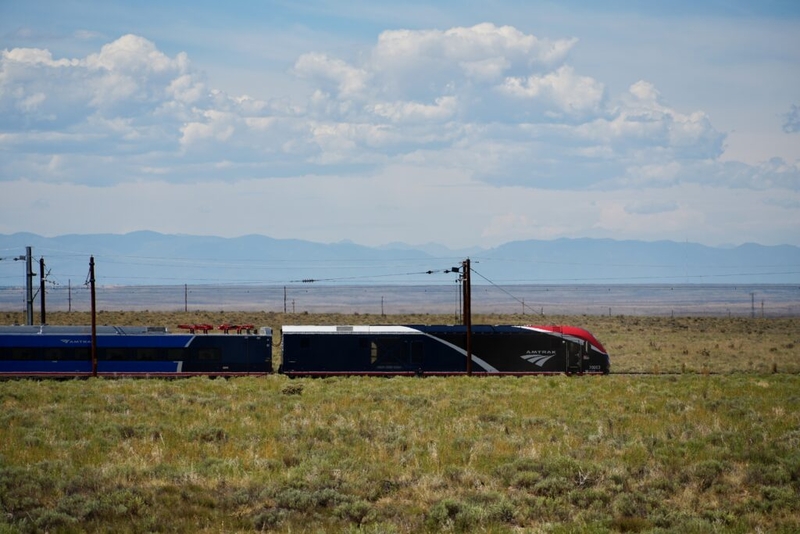
A next-generation Amtrak Airo train carries Colorado state and local officials for a ride on the test track at the federal Transportation Technology Center near Pueblo in August. (Photo by Chase Woodruff/Colorado Newsline)
Officials with Colorado’s Front Range Passenger Rail District will return to the negotiating table with their railroad partner next week fresh off a major victory at the ballot box, where the district’s voters approved a sales tax hike to fund its plans for a long-awaited restoration of passenger service along the Interstate 25 corridor.
Voters in the 31 Front Range municipalities that make up the district approved Issue 7A, imposing a 0.333% district-wide sales tax to fund the Colorado Connector service, known as CoCo, by a margin of 55% to 45%.
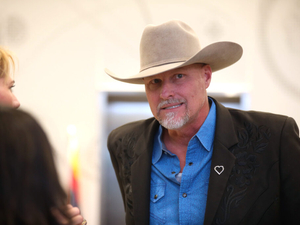
Sal Pace, the rail district’s general manager, called the vote a “historic win” for a project that has been decades in the making.
“It shows that Colorado believes in itself, and believes in the ability to do great things,” Pace told reporters after the victory. “And we’ve decided that we want to be connected, instead of allowing I-25 to continue to divide us.”
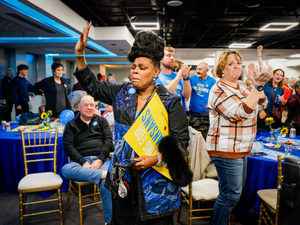
Colorado Gov. Jared Polis, who has championed CoCo as he prepares to leave office after two terms in January, celebrated with Issue 7A proponents on election night and said in a statement that the service “will connect Colorado communities, reduce traffic, protect our clean air, and save Coloradans time and money.”
Coloradans for CoCo, an issue committee that supported Issue 7A, raised about $1.3 million from donors including the Denver Broncos, Colorado Rockies, Conservation Colorado and liberal megadonor Pat Stryker.
The approved tax hike, equivalent to about 33 cents on a $100 purchase, will raise an estimated $295 million annually for “CoCo,” keeping it on track to launch along its full, 12-stop intercity route by 2032. Already, as part of a multi-phase plan finalized earlier this year, district officials said they had already secured enough funding to begin service between Denver and Fort Collins by 2029.
The northern segment is planned as a “joint service” in collaboration with the Colorado Department of Transportation and the Denver area’s Regional Transportation District, which has struggled for years to complete a Denver-to-Boulder commuter route, the B Line, first approved by voters in 2004.
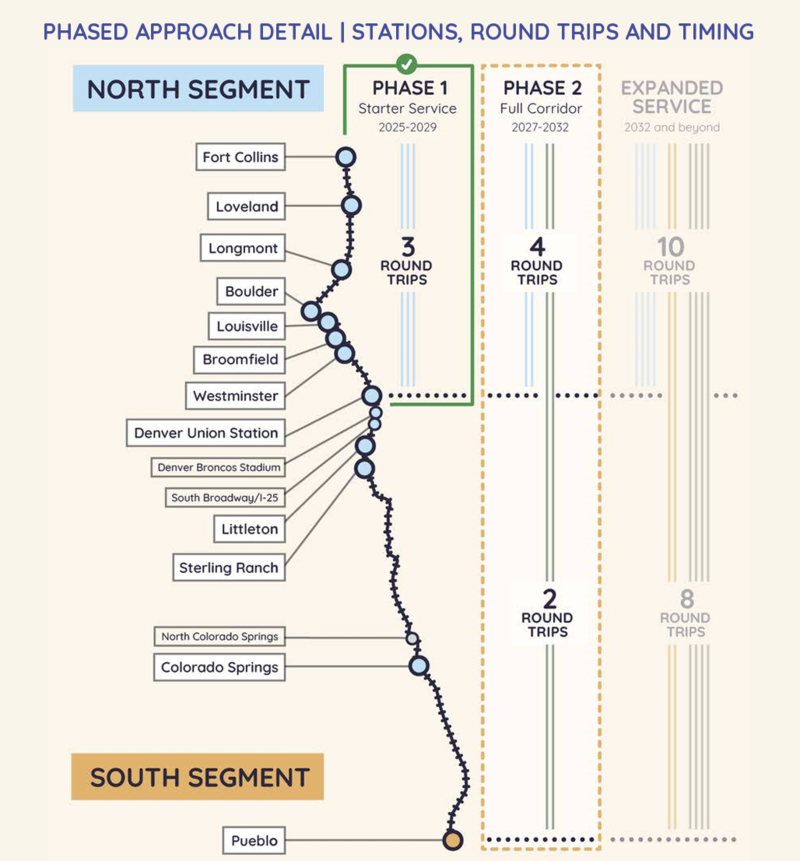
“Because of the success of the ballot measure, we’ll be able to have service everywhere within five years,” said Pace.
12 stops planned
The district’s full delivery plan calls for a gradual expansion to 10 daily round trips north of Denver and eight round trips on the southern segment. Permanent stations would be located in Fort Collins, Loveland, Longmont, Boulder, Louisville, Broomfield, Westminster, Denver, Littleton, Sterling Ranch, Colorado Springs and Pueblo. The plan also envisions special-event stops at the Broncos’ future home at Burnham Yards and the planned Denver Summit soccer stadium at I-25 and Broadway.
To follow through on that promise, the district will need to finalize access agreements with the CoCo service’s host railroads. An agreement is “close to wrapped up” for the northern segment, owned and operated by rail giant BNSF, Pace said, and those discussions will continue next week. BNSF and Union Pacific jointly own the southern segment between Denver and Pueblo, and those negotiations will likely begin in early 2027.
Along with station infrastructure and improved crossings, the track north of Denver needs to be upgraded with “positive train control,” a signaling and automated safety system that’s required under federal law for all rail lines with passenger traffic. The cost of such a system is the project’s “biggest single capital piece,” said John Putnam, chair of the rail district’s board.
After voters passed RTD’s FasTracks plan in 2004, the timely completion of the B Line was derailed in large part due to the unexpectedly high costs of leasing the tracks north of Denver from BNSF. But Pace and other state rail district officials have been adamant that their careful approach, which has included extensive engagement with the railroads about the service’s needs and design, will prevent history from repeating itself.
“We have laid all the groundwork,” Pace said. “We have a pretty good idea of what those railroads are going to be asking for, based on what we’ve already gone through with them over the last five years.”
Denver, CO