Taxpayers To Fund Mainland TV Host’s ‘Hidden Hawaiʻi’ Show
Oct 30, 2026 | 6:01 am ET
Description
Photo courtesy of Honolulu Civil Beat
Last fall, at the Sheraton Waikīkī Beach Resort, business owners, hotel executives and agricultural leaders gathered for a conference on Hawaiʻi’s culinary culture and food scene. With tickets sold at $250 a head, the glitzy event was filled with champagne and delicate dishes made by award-winning chefs.
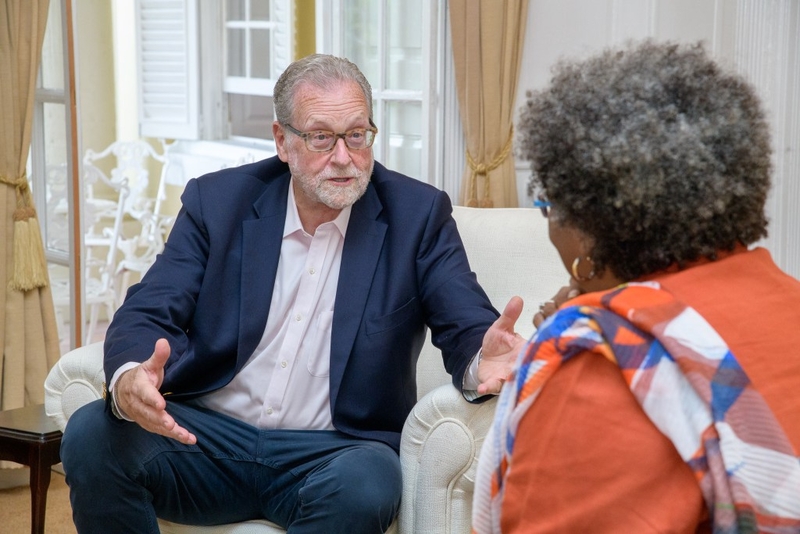
At the event, James Tokioka — director of the state department that oversees business, economic development and tourism — gushed about the keynote speaker, travel journalist Peter Greenberg, who he’d just met the night before.
Tokioka was quite taken with him. The two men talked for almost two hours.
“What a talent that guy is,” Tokioka said. “I was blown away.”
A year later, Tokioka’s agency awarded Greenberg a no-bid contract: Hawaiʻi taxpayers will spend up to $584,000 to support the production of Greenberg’s upcoming four-part show “Hidden Hawaiʻi.” Greenberg said that he proposed the project to the Hawaiʻi Tourism Authority. The state’s investment is meant to promote tourism, Tokioka said, but he acknowledged the return on investment for taxpayers may be indirect.
“It’s not going to benefit every single taxpayer,” Tokioka said. “But it will benefit the visitor industry when people in the Northwest or the East Coast see his show, and they think about Hawaiʻi… that makes people want to come here.”
However, at a time when Hawaiʻi’s film industry has been struggling for years, numerous local filmmakers say those state dollars would be better spent on a local production, and that contract should’ve been open for competition. A state program that offers funding to local filmmakers offers much smaller awards, up to $50,000 for large projects.
Mericia Palma Elmore, chair of the Film Production Tourism Standing Committee advisory board of the Hawaiʻi Tourism Authority, said that the news was a surprise to her and that no one on the committee received notice about the award.
“The idea of this going through with no bid was never brought to us,” said Elmore, who is also the executive director of the Hawaiʻi chapter of SAG-AFTRA, a union covering 160,000 workers nationwide.
“Why was an award given to a single production company, not Hawaiʻi-based, without any seeming review, competition, or explanation about how and why that was chosen?” said Jordan Kandell, president of the board of the Hawaiʻi International Film Festival whose screenwriting credits include co-writing the Disney animation “Moana.”
“It’s especially charged when someone from the outside comes in with a show claiming to show you the authentic side of a place,” he continued, “but it’s not based on anyone from our community.”
Greenberg said in an interview with Civil Beat that all of his crew members will be based in Hawaiʻi and that he has already contracted with a local crew for both production and post-production. He said that he is working with 80 different people across four Hawaiian islands for research.
“We made a decision a long time ago, for all of our shows, to maintain local knowledge and cultural integrity, that we only use a Hawaiian crew,” he said, adding, “So we're not coming in with an outside crew. We never do.”
Asked if he meant his crew would be Native Hawaiian or Hawaiʻi locals, Greenberg said he “hasn’t done an ethnic search yet, but everybody who's working on the crew lives and works in Hawaiʻi.”
Tokioka, director of the Department of Business, Economic Development and Tourism or DBEDT, said the deal was needed as part of the state’s efforts to attract the “more experienced and high net traveler" — the type of person who would watch Greenberg’s show.
He compared Greenberg to celebrity TV hosts Guy Fieri and the late Anthony Bourdain.
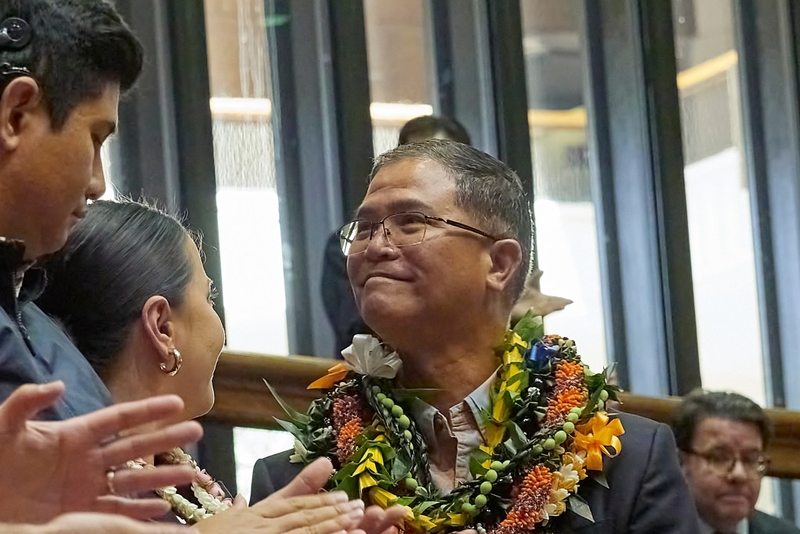
“If you talk to any single restaurant that Guy Fieri has been to in Hawaiʻi,” he said, “the sales have increased substantially.”
Greenberg said all his projects are funded by a mix of sponsors and public-private partnerships. He declined to say whether “Hidden Hawaiʻi’ could have launched without government funding.
The Hawaiʻi Tourism Authority will contribute up to $584,000 from its Regenerative Tourism Development budget, while private partners from the tourism industry will contribute an additional $250,000, according to David Uchiyama, chief administrative officer of the Hawaiʻi Tourism Authority. The final contract is still under negotiation. The state's contracting website states the award to Greenberg's project is actually $760,000. HTA officials did not respond to questions about that discrepancy.
In an interview with Civil Beat, David Uchiyama of the Hawaiʻi Tourism Authority, said it is somewhat unusual for the agency to fund a television show, but the goal of the expenditure is the same as any other marketing expense: Draw tourists to the islands.
HTA used to be exempt from the state’s procurement rules, which generally require contracts be bid out. But that changed in 2021 after a blistering 2018 audit found lax oversight and poor internal controls, including awarding sole source contracts based on questionable justifications. The auditor made a series of recommendations to increase oversight and accountability, including ensuring contracting of goods and services is “fair, competitive, and transparent.”
“Those recommendations continue to be important to ensure that HTA complies with procurement requirements and its work is in the State’s interest,” the follow-up audit states.
In a document outlining the reasons the contract should be exempt from regular procurement rules, the Hawaiʻi Tourism Authority acknowledged other production companies are “capable of producing travel-related content” but they wouldn’t have the prestige and name recognition of the “Hidden Hawaiʻi” brand.
The document states that the series will reach an audience of 103 million viewers over a span of three years across platforms such as PBS, Amazon Prime, YouTube and CBS.
Greenberg said that the show will begin shooting in January.
As a funder of the show, not a sponsor, the state of Hawaiʻi will not have editorial control over the program, he said.
The show, he said, is “not going to be an advertisement or a commercial or a promotion.”
Who Is Peter Greenberg?
Peter Greenberg is a longtime travel journalist and TV host known as “The Travel Detective.” He recently left CBS News where he was a travel editor. He hosts three travel shows through his private company Check Six Productions, Inc., and a radio show called Peter Greenberg Worldwide that also airs in Hawaiʻi.
His most well-known show may be the “Hidden” series, where he goes to places around the world, introducing viewers to what he characterizes as authentic spots, or local secrets that aren’t in historical guidebooks. Greenberg has filmed his shows around the world including in Tahiti, Hong Kong and Rwanda, amongst other locations. He’s previously filmed on Kauaʻi and Oʻahu.
Part of the episode of “Hidden Gems Kauaʻi” which aired in 2022, shows Greenberg at Hāʻena Beach Park, talking about how the island is embracing regenerative tourism, an approach that invites visitors to leave a place better than when they arrived, respecting local cultures and traditions.
“I guess maybe the double edged sword about this place is that it’s so beautiful, but it could be loved too much,” Greenberg said.
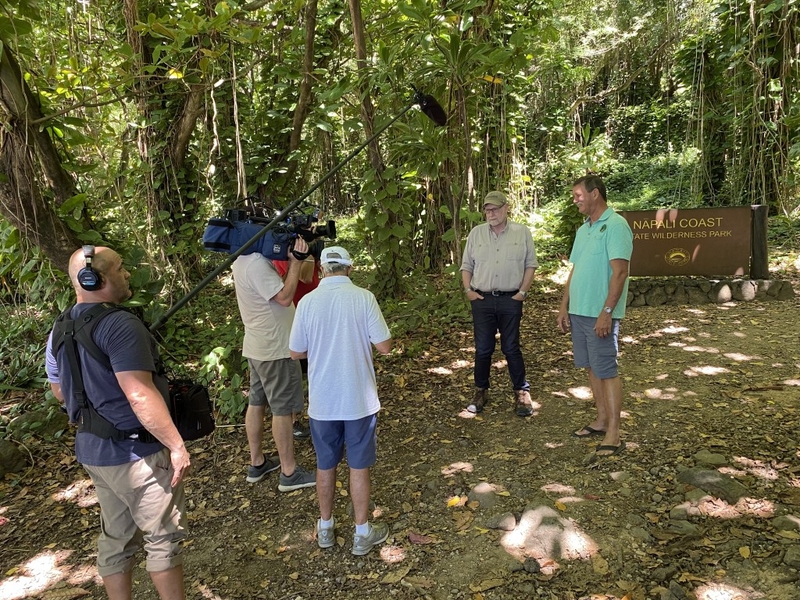
Sue Kanoho, retired former executive director of the Kauaʻi Visitors Bureau, said that she really enjoyed working with Greenberg at the time.
She said that Greenberg came to the bureau with a proposal, which is common. (For instance, they turned down the reality show "Love Island," Kanoho said). The bureau decided to partner with him for $50,000 of state funds to get the message out about the shift in their approach to tourism after the pandemic.
According to Kanoho, Greenberg hired one or two people locally and brought in his own team of about five people, including a producer and an assistant. Kanoho said that she pitched the storylines for the shows and Greenberg chose what he wanted.
“It was a partnership,” she said. “I didn’t want to pitch anything I didn’t want covered.”
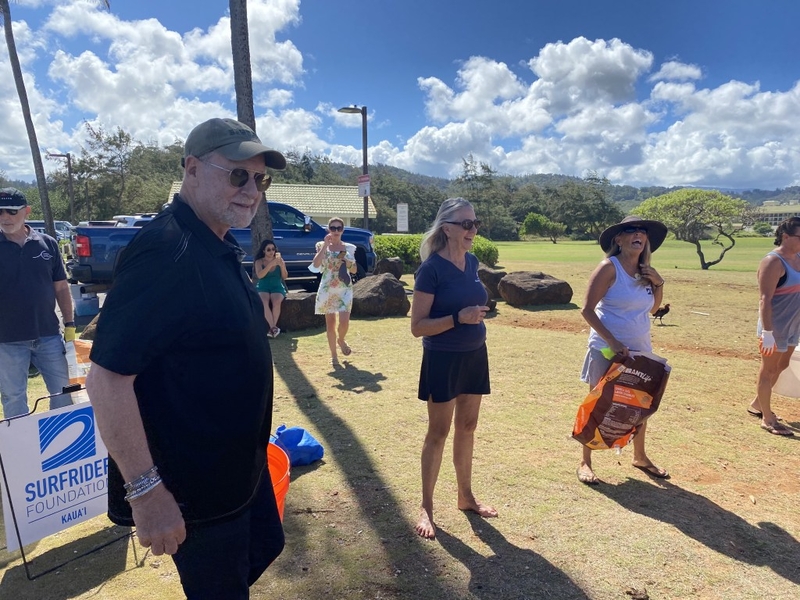
Greenberg is not new to Hawaiʻi. He first traveled to the state in 1973 when he was a correspondent for Newsweek, he said.
In his speech at the conference last year, Greenberg emphasized his personal connection to the Aloha State and noted his relationship with chef Roy Yamaguchi and his wife Denise, the latter of whom hosted the event.
“Somebody said, ‘You’re the only guy here who’s not Hawaiian. Well I have news for you: Most of my relatives are Hawaiian,’” Greenberg said, pointing out that Dave Rochlen, the founder of Surf Line Hawaii, a swimwear brand, is his uncle.
Rochlen was married to a Native Hawaiian woman named Keanuenue Ka'eo. They’ve both passed away.
In a 2018 episode of Hidden Oʻahu, he recommends Jams World as a great place to get Aloha shirts.
“The shirt’s local, and now, so are you,” he says into the camera, sandwiched between the bright colored Aloha wear.
He does not disclose in the episode that Jams World, owned by Surf Line Hawaii, was founded by his uncle, Rochlen.
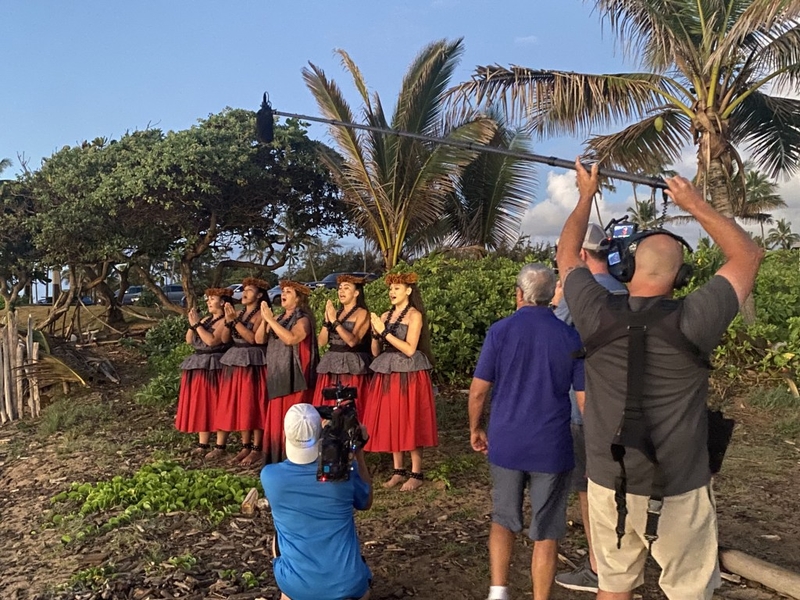
In past programs, Greenberg has struck a deferential tone with his hosts.
On one of his shows called “The Royal Tour,” heads of state play the role of the “ultimate tour guide.” In a 2014 episode filmed in Israel, Prime Minister Benjamin Netanyahu shows Greenberg around the country.
Throughout the episode, Netanyahu talks about his politics and his life, and Greenberg rarely pushes back. Netanyahu leaves out details on the founding of his country, including the 1948 Nakba when 750,000 Palestinians – roughly half the population – were expelled by force after World War II. The two men play soccer, ride in an IDF helicopter and feed dolphins together, occasionally joined by Netanyahu's wife and son.
Through a public relations staffer with the Hawaiʻi Ag & Culinary Alliance, Denise Yamaguchi said that neither of the organizations she represents is involved in the development or production of the "Hidden Hawaiʻi" series.
Local Filmmakers Offered Less Funding
Civil Beat spoke to nine local film industry professionals based in Hawaiʻi, many of whom did not want to speak on the record for fear of reprisal. But their questions about the no-bid award were strikingly similar: Is this fair?
“Off the top of my head, I can think of at least 10 to 15 Native Hawaiian filmmakers who are exceptionally capable and who would produce this to an excellent standard,” said Duncan Caillard, a researcher at the University of Melbourne specializing in screen industries in Hawaiʻi and the Asia-Pacific.
“It’s especially culturally inappropriate and in poor taste to have a series called ‘Hidden Hawaiʻi’ and not have it be produced by a Native Hawaiian.”
The local film industry has been struggling. It has contracted roughly 80% since the pandemic.
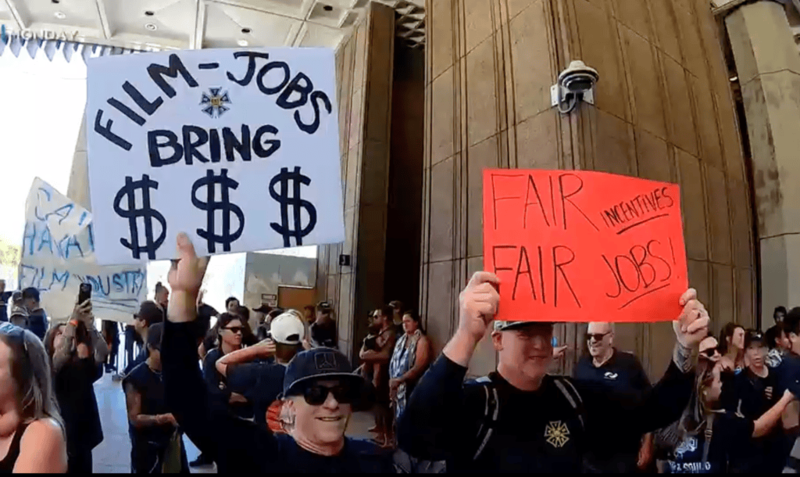
The frustration has been building for years. In 2022, the Legislature set aside around $850,000 in a special fund to seed projects by local filmmakers. It was a rare gesture toward independent filmmakers from lawmakers who each year approve tens of millions of dollars in tax credits for Hollywood productions.
It was not until the end of 2024 that the Department of Business, Economic Development and Tourism put out a call for proposals from local filmmakers for a pool of $400,000.
Of that, $100,000 was set aside for short films, with awards of $3,000 to $15,000. The state designated $300,000 for longer projects with awards ranging from $16,000 to $50,000.
Georja Skinner, chief of the department’s Creative Industries Division, said that they received 113 applications. Twenty-three, or about one in five projects, were chosen to receive funding.
Kandell, the screenwriter, said that he was notified that he would be awarded $16,000 for a project that he pitched with his brother.
But the process has been slow. Awardees were notified earlier this year — over a year after they applied — and the contracting process is still underway. For awardees, contracting was meant to be completed within four months of the date of submitting their applications.
In July, Gov. Josh Green signed Senate Bill 2580, which expands the state’s film tax credit. The new law increases tax incentives to $20 million per qualified production, with a cap of $60 million per year – a $10 million increase from the prior year. Productions with a workforce that is at least 80% local get an additional 5% credit.
“These amendments will expand opportunities for local talent, while sharing our stories with audiences across the globe,” Green said at the time of the signing.
But whether opportunities reach filmmakers here is another matter. A DBEDT study of projects that received incentives in 2020 found that only 30 of 174 above-the-line jobs — roles that guide creative direction such as directors, screenwriters and principal cast — went to Hawaiʻi residents.
Regarding "Hidden Hawaiʻi," DBEDT and Hawaiʻi Tourism Authority officials repeatedly said the reason Greenberg was awarded the no-bid contract was because of his reach and following.
But, local filmmakers asked, how can they ever make it to that level without any initial support?
Investments by the state in local film projects will pay dividends to the community, said Jennifer Varenchik, executive director of Hawaiʻi Filmmakers Collective, a non-profit supporting independent filmmakers in Hawaiʻi and the Pacific.
“It may not be a quick fix, and it might be putting up money initially,” she continued, “but if you put in that local investment, you will create something that will keep giving back time and time again.”
Honolulu, HI