Inflation hits Oklahoma road, bridge construction
Oct 22, 2026 | 5:48 pm ET
Description
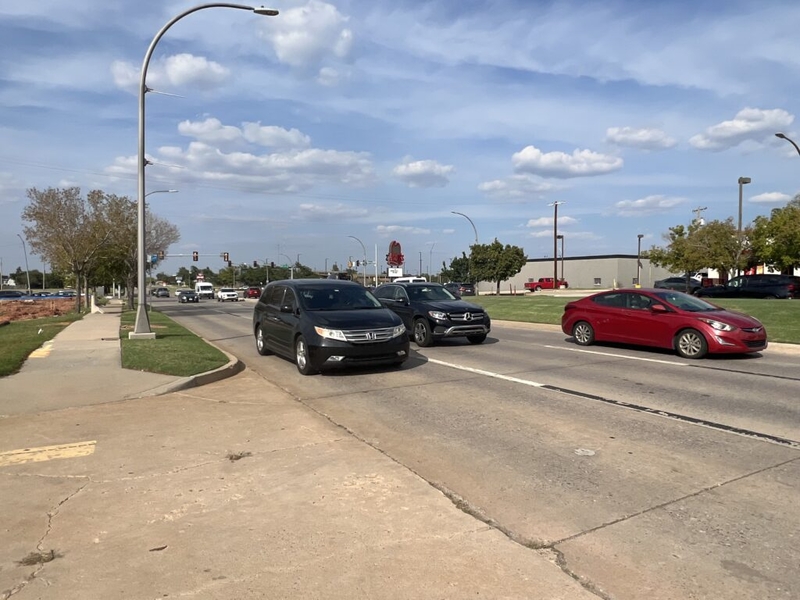
Cars travel southbound on North Lincoln Boulevard, east of Interstate 235. (Photo by Mindy Ragan Wood/Oklahoma Voice)
OKLAHOMA CITY – Inflation has taken a big bite into the state’s ability to maintain its roads and bridges, a legislative panel was told Thursday.
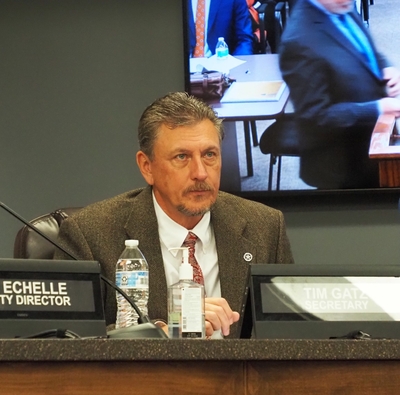
In what could be one of his last addresses to lawmakers before he gives up the reins at the Oklahoma Department of Transportation, Transportation Secretary Tim Gatz said the state is about $255 million short annually of what it needs to keep the system in the condition it is today.
“We are going to start to see more of the deterioration we have seen in the past,” Gatz said.
Oklahoma in recent years has made some notable progress, he said.
Oklahoma was able to reduce the 1,200 backlog structurally deficient bridges to about 35, he said, adding that it was due to a legislative commitment. Oklahoma has gone from ranking 24th or 25th in pavement condition to 16 or 17th, he said.
But rising inflation has had an impact, he said.
“We’ve seen the highway construction cost index rise as much as 18% in one year and the reduction that causes in your buying power is something that has already knocked us to our knees,” Gatz said.
Highway construction cost inflation is significantly higher than inflation for a loaf of bread and takes into account many factors, such as labor and materials, he said.
In 2021, $245 million would build and put shoulder on 100 miles of two-lane road, but today it would only cover 65 miles, Gatz said.
He said 2021 was an inflection point where everything changed. The state in 2021 and 2022 started to see inflation like it had never experienced, Gatz said.
For fiscal year 2027, the agency’s appropriation was about $837 million, but certain commitments, including a $3 million allocation for a new state plane, reduced that figure to about $778 million, he said.
Oklahoma’s eight-year construction program costs about $7.3 billion, which is less than $1 billion a year, he said, adding that 60% of it comes from federal highway dollars, which are facing a bit of uncertainty.
Oklahoma has 1,100 highway bridges that are 80 years old that need some attention, he said.
“We’re trying to make investments in them, but it’s going to be hard for us to catch up with that kind of deterioration in our infrastructure with flat funding and the longer you wait, the more it costs,” Gatz said.
The Oklahoma Turnpike Authority, like ODOT, has a number of aging bridges and turnpikes, said Trent January, OTA chief engineer.
The Turnpike Authority is in the midst of an $8.2 billion turnpike improvement and expansion project, financed by bonds which are retired with toll revenues. The original cost was $5 million, but inflation increased the price.
The agency needs to reconstruct 311 miles on the system which are not part of the turnpike expansion and improvement project, January said.
The cost is $1.9 billion in today’s dollars, January said.
Gatz discussed revenue enhancements being considered or implemented by other states.
Twenty-six states index motor fuel taxes to inflation or construction costs, Gatz said.
That is a difficult subject given the price of gas and diesel right now, he said.
Other states are talking about delivery fees on ecommerce, such as Amazon deliveries, he said.
A lot of states are implementing managed lanes, where a driver pays a fee to drive in a less congested and quicker lane, he said.
Some states are looking at a road user charge where a person pays per mile, Gatz said.
“We’re not ready for that yet,” he said.
Oklahoma’s gas tax is 20 cents per gallon, one of the lowest in the nation, Gatz said.
“We’ve got to diversify our funding,” Gatz said. “I promise you, there is no magic bullet that is going to come in and address it.”
Oklahoma City, OK