‘I want to live now’: Indiana death row inmate makes clemency plea ahead of execution
Oct 16, 2026 | 3:25 pm ET
Description
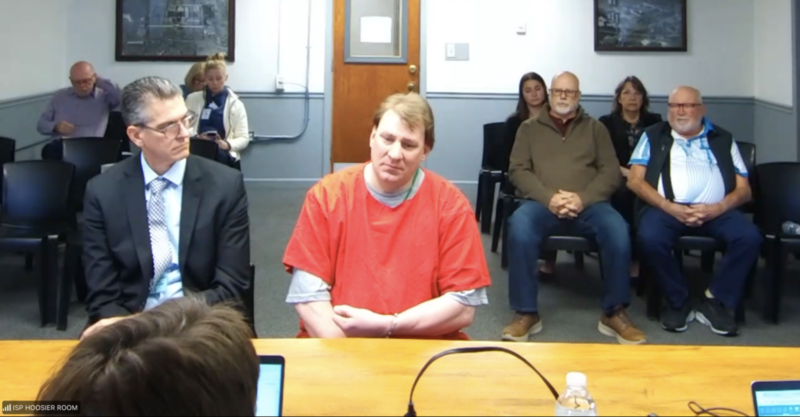
Jeffrey Weisheit answers questions during his Oct. 16, 2026, clemency hearing at Indiana State Prison in Michigan City. Board members questioned him about the murders of Alyssa and Caleb Lynch and whether he could safely serve a life sentence. (Screenshot from livestream)
Death row inmate Jeffrey Weisheit asked Indiana’s parole board Friday to let him live out his life in prison, but repeatedly struggled to explain why anger at his girlfriend led him to kill her two young children.
During 64 minutes of questioning at Indiana State Prison in Michigan City, Weisheit apologized for murdering 8-year-old Alyssa Lynch and her 5-year-old brother, Caleb.
He described placing a phone book on an electric stove burner, turning it on and leaving the house with both children still inside. He also spoke of his religious conversion and said he wants to keep helping others behind bars.

Board members pressed him on his account of the killings, his prison disciplinary record and his reluctance to seek mental health treatment while incarcerated. They repeatedly asked whether his struggles to manage anger, cope with stress and resolve conflicts could endanger other prisoners or correctional staff if his death sentence were commuted to life without parole.
“There is no excuse or explanation for what I did,” said Weisheit, 50, who appeared with attorney Joseph Perkovich.
The livestreamed interview opened the board’s consideration of his clemency request ahead of his scheduled Nov. 5 execution. Public testimony is scheduled Monday in Indianapolis. The five-member panel will then make a nonbinding recommendation to Gov. Mike Braun, who will decide whether to spare the inmate’s life.
Weisheit became noticeably emotional and cried while discussing Bible passages about Jesus healing and helping others, including the account of a Roman centurion whose servant Jesus healed.
But much of the hearing centered on the murders and what board members could rely on in assessing his request for mercy.
“The word sorry cannot be enough, but I am so sorry to Lisa Lynch and her family, and Steve Lynch and his family,” Weisheit said.
He said he thinks about the children every day and hopes to remain a son, brother and uncle to relatives who have continued supporting him.
Board members press for answers about killings
Weisheit was caring for the children while their mother, Lisa Lynch, worked the night of April 9, 2010. Firefighters found their bodies after responding to the burning Evansville home early the next morning.
A jury convicted him of two counts of murder and arson in 2013 and recommended a death sentence.
On Friday, Weisheit described financial strain, disagreements over caring for the children and his belief that Lisa Lynch had betrayed him. He said he had become consumed with thinking about the issue in the weeks before the killings.
He told the board that the children had watched a Disney movie and fallen asleep before he sent them to bed. He later spoke with their mother by phone.
Afterward, he said, he grew increasingly angry.
Caleb got out of bed wanting to play, Weisheit said. He acknowledged binding the boy with duct tape, putting a rag in his mouth to keep him from screaming and placing him on his bed.
Alyssa remained in her own bed, he said.
I don’t understand why I got so mad ... I can’t explain it.
Weisheit said he packed belongings into his car and decided to set the fire just before leaving. He denied setting the fire during his 2013 trial, court records show.
Court records also detail preparations he made before the killings: He stopped payments on an engagement ring, told the jeweler he was leaving the country, quit his job and withdrew the money in his bank account.
He fled to Kentucky, where police apprehended him following a high-speed chase.
Board members Friday questioned him about road flares found under and around Caleb’s body. Weisheit acknowledged buying flares and keeping them in the house but denied placing them near the boy.
He offered no explanation for how they got there. At one point, he speculated that police or emergency responders could have been responsible, without providing evidence for that suggestion.
One board member asked why he had not simply left the house without hurting the children. Another asked why he directed his anger toward them rather than their mother.
Weisheit said he could not hurt Lisa Lynch because she was pregnant with his child.
He repeatedly said he could not explain his actions. He also denied being under the influence of alcohol or drugs at the time.
“I don’t understand why I got so mad,” he said. “I just, I don’t know, I don’t know why, why I can’t explain it.”
A life beyond death row
Board members devoted much of the hearing to whether Weisheit could safely spend the rest of his life in prison.
Weisheit said he takes pride in his sanitation duties in the prison, focuses on keeping his surroundings clean and tries to help other prisoners. He described buying snacks for others on his unit and said he wants to continue contributing to the prison community.
“I want to live now,” he said. “I want to try to make things better as much as I can, especially in prisons, because I see how bad, like this prison, it’s managed.”
Still, board members questioned how he would manage conflict if he moved out of death row and into the prison’s general population, particularly if he had to share a cell.
Weisheit said he generally tries to find common ground with others and retreats to his cell when tensions rise.
Board member Mia Kelsaw asked what he would do if the source of conflict was his cellmate. Weisheit said he would try talking to the person and seek help from a correctional officer.
Chairwoman Gwendolyn Horth also questioned how statements about his Christian faith fit with his prison disciplinary record.
She noted an incident involving fecal matter. Weisheit denied throwing it at anyone, saying he had kept it in a cooler in his cell because he feared another prisoner would attack him. He said officers required him to empty it into a toilet.

He also disputed the circumstances of other incidents, including possessing a broken squeegee handle and blocking his cell’s lock with cardboard. He said he intended to repair the cleaning tool and used the cardboard because he feared other prisoners could enter his cell.
Those explanations prompted another board member to question how he would handle pressure in a different prison setting — and how the board could be assured he would not harm someone during another episode of distress.
Weisheit maintained that being around more people could be better than spending years with the same small group on death row. He said he gets along with the prisoners currently housed there, although they sometimes get on one another’s nerves.
“We’re the same five people,” he said. “We don’t get to see much of anybody else other than (correctional officers). And COs don’t like coming in because we talk them to death.”
Later, Kelsaw questioned why Weisheit had spent so much time discussing his relationship with Lisa Lynch and comparatively little describing the steps he took to kill the children. She also questioned why he had not taken advantage of available mental health services in prison.
Weisheit said he was afraid to discuss personal matters with counselors. By the end of the hearing, though, he said he would like to speak with someone.
“I wish you had have taken the opportunity to get some help, so that you could be able to figure out what in the world was going on with you,” Kelsaw said. “Every opportunity you have, you take what’s offered, and you work on you.”
Questions remain over brain injuries
Weisheit repeatedly attributed difficulties throughout his life to problems with his brain. He described childhood head injuries, trouble concentrating and fears about medication.
He said he was not taking psychiatric medication. When a board member asked about his bipolar disorder diagnosis, he continued to emphasize his belief that brain damage was the underlying problem.
His attorneys are seeking additional brain imaging and a two-week execution delay. They contend that evidence of brain injuries, mental illness and childhood trauma was not adequately developed in earlier proceedings.
The lawyers want MRI and PET scans and further analysis to help establish whether abnormalities preceded the murders. Weisheit also suffered a head injury when police used a Taser during his arrest and he fell. The extent and timing of earlier injuries have been disputed in court.
U.S. District Judge Sarah Evans Barker approved funding for further investigative work Sept. 16 but denied the transportation request Oct. 7. His attorneys have since turned to the Indiana Supreme Court, asking that his execution move from Nov. 5 to Nov. 19.
The state Supreme Court set deadlines for both sides to submit additional arguments on the transportation and scheduling requests. The state’s response is due at 4:30 p.m. Friday, and Weisheit’s attorneys have until 4:30 p.m. Monday to reply.
The court has not yet ruled on either request. Weisheit’s execution remains scheduled for Nov. 5.
Tears over Scripture
Asked about his faith, Weisheit said he had been baptized and had read the Bible seven times from beginning to end. He said he’s currently reading it again.
“I’ve made my peace with God,” he said. “I’ve talked to Him. I’ve got baptized.”
When Horth asked his favorite book, he described passages about Jesus helping people.
‘Jeffrey, I forgive you’: Father of slain children supports clemency for Indiana death row inmate
“My favorite parts are mainly when Jesus is helping somebody,” he said.
Weisheit became visibly emotional and cried while talking about his faith.
“I’m still learning,” Weisheit said.
He said he has cut back on swearing and tries to watch his words and behavior as he continues learning about his faith.
Horth acknowledged that faith near the hearing’s close.
“I love that you have found the Lord,” she said. “We all live in a broken world, but we will be in paradise.”
“But I want you to know that I do believe, from what I heard from you, that you have transformed and have that relationship right now,” she continued “I’m grateful for that.”
The board did not announce a clemency recommendation Friday and does not expect to before Oct. 23.
Public testimony scheduled for Monday
Friday’s interview followed a plea for clemency from the children’s father, Steven Lynch, who signed an affidavit supporting life imprisonment without parole.
“What good does it do the memory of my children to put this man to death?” Lynch wrote before concluding his affidavit with “Jeffrey, I forgive you.”
Perkovich previously emphasized that Lynch speaks for himself and does not represent the views of all the children’s relatives.
Weisheit was the first Indiana death row prisoner to personally answer the board’s questions in a clemency interview since Benjamin Ritchie in May 2025.
Joseph Corcoran did not seek clemency before his December 2024 execution. Roy Lee Ward declined a prison interview with the board last year, although his attorneys presented his clemency case during the public hearing in Indianapolis.
The board recommended against clemency for Ritchie, and Braun allowed his execution to proceed. Braun also denied Ward’s clemency request.
Weisheit’s execution would be Indiana’s fourth since the state resumed executions in December 2024 after a 15-year pause.
Under the current schedule, the board will hear public testimony Monday, Oct. 19, in conference rooms 1 and 2 at the Indiana Government Center in Indianapolis. Testimony supporting clemency is scheduled from 9 to 11 a.m., followed by testimony opposing it from 1 to 3 p.m.

Indianapolis, IN