Deer hunters welcome cooler, drier conditions as muzzleloader season starts
Oct 16, 2026 | 5:40 pm ET
Description
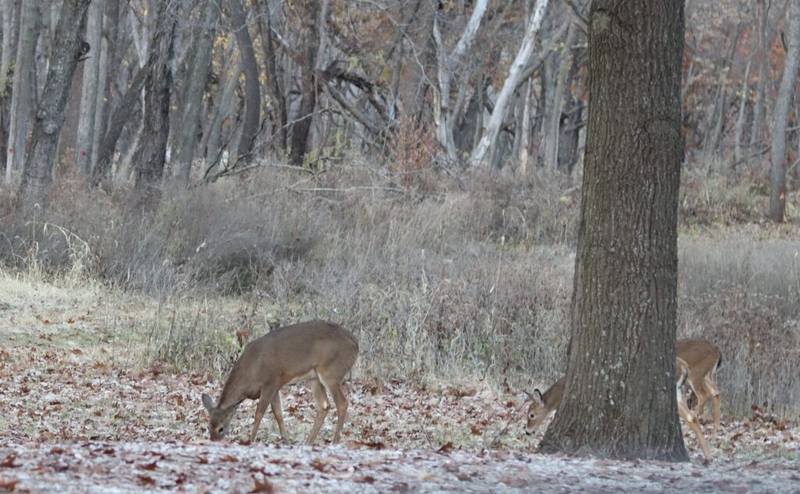
Several deer at Jester Park in Polk County on Nov. 7, 2024. (Photo by Karsan Turner for Iowa Capital Dispatch)
Cooler temperatures and harvested crop fields are welcome conditions for deer hunters in the state who have already started for the season or are gearing up to begin hunting, according to the Iowa Department of Natural Resources.
DNR tracks deer populations and hunter data throughout the year. Its 2026 spring spotlight survey, which scans for wildlife after sunset along gravel roads throughout the state, observed the lowest relative abundance of white-tailed deer in over a decade.
Jace Elliott, state deer biologist for DNR, said the spotlight survey findings are commensurate with what the department is hearing from bow hunters, whose season started at the beginning of the month. The state’s early muzzleloader season begins Saturday.
“Bow hunters are our most avid hunting group, spending the most time in the field,” Elliott said in a news release from DNR. “And what we’ve been hearing from them in recent years is they are seeing fewer deer throughout much of the state.”
The spotlight survey showed relative deer abundance declined 20% from 2025, and has the lowest estimated abundance since 2013. Deer populations declined across all regions of the state, though Elliott said “there is evidence” that deer populations in western Iowa are beginning to rebound.
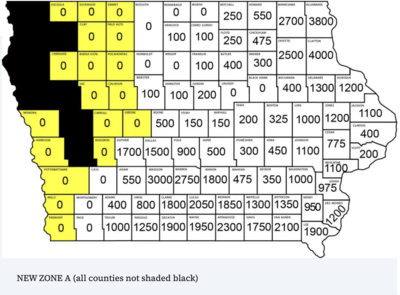
As a result of the observed population declines in the area, DNR implemented a new regional hunting zone this year in eight western Iowa counties that has limited quotas of county-specific licenses and a requirement to hunt antlered deer only.
All counties aside from Crawford, Ida, Lyon, O’Brien, Plymouth, Shelby, Sioux and Woodbury are considered part of Zone A and do not have the same restrictions, though there is an antlered-buck only restriction in certain Zone A counties during the first gun season. Hunters should consult DNR’s hunting guide for specific information before heading out to their tree stands.
According to DNR’s 2026 spotlight survey, the reasons for the decline in the relative abundance of deer in the state “remains unclear.”
While deer in the state continue to be exposed to epizootic hemorrhagic disease — an often fatal disease spread by small insects – reported mortality from the diseases were relatively low in 2025. According to the spotlight survey report, mortality rates from hemorrhaging diseases were higher in the last several years though the relative abundance of deer remained stable.
The survey said it is possible that unaccounted for landscape or atmospheric conditions impacted the count. DNR said the survey also observed very low numbers in 2012, but that numbers shot back up the following year at rates that were “biologically improbable.”
Chronic Wasting Disease continues to impact deer in Iowa and DNR tracks the disease with the help of hunters and additional population management in areas with high observations of the disease. However, CWD was not listed as a reason for the population declines across the state.
According to DNR data, 192 deer in 29 counties tested positive for chronic wasting disease in 2025. The highest concentrations of the disease were detected in eastern and south-central Iowa. So far in the 2026-2027 hunting season, DNR’s database shows more than 240 samples have been taken, but none have been confirmed positive for the disease, which is always fatal to deer.
Population, hunting, disease and car collision data gathered by the department helps inform deer management plans, county antlerless deer quotas and deer license types. The department’s management priorities for the current hunting season are primarily to maintain deer population in most of the state and to increase population in western Iowa.
Hunters harvested 101,919 deer in the 2025-2026 season, which was a 1% increase from the previous year, according to DNR’s latest deer program report. While gun season harvest last season had around 5% lower harvests from the year prior, bow hunters harvested about 4% more deer last year than the year before.
DNR said “Mother Nature hasn’t been cooperating” with bow hunters this fall as the state has seen warmer weather and near record-high rain totals in September.
Elliot said bow hunters, whose first season stretches to Dec. 4, are “are getting excited” by cooler temperatures and a break from the rain.
“Due to all the rain, natural forage has been really prevalent this year and deer seem to be remaining in the timber where they have ample cover and food,” Elliot said.
Drier conditions the past couple of weeks have allowed farmers to make some progress on harvest, which Elliot said will also be beneficial for hunters.
“Deer are still disbursed, but that can change as the crops come out and temperatures drop,” he said.
Des Moines, IA