In race for Idaho attorney general, a Democrat is trying to unseat a longtime Republican official
Oct 16, 2026 | 6:15 am ET
Description
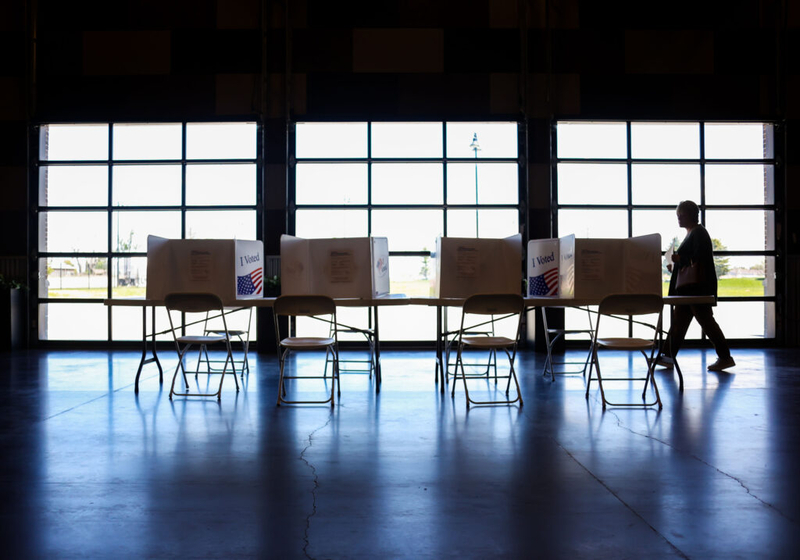
Voters cast their ballots during the May 19, 2026, primary election at The Waterfront in Idaho Falls. (Photo by Pat Sutphin for the Idaho Capital Sun)
Democratic candidate for Idaho attorney general Lori Hickman says she has a long track record of being a straightforward attorney who is running to keep politicization out of the office — something she says her opponent hasn’t done.
But Raúl Labrador, the Republican incumbent running for a second term, says he transformed the office for the better — pointing to his legal victories defending state laws in court — in part because he followed through on a promise he made when he first campaigned: being an aggressive attorney general.
The two will be on the ballot in the Nov. 3 general election.
The attorney general is an elected office that serves as the state’s top attorney, which includes defending the state and its laws in court, and serves on the Idaho Land Board, which manages state endowment lands. The attorney general serves a four-year term and receives an annual salary of $146,730.
In a Republican-controlled state, Hickman’s election bid faces tough odds. Voters in the state last elected a Democrat to statewide office in 2002, for the superintendent of public instruction. The state last had a Democratic attorney general more than 30 years ago.
Who is Lori Hickman, Democratic candidate for Idaho attorney general?
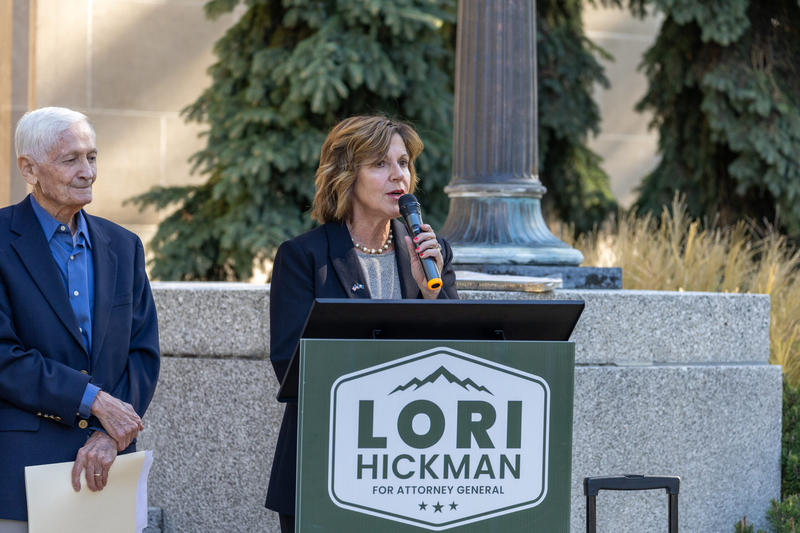
Hickman, 61, is an Idaho attorney with two decades of experience, including at global tech company Micron and as a clerk in Idaho’s federal courthouse, the U.S. District Court for the District of Idaho. She hasn’t run for public office before.
She spent her childhood moving around the country as part of a military family. She said she has lived for 30 years in Idaho, where she said her family has deep roots. In 2013, she joined the Boise-based law firm McFarland Ritter as an attorney focusing on business negotiation and litigation.
She served as board chair for Mormon Women for Ethical Government, a nonpartisan and 501(c)(4) faith-based nonprofit organization that joined a lawsuit unsuccessfully challenging an Idaho law that established tax credits for students to attend private, religious schools. Hickman said the people she encountered in her involvement in that group encouraged her to run for the attorney general’s office.
Though she’s running as a Democrat, she says she wishes the race was nonpartisan, like elections for judges in Idaho.
“A good attorney just follows the law, wherever it goes,” Hickman said in a recent interview.
Before filing to run, she said she was a registered Republican so she could vote in the state’s closed GOP primary elections. But Hickman said she joined the race as a Democrat because she felt she didn’t have enough time to gather 1,000 signatures to run as an independent, or to mount a competitive campaign for the Republican primary election in May, where Labrador ran unopposed.
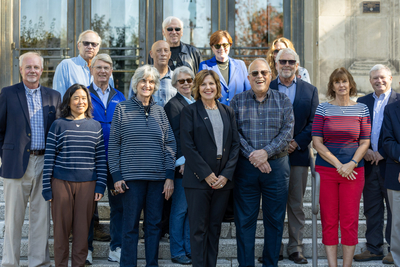
Earlier this month, Hickman announced a slate of endorsements from dozens of former deputy attorneys general, including a handful who left the office around the start of Labrador’s first term. Those endorsements also include two former Republican Idaho attorneys general: Lawrence Wasden, the state’s longest serving attorney general, and Jim Jones, who also served on the Idaho Supreme Court and is a frequent critic of Labrador.
On Thursday, she announced endorsements from more Republicans in Idaho, including former Republican state Rep. Julie Yamamoto, former Republican Idaho Secretary of State Ben Ysursa, and former Sergeant at Arms of the U.S. Senate Gregory Casey, who served as chief of staff to former U.S. Sen. Larry Craig, R-Idaho.
If elected, Hickman would be the state’s first female attorney general. She is a member of The Church of Jesus Christ of Latter-day Saints.
At a news conference announcing her endorsements, she talked about her vision for the office.
“Idaho deserves an attorney general who practices law, not politics,” Hickman said.
“I have over 20 years of legal experience as an attorney, seeking results, not headlines. I never planned on running for office. But as anyone here standing beside me can tell you, the attorney general’s office has lost its way and lost focus on serving the people of Idaho. Under my leadership, the office of Idaho’s attorney general will once again be a zealous advocate for the state of Idaho and for all of its citizens.”
Who is Raúl Labrador, the Republican candidate for Idaho attorney general?

Labrador, 58, is an attorney and has held elected offices as a Republican in Idaho for nearly two decades.
Between 2006 and 2010, he served two terms in the Idaho House of Representatives, before running for the U.S. Congress.
In 2010, he defeated the last Democratic congressman elected in Idaho, Walt Minnick, in the general election. Labrador went on to serve four terms in Congress, and was a founding member of the House Freedom Caucus, a group of conservative lawmakers. Born in Puerto Rico, Labrador was the first Hispanic person to represent Idaho in Congress.
In 2018, instead of seeking re-election to Congress, he ran unsuccessfully for governor, losing out to now-Gov. Brad Little in the GOP primary election.
“I thought I was done with politics,” Labrador recalled in an interview this week at his office in the Idaho State Capitol.
But soon, Labrador said attorneys general in other states encouraged him to run for the office in Idaho. So he did, saying he believed the incumbent, 20-year GOP attorney general Wasden, wouldn’t seek re-election. They both ran, and Labrador defeated Wasden in the 2022 Republican primary election, and won in the November general election.
Labrador said he set out to transform the Office of the Attorney General by being an aggressive attorney for the state. And nearly four years later, he said he’s proud of what he’s accomplished — pointing to his work to address a backlog of tips for child sex abuse material cases, and to improve legal strategies in court cases.
“I made a bunch of promises to the people of Idaho of what I was going to do in the Office of Attorney General,” Labrador said. “I told them that I was going to be more aggressive. I thought that we were going to be more successful. I told them that we were going to create an office of solicitor general, and that I was going to leave the office better than I found it. And I think in every single way, the office has improved from the prior administration. (It) has been more successful. We’ve won more cases. We have helped not just the state debate but the national debate on some of the most important issues of the day.”
He is also a member of The Church of Jesus Christ of Latter-day Saints.
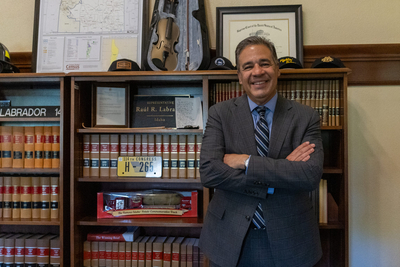
On a bookshelf lined with books of state laws in Labrador’s office, a golden fiddle sits as a reminder of legal victories his office portrayed as defeating Satan. The fiddle, which Labrador said was a gift, is a nod to the song “The Devil Went Down to Georgia.”
He dismissed criticisms of his actions as, in part, fear of change. He cited a quote by former Alabama football coach Nick Saban.
“He said something that I think applies to this situation, many situations in life. ‘Mediocre people do not like high achievers,’” Labrador said. “And I came in. I started doing things better than were being done before. And they’re mad that things are actually going pretty well in this office.”
Candidates clash over legal opinions to lawmakers
In his first term in office, Labrador has faced criticism about his actions as attorney general — including investigating a state agency he legally represents, the Idaho Department of Health and Welfare.
Hickman’s campaign touches on many of those developments and has criticized Labrador’s office for not providing written legal opinions to lawmakers, which state law outlines as a duty of the attorney general. She said those opinions, which can assess the enforceability or constitutionality of a proposed bill in the Idaho Legislature before it passes, are “the way a good government runs.”
“Do your job at the front end, and provide that legal guidance and analysis that they need — (which) is required by statute — because that’s the way a good government runs,” Hickman said. “… The Legislature’s doing its job, and because they’re passing laws that affect every single Idahoan, then make sure those laws are legally sound and they’re not running afoul of Idaho’s Constitution or the federal Constitution, or other laws or statutes.”
Labrador said he is still providing those opinions to legislative sponsors of bills — not to critics in the Legislature who want to “attack” a bill.
Back when he was in the Legislature, he said he remembered seeing dueling opinions from different attorneys in the attorney general’s office.
“To me, that was almost close to malpractice to use this office to go attack somebody’s bill that you were then going to have to defend in the courts later,” Labrador said.
Now, when Labrador says he has bad news for a lawmaker who asked for legal advice, he said he verbally relays the bad news — and asks if they want it put in writing.
“Because the law also says that if I put it in writing, it has to be then published — it’s a public record,” he said. “So I said, ‘Do you want me to tell them that your bill sucks?’ And most of them say, ‘No, it’s OK. Thanks for letting me know.’ And they either go change it or just scrap it or something like that.’”
He says he’s fulfilling his legal duties, and that it is better for the state because he has an improved relationship with the Legislature.
“Some people are mad. … Because this office was being allowed to be used as a political weapon, (bill critics) don’t like it. But most of the legislators are thanking me,” he said. “They’re like, ‘Great, this is the way I wanted to have a relationship with the office of attorney general.’ Because then I’m actually an assistance to the Legislature, not a weapon to be used against the Legislature.”
That shift has also, Labrador says, helped the state in court. He said a critical legal opinion issued under his predecessor on Idaho’s first-in-the-nation ban on transgender athletes was cited by the groups suing over the law in 2020. Years later, the U.S. Supreme Court upheld Idaho’s law.
Labrador said he doesn’t agree with every law he defends. But if it passes, he said, “I’m going to defend it.”
Hickman has her own story about the importance of legal opinions from the attorney general’s office.
More than a decade ago, her daughter, Ilah Hickman, spent years advocating in the Legislature to name the Idaho giant salamander as the state’s official amphibian.
At the time, some lawmakers had worried that the symbolic declaration could invoke environmental protection laws. A legal opinion by the office of Wasden, Labrador’s predecessor, helped clear the air, the Spokesman-Review reported.
Back then, Hickman remembers other lawmakers scoffing at the concerns.
But the experience proved a quirky reminder of the attorney general’s role.
“That was how she learned about it and how I realized: Oh yeah, the lawyer’s giving out good advice, and it doesn’t mean they have to take it. But at least it’s written, and it’s in the record,” Hickman said.
“Hopefully, it is a behind-the-scenes role too — not making headlines, not having sound bites on any news shows or anything like that,” she continued. “If lawyers are doing their job, they’re kind of in the back room, boring, like accountants, like just like doing the good job of protecting and representing Idahoans to the best of the lawyer’s ability, without having it be some big flashy, headline-making part of running our good government here in Idaho.”
Hickman also cited a legal opinion Labrador wrote on Idaho’s abortion laws to a state lawmaker — which sparked a lawsuit that ended with the state paying nearly $400,000 in legal fees. The lawsuit was brought by a Planned Parenthood affiliate.
Labrador pushed back on the characterization.
He said his office told the court his office withdrew that opinion because it was incomplete. The opinion said medical professionals who refer or prescribe abortion pills to pregnant patients across state lines are subject to criminal penalties under Idaho’s strict abortion ban. And Labrador said the fines his office paid in the case — which ended in a legal agreement last year — pale in comparison to the $300 million his office recouped in his term, and to the millions of dollars in legal fees that he said his predecessor’s office paid in litigation in his last term.
That opinion, Labrador said, was part of what inspired his shift in providing written opinions to lawmakers.
“It’s one of the reasons, actually, I don’t write letters, because I noticed that the courts were going to treat everything that came from this office differently than my predecessor,” he said. “Because my predecessor … one thing that has changed dramatically, is he loved to acquiesce to the other side. We lost a lot of cases in Idaho because he would concede the point that the other side was making.”
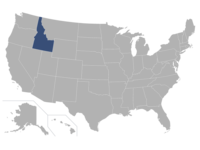
Boise, ID