Jackson outraises Collins, but has less cash left
Oct 16, 2026 | 10:07 am ET
Description
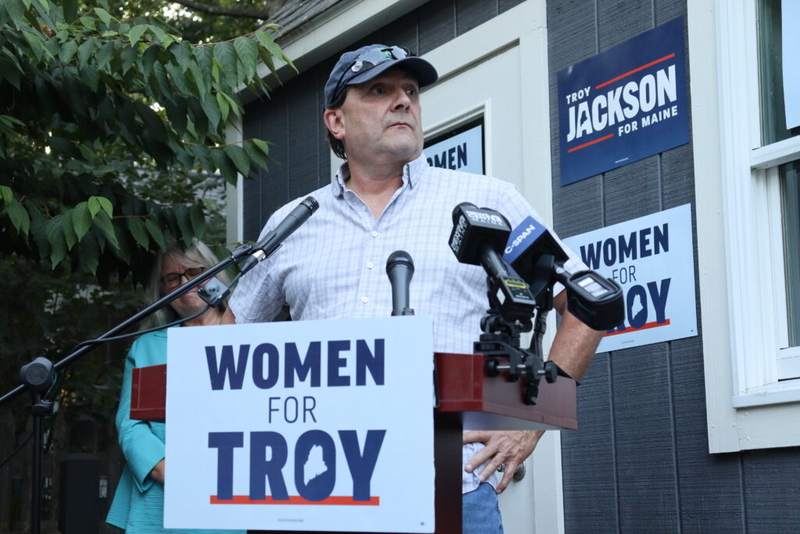
Democratic U.S. Senate nominee Troy Jackson addresses voters at the "Women for Troy" launch in Brunswick on Aug. 26, 2026. (Photo by Emma Davis/ Maine Morning Star)
Democratic nominee for U.S. Senate Troy Jackson raised four times as much as Republican U.S. Sen. Susan Collins since July. But he now has less cash left than the incumbent.
The latest Federal Election Commission filings due Thursday provide the first full look into Jackson’s campaign’s finances, since he replaced former Democratic nominee Graham Platner in late July.
While the late entrant was able to raise nearly $20.4 million in three months, his campaign spent about $16 million already, leaving him with just under $4 million cash on hand at the end of September.
Meanwhile, Collins raised $5.2 million from July through September. She had $11 million cash on hand at the end of June. Over the past three months, her campaign spent nearly $10.9 million, leaving her with just under $5.4 million.
Jackson also owes about $1 million to media and consulting companies, while Collins has no outstanding debt, according to the latest filings.
Jackson, a former logger and union member, received donations from several organized labor PACs and some of his former opponents in the brief race to replace Platner as the nominee, including Jordan Wood and Dan Kleban. Most of what he raised from individuals came through ActBlue. Jackson’s campaign touted in a press release that nearly 95% of his contributions were under $100.
Collins received several contributions from prominent national figures, including former Republican President George W. Bush, whose family has a compound in Kennebunkport, and U.S. Secretary of Education Linda McMahon.
Both candidates’ contributions as disclosed in these filings largely came from out of state.
These direct campaign contributions are only one part of the overall funding picture. Republican-aligned groups are still far outspending Democratic-aligned ones when it comes to ad buys in the race.
Platner’s spending after his exit from the race following an accusation of sexual assault, which he has denied, was also made known in his latest FEC filing. His campaign paid his wife more than $20,000 for “severance payroll,” which was part of more than $350,000 the campaign paid to staff for severance.

Augusta, ME