Legislators say Laurel could be breaking federal law
Oct 15, 2026 | 2:22 pm ET
Description
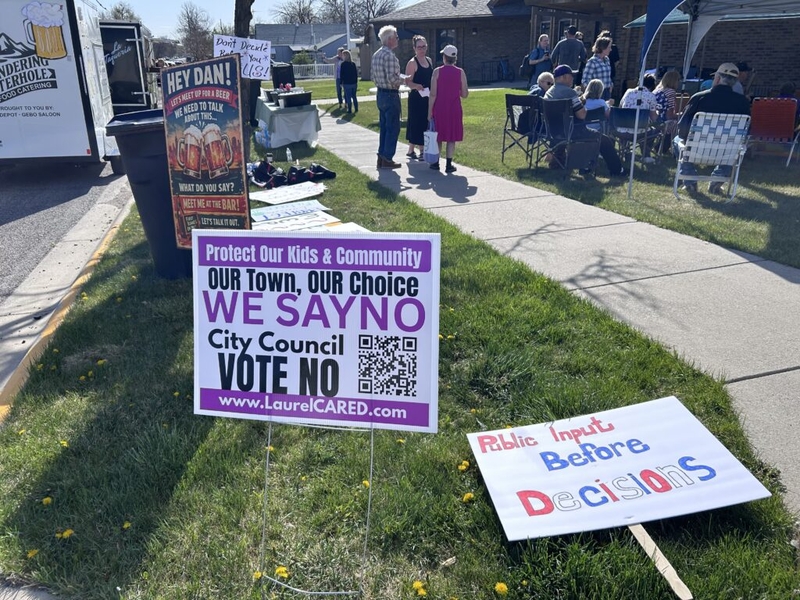
Signs line the lawn of the Laurel Public Library as community resident gather before a listening session on a proposed state psychiatric facility. The meeting happened on April 22, 2026 (Photo by Darrell Ehrlick of the Daily Montanan).
Montana legislators accused the City of Laurel of potentially breaking federal law in a fight over a mental health facility outside of the city in a meeting and a letter to the local government earlier this month.
Legislators in the Long Range Planning Interim Budget Committee also threatened to withhold municipal funding following a moratorium Laurel unanimously passed last month that halted annexing any land so it can study the city’s water system. Those issues also include aging infrastructure, fire protection problems and areas of low water pressure. There’s also been problems with the city’s water intake from the Yellowstone River.
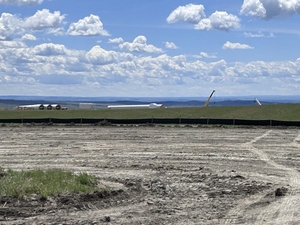
State plans call for building a 32-bed mental health facility at the edge of Laurel city limits in Yellowstone County. Laurel residents have pushed back on the proposal citing problems they say could arise when the facility is built, including concerns the city’s utilities won’t be able to keep up.
City officials say they pressed pause on annexation applications so Laurel can study its water system. Some legislators, meanwhile, say the city is discriminating against those with mental illnesses and could be breaking federal law.
A letter sent from the Long Range Planning Interim Budget Committee to Laurel and Montana’s congressional delegation says the city’s decision “essentially means the city will not provide water service to the proposed new mental health facility for forensic patients” and goes on to say the ordinance was “discriminatory.”
State officials decided during the summer to place the facility outside Laurel. Onsite work at the facility has been paused while a lawsuit over the construction proceeds.
The letter from legislators to the City of Laurel says the action “may subject” the city to a lawsuit for violating federal law. Legislators unanimously approved the letter during an Oct. 8 committee meeting.
Additionally, during that meeting, legislators by a 4-3 vote approved a “global motion” to direct the legislature to consider not directing any funding to any municipality under investigation for violations to the Americans with Disability Act, the Fair Housing Act or the Montana Human Rights Act.
The vote does not immediately strip any municipalities of any funding but means the issue of whether cities under federal investigation are eligible for state money will be taken up by the Legislative Finance Committee when it resumes during the 2027 session. Laurel was the only city discussed during the meeting.
“The legislature is not going to investigate the city of Laurel,” said John Esp, a Big Timber Republican and chairperson of the committee. “Somebody’s going to file a complaint on fair housing grounds, or on Americans with Disabilities grounds, or with the Montana Human Rights Commission, and while they’re under investigation by the Human Rights Commission or some federal agency, that’s when the prohibition on getting state money kicks in.”
Any sort of penalties wouldn’t begin unless the Legislature passes a bill to that effect next session.
When asked if any complaints have been filed against the City of Laurel, a Department of Labor and Industries employee within the Montana Human Rights Bureau directed the Daily Montanan to file a records request, which it has done. Federal Fair Housing Act violations would fall within the U.S. Department of Housing and Urban Development, while Americans with Disabilities Act violations are investigated by a variety of federal entities.
In a five-page response to the lawmaker’s letter, Laurel Mayor Kris Vogele said he disagrees with the legislators, and expressed concern about any potential loss of funding. Some legislators worried the motion could negatively impact cities that are under investigation but end up not having broken federal law. Laurel receives millions of dollars in state funding per year, though city officials said they weren’t sure how much.
For example, per the Montana League of Cities and Towns documentation, cities are projected to receive about $26 million in roads funding from the state, which is protected by statute. Laurel is projected to receive about $300,000 from that funding stream.
The legislative motion made by Sen. Ellie Boldman, a Missoula Democrat, said “that the legislature not consider or fund any local government request while under investigation for discriminating against a state facility.”
“Our intent right here on this call is to encourage the City of Laurel to take a look at this on their own,” Boldman said during the meeting, “so that nobody has to withhold anything.”
In a separate email to media members, Vogele said the committee was advancing a “deeply troubling allegation.”
“These are extraordinarily serious accusations, made with potentially far-reaching consequences not only for Laurel, but for communities across Montana,” Vogele wrote in a statement. “An investigation is not a finding of wrongdoing. An allegation is not proof of discrimination. And a Montana community should not risk losing state funding simply because its elected officials raise legitimate questions about whether its infrastructure can safely support a major state project.”
The Laurel response also references a 95-page document the city sent the state regarding its environmental assessment of the mental health facility property. That document, sent to the state in September, asks for more assessment of the site “to establish a complete and supportable record.”
The mental health facility has been an issue in Laurel for more than a year, and some residents have also expressed worry about the impacts to the city’s sewer and water systems, while others have been concerned about its location within a mile of an elementary school.
Helena, MT