Republican’s push for initiative restrictions criticized in Arkansas secretary of state debate
Oct 15, 2026 | 4:20 pm ET

Description
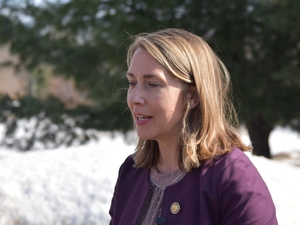
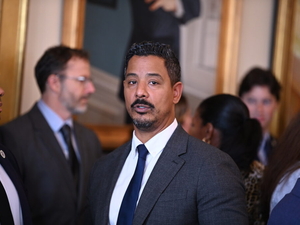
Arkansas Secretary of State candidates Kelly Grappe (D), Sen. Kim Hammer (R), and Michael Pakko (L), meet on Thursday, Oct. 15, 2026 to debate at the Arkansas TV studios in Conway, Arkansas. (Photo by Katie Adkins/Arkansas Advocate)
Arkansas Republican Sen. Kim Hammer defended his stances on noncitizen voting and restrictions on the state’s ballot initiative process during a televised debate against his two opponents for secretary of state Thursday.
Democrat Kelly Grappe and Libertarian Michael Pakko said during the debate on Arkansas TV that they agreed with a federal judge’s ruling that several 2025 laws restricting the initiative process Hammer sponsored are unconstitutional.
The laws declared unconstitutional imposed requirements including that canvassers request photo ID from signers and that paid signature-gatherers’ home addresses be provided to the state. The case is under appeal.
Hammer said the ruling was “one judge’s opinion” and the purpose of the laws was to protect the state’s constitution. Grappe and Pakko disagreed.
“You don’t do that by passing laws that are unconstitutional in and of themselves,” Pakko said.
Federal judge rules Arkansas initiative restrictions unconstitutional
Arkansas is one of two dozen states that allow the public to propose and vote on their own laws and constitutional amendments. Grappe called this “a sacred right” that aligns with the state motto, Regnat Populus, Latin for “the people rule.”
“As secretary of state, I believe my job is to hold the hands of the organizations who are walking through that process,” Grappe said.
The secretary of state’s duties include overseeing elections, vetting proposed citizen-led ballot measures and keeping a database of licensed businesses. Republican Secretary of State Cole Jester is ineligible to defend the seat because he was appointed, not elected, and is running for land commissioner.
The voter rolls
Hammer also said he plans to vote for Issue 1, or the Citizens Only Voting Amendment, which the Legislature referred to the November ballot last year.
The amendment would affirm that only U.S. citizens can vote in Arkansas. A proposed law with the same affirmation failed in the Legislature last year.
Noncitizen voting is already illegal in federal elections. It has been legalized for local elections in a few cities, but none in Arkansas.
Jester reviewed voter rolls last year and found that 0.013% of all registered voters, or 240 people, were likely noncitizens.
Hammer lost his first run for the Legislature in 2006 by more than 300 votes, and he won this year’s Republican secretary of state primary runoff by 913 votes. He said Thursday that every illegal vote disenfranchises a legally registered voter and that he would work with “everyone that has a seat at the table” to ensure only citizens are registered.
“Every vote matters, and if you don’t think it matters, then you’re okay with some people who are registered to vote who are not legal citizens,” Hammer said.
Pakko noted that Jester’s office did not publicly confirm how many of the 240 potential noncitizens were actually noncitizens or whether they actually voted. He and Grappe both said they oppose Issue 1.
Grappe and Pakko also said Arkansas is behind the times as one of eight states that does not allow online voter registration. Both said they would support a legislative effort in this area.
Grappe said she trusts county clerks to verify that registered voters are who they say they are. Hammer said he believes a “wet signature” — a physical signature written by hand on a paper document — is necessary for voter registration.
In March, a federal appeals court upheld an injunction prohibiting Arkansas from enforcing a 2024 rule that all voter registrations be signed in ink.
Voter engagement and trust in the process
All three candidates agreed that Arkansas’ consistently low voter turnout is a problem the secretary of state must address.
Grappe said she hopes to use the secretary of state’s voter education arm to the best of its ability. She said she is already working to form a bipartisan election advisory commission made of experts who can answer questions from the public.
“We are going to get under the covers on every single piece of our electoral process to make sure that the people can trust [it] every time they go to the polls,” Grappe said.
The three candidates also discussed hand-counted paper ballots, a method of voting some conservatives have favored since the 2020 presidential election. Arkansas counties have the authority to choose their method of voting: Searcy County’s quorum court voted in 2023 to swap voting machines for paper ballots, and Independence County voters approved the same initiative in 2024.
Pakko said he does not discourage hand-counted paper ballots even though “it’s not a perfect system.”
“I’m not saying the touch-screen vote-marking devices are a problem, but some people don’t trust them, and I think it’s important that we give people the opportunity to vote in a way that they clearly know their vote is going to be counted the way they intended,” Pakko said.
Arkansas election officials debate voting machines vs. hand-counted paper ballots
A 2024 audit from Jester’s predecessor, John Thurston, revealed errors in Searcy County’s hand-counting process.
Grappe said that as secretary of state she would ensure counties are fully equipped to manage hand-counted paper ballots if they employ this method.
Hammer says the state has “an excellent paper ballot system” that includes voting machines, and he praised the state’s auditing and recount processes. A recount in several counties confirmed Hammer’s primary victory.
“That’s why we’re number one in election integrity and security,” Hammer said.
Little Rock