Bipartisan permitting bill in Congress could speed energy projects, but draws green critics
Oct 15, 2026 | 4:00 pm ET
Description
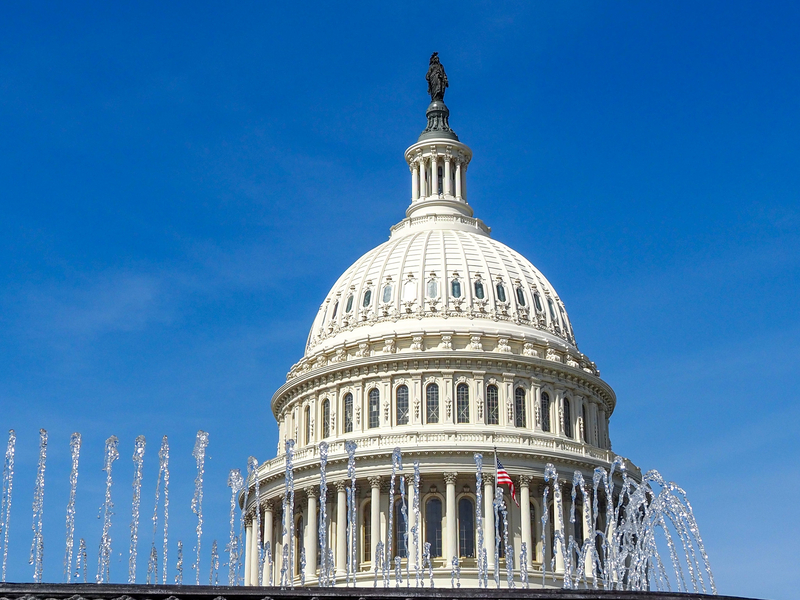
The U.S. Capitol on April 9, 2026. (Photo by Ashley Murray/States Newsroom)
WASHINGTON —Suddenly there’s hope for cutting the reams of red tape that can make getting new energy projects a seemingly endless slog.
Top Republican and Democratic senators have unveiled a 417-page bill to overhaul the approval process, a pathway for what’s known as “permitting reform.” A debate is likely when lawmakers return for their lame-duck session in November, though getting to a finish line anytime soon won’t be easy.
Reformers will have to fight environmental groups, who tend to appreciate today’s detailed, often lengthy process for reviewing energy projects. They worry that streamlining reviews will make it easier for energy-gulping and air-and-water-polluting projects to proceed.
It’s a battle that is likely to continue for months and perhaps even years. But at least now there’s a real starting point, a bipartisan group of powerful senators eager to find common ground and a widespread congressional — and national – consensus that the process is broken.
“Long awaited is not an exaggeration,” said an analysis from the Bipartisan Policy Center of the effort to spur changes.
“There is widespread recognition that a permitting system created to protect the environment against industrial pollution more than 50 years ago has morphed into a system that is bad for both the economy and the environment,” it said.
An uncertain future
The bill faces a bumpy, unpredictable path. Lots of amendments are likely. The White House’s reluctance to embrace renewable energy is a potential roadblock.
Getting through the House, where Democrats who might be in the majority next year are signaling broad skepticism, could be tough.
“No issue was an easy issue,” said Sen. Sheldon Whitehouse, D-R.I., top Democrat on the Senate Environment and Public Works Committee, describing for reporters the challenges he and his colleagues faced in writing the bill and continue to tackle.
The strongest opposition is coming from environmental groups.
“The entire gist and purpose of this bill is to get to yes as fast as possible for every project under the sun. It doesn’t matter if it’s a good project or a bad project,” Brett Hartl, government affairs director at the Tucson, Arizona-based Center for Biological Diversity, told States Newsroom.
These groups see the bill as a massive concession to those who have thwarted efforts to promote renewable energy.
“Making a deal with the devil fails the American people,” said Eric Schlenker-Goodrich, executive director of the New Mexico-based Western Environmental Law Center.
Whitehouse saw the bill very differently..
“The wins from this could be very very big ones. This should lower electricity costs measurably for Americans. This should increase clean power significantly for Americans. This should significantly add construction and jobs across the country,” he said.
What the bill would do
The Senate bill is co-sponsored by four of the most powerful energy and environmental voices in the chamber: Energy and Natural Resources Chairman Mike Lee, R-Utah; top committee Democrat Martin Heinrich, D-N.M.; Environment and Public Works Chair Shelley Moore Capito, a West Virginia Republican; and Whitehouse.
The bill offers new laws governing the issuance of permits and approvals to energy and infrastructure projects.
It would put new restrictions on the process federal regulators use to take a serious look at environmental impact before approving a project. Critics have complained that the 1970 National Environmental Policy Act’s provisions have meant unnecessary delays.
Here’s what the reforms could mean for:
- Data centers. Companies would have to pay for the electricity infrastructure they use to operate the centers. While they’ve pledged to protect consumers from paying additional costs, signing an agreement with the White House, nothing in that deal is mandatory. Traditionally, those who use the electricity share the costs, since they too benefit from the new or expanded power plant and/or transmission lines. This bill says data centers will pay all those additional center-related costs.
- Power plants and transmission lines. The bill would cut down the amount of time allowed for government review and approval of such facilities. It would be easier for federal and state reviews to proceed simultaneously, shortening the review period.
- Wind and other renewable energy. President Donald Trump has been opposed to such projects. The bill would apparently bar the executive branch from denying permits for political reasons, though lawmakers are still in discussions with administration officials on how to proceed.
- Historic preservation. Reviewing a project’s impact on a historic property can take years — there’s no deadline for review. The bill would streamline the process in a number of ways.
- Legal challenges. Opponents would have 150 days to file legal challenges to most of the act’s provisions. Currently lawsuits can be filed within six years.
- Environmental protection. The bill attempts to speed the process for environmental review without changing the standards for review.
- Pipelines. The bill makes it harder for a single state to block an interstate gas pipeline or electric transmission line that the administration views as essential to national security or significant economic reasons.
One reason permitting itself can take a long time, said the Bipartisan Policy Center, is that “agency staff try to write environmental review documents that will survive legal challenges, which is quite different from doing a more careful review of potential harms.”
Roadblocks
The promising news for the effort is being led in the Senate by the four top committee members.
“We once built projects like the Hoover Dam, the Golden Gate Bridge, and the Empire State Building in years, not decades,” said Lee in a statement. “America still has the resources and the talent, but what too often stands in the way is a permitting system that takes too long and costs too much.”
Whitehouse had a somewhat different emphasis. “If we can pass this bill, we will flood the grid with clean, affordable energy and make data centers start paying their fair share,” he said.
But in the House, Rep. Jared Huffman, D-Calif., said that while the senators have “done some good work,” their bill “raises significant questions and concerns that would have to be resolved before most Democrats could support it.”
While he supports smoothing the process for transmission and clean energy projects, he had environmental concerns.
“We can't throw states, tribes, impacted communities, and threatened and endangered wildlife under the bus,” said Huffman, top Democrat on the House Natural Resources Committee.
Environmental groups agreed.
Holly Bender, chief program officer at the Sierra Club, worried that the bill would benefit oil and gas companies “while communities stand to lose critical protections for clean air, water, and wildlife.”
Her views were shared in a letter to top Senate Democrats from representatives of 122 clean air and water advocacy organizations. They stretched from coast to coast, including the Chesapeake Bay Foundation, Detroit Riverkeeper, Los Angeles Waterkeeper, Conservancy of Southwest Florida, Oregon Wild, Orleans Audubon Society, Ohio River Foundation and more.
Alaska pipeline project
Hartl cited a proposed pipeline project in Alaska as an example of how the bill could have a profound impact.
The LNG project, championed by the Trump administration, would send natural gas from Alaska’s North Slope to a terminal in the southern part of the state.
“That pipeline will cross lands, streams, rivers, down to Anchorage. A project like that in a normal world would have a pretty serious environmental review. If this (bill) were to pass I think they could approve it with almost no review,” Hartl said.”That project will be rubber stamped.”
Ariana Kretz, policy analyst at the Climate Justice Alliance, which promotes efforts to reduce the impact of climate change, cited as an example of the bill’s danger how the administration has dealt with the Santa Ynez Unit, an offshore oil production operation off the Southern California coast. It was shut down 11 years ago after an oil spill.
In March, Energy Secretary Chris Wright directed it to reopen after a presidential executive order aimed at producing more domestic oil.
"Today's order will strengthen America’s oil supply and restore a pipeline system vital to our national security and defense, ensuring that West Coast military installations have the reliable energy critical to military readiness,” he said at the time.
If the new legislation became law, Kretz told States Newsroom, “a future administration would have a very difficult time reversing Secretary Wright's decision.”
More opinions
Energy interests have offered strong praise for the bill. It’s a “generational opportunity” to streamline a balky process, said Mike Sommers, American Petroleum Institute president and CEO.
Others are being somewhat more circumspect.
The National Governors Association is “encouraged” by the bill's introduction. CEO Brandon Tatum said he looks forward to “working with Congress to further develop this legislation. “
Whitehouse said issues such as wind projects — which the Trump administration tried to halt but was thwarted by a federal judge — remain under discussion.
“We need more clarity on that and when we have more clarity there will be back and forth,” he said. So far, he found White House staff's proposals and discussion “not outside the bounds of ordinary legislative disagreement.”
The bill is a starting point, he and others said, and there are many amendments and negotiations still to come. But at least there is a starting point, Whitehouse suggested, and so “today begins a process.”
All States Newsroom content is free to republish. Read our republishing policy for more information.