Indiana DNR plans public wildlife land at former Newport Chemical Depot
Oct 07, 2026 | 4:30 am ET
Description
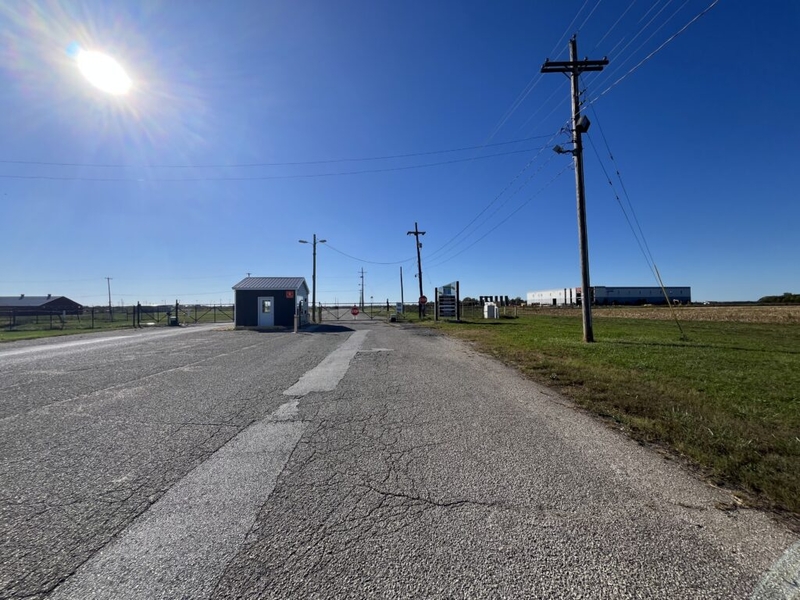
The former Newport Chemical Depot property includes forest and agricultural land intended for conservation, prairie restoration and protection of Indiana bat habitat. (Photo by Niki Kelly/Indiana Capital Chronicle)
Fifteen years after agreeing to acquire a large swath of the former Newport Chemical Depot for conservation, Indiana is still working to complete the $10 transfer — and planning to manage the additional land without more money or staff.
The Indiana Department of Natural Resources has not yet acquired the roughly 1,705 acres in Vermillion County, according to agency spokesperson Emma Balzer. But she said a 2011 agreement outlining the unusual deal remains in place and its terms have not changed.
“The department is working through the process, including completing the necessary survey work,” Balzer said in a written response to the Indiana Capital Chronicle.
Under the agreement, the Newport Chemical Depot Local Redevelopment Authority intended to convey a 1,093-acre forested parcel and a 612-acre agricultural parcel to DNR during 2026, although it did not establish a more specific deadline. The land would be limited to conservation purposes, including prairie restoration, wetlands banking and preservation of Indiana bat habitat.
The agreement called for DNR to pay $10 for the land if the transfer occurred in 2026, with the property’s future use restricted to conservation. Had DNR accepted the property earlier, it would have owed $3,000 per acre — more than $5.1 million for the full 1,705 acres.
This is a beautiful area, and it’s an important area, and it’s really an opportunity for the state to do something in a very cost effective way.
Balzer said the original agreement remains in effect and that its terms have not changed.
The agency did not provide a projected acquisition date or say what must be completed beyond the survey work.
John Ketzenberger, director of government relations for The Nature Conservancy in Indiana, said the organization is hopeful DNR will complete the acquisition.
“We’ve all been worried about the deadline because it’s right upon us,” Ketzenberger said. “But we’ve gotten an assurance from DNR that they intend to do that. It’s just a matter of getting everything worked out.”
The DNR acquisition is roughly one-quarter of the overall site. The redevelopment authority owns and operates the broader 7,000-acre Vermillion Rise Mega Park, which includes land dedicated to industrial and economic development.
Former military land
The property is part of the former Newport Chemical Depot, located about 25 miles north of Terre Haute and several miles south of the town of Newport, between the Illinois border and the Wabash River.
The installation was used for military manufacturing and later for the storage and destruction of the deadly nerve agent VX. A federal base-closing commission recommended shutting it down in 2005 after completion of its chemical demilitarization mission.
The Army subsequently conveyed more than 7,200 acres associated with the chemical depot, according to federal Base Realignment and Closure records. The local reuse authority was established to guide the former depot’s conversion to civilian use and economic development.
Federal records also show that buildings involved in VX neutralization were demolished because of possible contamination. Historical military environmental reports identified explosives, heavy metals and other contaminants at sites across the former installation.
Story continues below.
DNR did not identify a specific environmental obstacle when asked whether cleanup obligations, liability or other environmental issues could affect its acquisition. Its response instead emphasized the challenge of managing the property with existing resources.
“It’s not your typical transfer,” Ketzenberger said, noting the need to identify conservation easements, other potential encumbrances before getting a clear title. “But what we’ve been led to believe is that it’s just a matter of time, of working through that paperwork, which gives us a little hope because for a long time we thought that they were just going to let it go.”
Balzer said additionally that DNR “is working to find solutions to properly manage the additional acres while maintaining the same budget and staffing level.”
The proposed acquisition comes amid an agencywide spending reduction at DNR.
The agency’s 2026 fiscal plan called for a $10.7 million appropriation cut, a $6.6 million reserve and savings from eliminating or holding open 100 full-time positions. The plan also proposed reducing intermittent staffing.
DNR officials did not say how many employees would be assigned to manage the Newport property.
Ketzenberger said managing the land as a fish and wildlife area makes sense because that designation generally requires less manpower than some other state properties. But he said the state must still invest in restoration and continued upkeep.
“We’re just hopeful that … they will … make the investment to ensure that … the restoration is done at a high quality level and that it’s managed then afterwards,” Ketzenberger said. “And by that, it may be doing prescribed fire or other conservation management practices to ensure that it stays viable for the long term and doesn’t just become an overgrown mess.”
Public access planned
DNR intends to make the land publicly accessible and place it under the Division of Fish, Wildlife and Nature Preserves, Balzer said.
The agency’s current plan calls for managing the Newport land as a satellite property of Deer Creek Fish and Wildlife Area.
The state wildlife area began in 2010 with the transfer of 1,962 acres from the Putnamville Correctional Facility to DNR. Later additions brought the property to 2,175 acres, according to the agency.
The main wildlife area is near Greencastle in Putnam County, while the former Newport depot is farther west in Vermillion County. DNR did not provide an estimate of the annual cost of managing the satellite property, nor did the agency identify how many employees would be responsible for it or say when public access could begin.

The 2011 agreement requires the parcels to be used exclusively for conservation after their transfer to DNR. Before the transfer, it allowed the agricultural parcel to remain in agricultural or conservation use and required the forested acreage to be managed for conservation.
Ketzenberger called the prospective acquisition “the bargain of the century.” He said the forest offers intact habitat, while more than 600 agricultural acres could eventually be restored as prairie, wetlands, woods or another habitat type selected by DNR.
The protected Indiana bat habitat is only one part of the property’s value, he said. Wetlands and floodplains can help reduce flooding, while the land’s location along the Wabash River places it within a migratory route used by sandhill cranes and other birds.
“It’s all part of an interconnected landscape, and when we tear it up as we have, then it makes it … harder to realize the benefits from that landscape,” Ketzenberger said. “And that’s why this, you know, it’s 1,700 acres, which is in Indiana a large parcel.”
He also pointed to the potential for hunting, fishing, trails and other outdoor uses if DNR opens and develops the property for recreation.
“Those kinds of recreational opportunities are critical, and in that part of the state, they’re just not abundant,” Ketzenberger said. “This is a beautiful area, and it’s an important area, and it’s really an opportunity for the state to do something in a very cost effective way.”
The agreement was executed in August 2011 by representatives of DNR and the Newport redevelopment authority. It did not detail why the parties selected 2026 for the significantly reduced transfer price.
Ketzenberger said he believes agricultural agreements covering part of the property needed to expire before the transfer could occur, contributing to the long wait.
DNR officials said the acreage, boundaries, ownership terms and conservation restrictions contemplated in the agreement have not changed.
Ketzenberger said The Nature Conservancy remains optimistic that “the state is able to complete the deal and … make it what it potentially can be.”
“You can imagine a prairie, or … whatever else is restored out there — wetlands, whatever they deem important,” he said. “It becomes an area that, from a picture, it may look unremarkable, but when you get on site, you can see numbers of birds and critters and chances to take in the beautiful nature of that area.”
Indianapolis, IN