Dems double down on election protection in Pa. amid Trump administration’s threats
Oct 07, 2026 | 5:17 am ET
Description
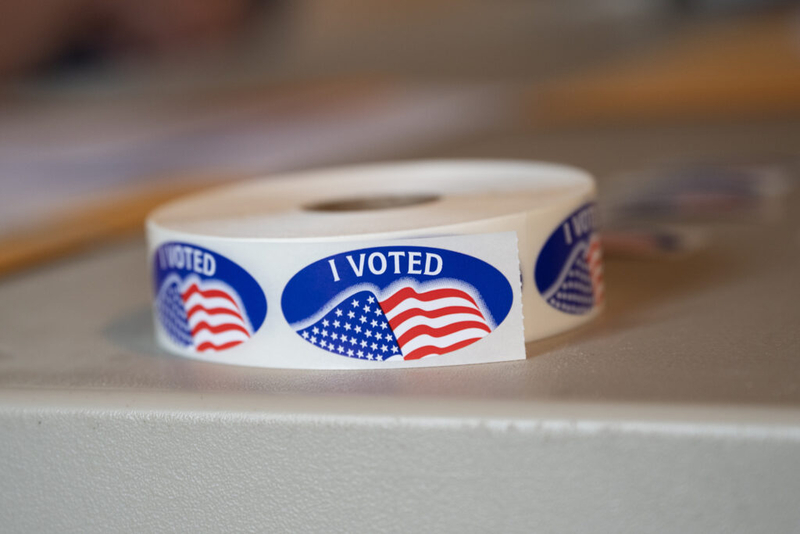
ÒI VotedÓ stickers at a polling place in Derry Township, Westmoreland County, May 19, 2026. (Photo by John Beale for the Pennsylvania Capital-Star)
Claims of voter fraud, threats to assert control over state-run elections and efforts to restrict mail-in voting have prompted Democrats in Pennsylvania and elsewhere to double down on measures to ensure eligible voters have unfettered access to the polls next month.
Democratic National Committee Vice Chair Jane Kleeb spoke with the Pennsylvania Capital-Star recently about the party’s plans to help voters and alert authorities to irregularities during the Nov. 3 midterm elections. Kleeb also serves as president of the Association of State Democratic Committees.
The Capital-Star has also extended an offer to the Republican National Committee to discuss the subject.
With an unresolved conflict in the Middle East with Iran, soaring food and fuel prices and an aggressive immigration crackdown ongoing, the midterms are expected to be both a fight for control of Congress and a referendum on President Donald Trump’s performance. .
Trump, his administration and his associates have continued to question the 2020 election, threatened to nationalize voting and to send U.S. Immigration and Customs Enforcement to “surround” polling places.
While the DNC mounts election protection efforts in every election, Kleeb said the party isn’t waiting to see if irregularities materialize.
Pennsylvania Republican Party spokesperson James Markley said the GOP also “takes election integrity extremely seriously.”
“We’ve invested heavily in staff throughout the Commonwealth who have been recruiting and training poll workers and monitors since before the primary election,” he said. “We are confident that we will have the ground game and legal expertise to properly deal with and eliminate any potential issues that will arise in the 2026 general election.”
The Democratic effort builds on regular election protection methods and incorporates practices and procedures that grew out of the effort to document ICE agents’ actions during the immigration surge in Minnesota this year. The party has even hired former members of the nation’s intelligence community to guard against threats from beyond America’s shores.
This interview was edited by a Pennsylvania Capital-Star journalist for clarity.
Q What is the DNC doing in Pennsylvania to prepare for the midterm elections?
A: We have rolled out a new program this year, all about election protection and early voting. And one of the projects specifically is called Democracy Protectors, where we are training voters all across the country to be outside of their polling location to basically be there in case Trump really does send ICE agents or insurrectionists or anybody else that we can document as well as be kind of a helpful happy face outside the polling location for our Democratic voters.
Q: Do you have indications that the threats to election integrity are greater this year?
A: We don’t know for sure, and I think we won’t know 100% until election day. But we know what the president has said, what Steve Bannon has said, what kind of the chattering class of the right is saying. We saw the move that the Georgia Board of Elections did Thursday.

And there’s lots of other signs of them trying to attack voters from abroad, trying to limit the ability of voters from abroad being able to cast their ballots as American citizens.
So we know that the risk is real, and because we won’t know with 100% certainty what will happen on Election Day, instead of being caught flat-footed, and we also wanted to make sure that voters know that we take these risks and concerns seriously, and we’re putting a plan in place to address it. So this is, you know, us saying we are concerned that the Trump administration is so desperate and will do anything. So what can we do as state parties, to make sure that we’re playing our role to protect the vote and to make sure every vote is counted?
Q: What does this training entail?
A: We modeled part of the training off of the Minnesota Democratic Farm and Labor Party training that they did in Minnesota to train folks to be constitutional observers during the ICE raids. So it’s very similar training where we train folks on how to de-escalate. We train folks on what we need them to do when they’re documenting bad actors if there are any. For example, you have to say your name, the date that you know you’re filming, where you’re filming. So we give them very specific training on that. We’re also helping them understand what they do if they do see a problem.
Everything we’re doing with the state parties is in conjunction with the DNC. There is a hotline that volunteers can use to call in any red flags, concerns, even if there’s long lines. We want these democracy protectors to be plugged into the chain of command and the system that we have to track all of this.
Sometimes long lines are just long lines, right? Lots of enthusiasm. Long lines happen every election day, but sometimes it can mean that there’s a problem that we have to address. Like maybe ballots ran out, and then we need to make sure our poll observer inside is monitoring that.
So we have systems to address red flags and problems. And from our perspective, we want more people engaged in it because we think that there are potentially going to be issues that we have to resolve on election day. We want to make sure that our democracy protectors are trained to do that.
The other part of the training is helping them understand how to help voters. Sometimes a voter will go to the wrong polling location, and they don’t know how to look up a polling location, or they don’t understand what a provisional ballot is. And so these are all things that basically a helping hand can assist voters with outside the polling location.
Q: In recent elections, people have become increasingly wary of any activity outside of polling locations. How do you navigate that with volunteer observers?
A: We’re having our folks be happy, helpful, wear blue, so folks know how to identify them. Not to be aggressive. Not to engage in any back and forth with any potential MAGA folks that are out there trying to intimidate voters or escalate things. This, for us, is all about documenting bad behavior, but also helping voters, and I think that we can definitely find that balance.
Q: How many observers do you expect to have around the state on election day?
A: Nationally, we are attempting to train 10,000 democracy protectors.
As soon as somebody goes through training, they then go through an additional screen to make sure they’re registered Democrats or Independents that lean our way. Those names get sent to the state party’s election protection program to place them. We also know that this is not the only tool that state parties are using. State parties themselves are also recruiting folks within their state, within the county party, to help with election protection as well. But this is our way as a national association of all of our state parties to kind of help recruit people to fill some of these gaps.
Q: Do you think we’ll ever get back to a time when we don’t need to do this, or is this something that’s always been going on behind the scenes and has not been as urgent a need?
A: Even in smaller red states, the DNC has some type of election protection program. That usually meant an existing staff member within the state party was tasked with being the lead for election protection. They were helping spread the DNC’s hotline and all their voter materials, and they recruited volunteers and lawyers on election day to staff phone lines within their state party office to address any concerns that are coming in on the phone or email. The lawyers that they recruited were also there to solve any problems, often the day after election day, when you have to cure ballots, or in close elections where you have to have a legal person represented for recounts.
In a big state like Pennsylvania or Georgia or Michigan, where they have a lot more resources for election protection, it’s always been a very robust program where they were recruiting poll workers in a nonpartisan way. So we had Democrats that were filling those lots. They were recruiting partisan poll observers to be inside the polling location-that’s a very sophisticated, you know, planned-out program with county election offices and secretaries of state-and then they would have what we call a boiler room or a war room with lawyers and election protection experts that are, you know, dealing with any red case scenarios or flags of long lines, ballots running out, that type of thing. We always do that, and we’re continuing to do that. That’s our core election protection program. Some states even do have and have had over the years people outside of the polling location, especially in kind of high priority precincts, so communities of color, or especially young voter precincts, where this is the first time a young voter is voting, so they may not know the habit of voting, may not even know what door to go in, like all that kind of stuff.
We’ve never, though, had an election cycle where we were this concerned that the White House would be coordinating to disrupt outside of the polling locations. We’ve never had a president say that they are going to send ICE agents to polling locations, or his biggest megaphone, Steve Bannon, doing that as well. That is abnormal. Do I hope after this election cycle, when we win big and we start to, you know, get norms reset, that we don’t have to do this? Sure, I’m sure we will have to do this for the presidential election, and then after that, hopefully, our country can, you know, put its shoulders down a little bit, and we can get back to normal election protection programs.
Q: What other efforts is the DNC making to ensure a fair election?
A: We’re pushing early voting as oftentimes state parties have pushed the mail-in ballots. That’s been a focus of ours over the past decade. This cycle, we’re really encouraging people to also vote early in person if they haven’t already requested a ballot by mail.
We also do have an intelligence unit. We’ve hired former CIA, FBI, Homeland Security type folks to monitor online any issues that we think that we need to be aware of, because at state parties, to be real frank, we are focused on putting out fires every day. There is always something happening at a state party that you have to do – a press conference, a canvas, a vote by mail, etc. and we don’t have time to monitor the dark web, or we don’t often have time needed to monitor Twitter and Facebook.
We’ve hired them to watch for trends across states, so we can be better prepared. We didn’t have this, of course, in 2016 when the famous Russia hack happened, or even in 2020 when Russia used the Bernie Bro narrative, or even last cycle, when the Republicans were doing a lot of the trans attacks that weren’t coming from authentic voters, they were coming more from bots to divide people.
Those are the types of things that our intelligence unit is monitoring and looking for, and then we’ll help state parties if something is a threat in their particular state.
The good thing is, the things that we’ve come up with so far are really kind of your traditional online scammers and phishers. There was one state party whose website was temporarily hacked into. But we’re monitoring it in case things get serious, or we really get concerned with a trend across states.
Harrisburg, PA