Utah needs a ‘Code Red’ policy to protect the homeless from extreme heat, report says
Oct 07, 2026 | 7:02 am ET
Description
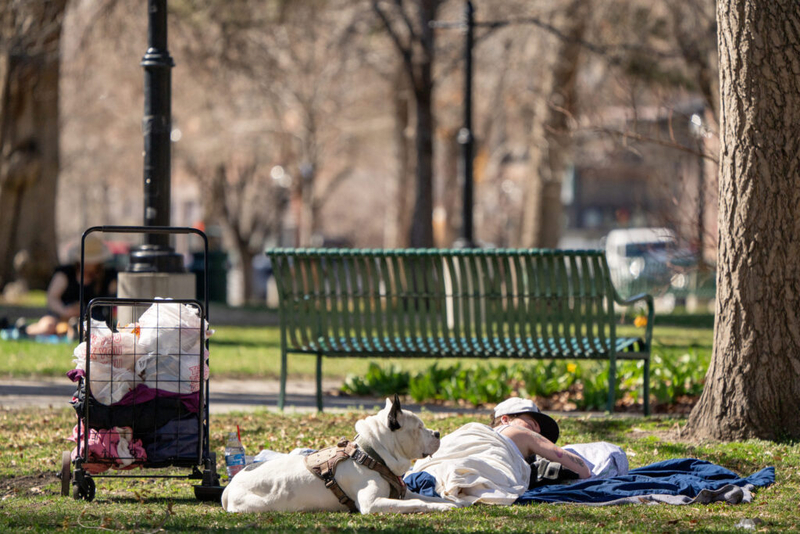
A person and a dog lay in the grass outside the City-County Building in Salt Lake City on Wednesday, March 26, 2025. (Photo by Spenser Heaps for Utah News Dispatch)
University of Utah researchers have released a new report looking at how heat impacts people experiencing homelessness — and offering recommendations for lawmakers to help address a lack of cooling resources during summer months.
For the report released Monday researchers interviewed 24 people experiencing unsheltered homelessness in the Salt Lake Valley about how they navigate extremely hot temperatures in public spaces, along with how city and private business policies impact their ability to cope.
“They reported heat exhaustion, dehydration, sleep disruption, and emotional strain, with limited access to shade, water, and restrooms,” the report says.
Eight people experiencing homelessness who participated in the study also used GPS-enabled smartphones and backpack-mounted weather monitors to track their locations and temperatures over six summer days.
According to the data collected by those monitors, they “routinely experienced hazardous conditions, including prolonged exposure” to moderate and high-risk heat thresholds (temperatures greater than 91 degrees Fahrenheit and 102.9 degrees Fahrenheit, respectively).
Researchers also looked at how Salt Lake City businesses respond to people experiencing homelessness, who may use their storefronts as a way to escape the heat. When cooling resources are lacking, businesses “frequently become de facto heat refuges,” researchers wrote in the report.
However, “their capacity is limited and their practices are too variable to substitute for coordinated public cooling infrastructure,” the report says.
Of about 30 business employees, managers and owners who agreed to do interviews for the research, about 77% reported no restrictions on who could enter their storefront and 73% reported no set customer time limits. However, “half of policies governing access and interactions” with people experiencing unsheltered homelessness “were informal and case-by-case,” the report says.
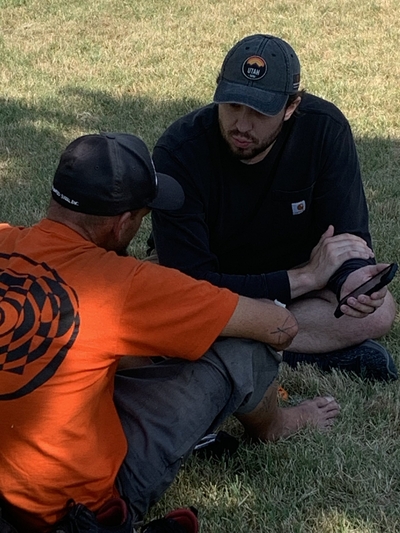
Only 30% of the businesses reported corporate guidance, and 37% changed their practices during extreme weather. Some offered water or allowed people to cool off indoors, while others “expressed concern that doing so might attract more” people experiencing homelessness.
A majority of the businesses (60%), mentioned they had “personal guidelines for engaging and communicating” with people experiencing homelessness.
“Most responded with statements like ‘treat everyone the same,’ ‘treat them kindly, ‘treat them with respect,’ and ‘treat them with empathy,’” the report says. “Only one said that her rule was to keep her distance and not engage.”
Altogether, the findings pointed to “thermal equity as both an infrastructure and governance issue,” researchers wrote in the report.
Exposure to heat “can be intensified by limited access to shade, water, sanitation, indoor cooling, and secure places to rest.” However, at the same time “interventions can work against one another: displacement from a shaded location can force someone into hotter conditions; restricted bathroom or water access can increase health risks; and informal business policies can make cooling opportunities unpredictable.”
The researchers included a list of recommendations for policymakers, including:
- Set a “Code Red” policy for extreme heat.
- Treat water, bathrooms, shade and cooling as integrated heat infrastructure by maintaining functional drinking fountains, extending summer bathroom access and providing shaded seating.
- Expanding cooling center locations and hours.
- Expand and protect the tree canopy where people experiencing unsheltered homelessness spend time.
- Establish protected shaded rest areas during extreme heat.
- Include people experiencing unsheltered homelessness in climate health planning.
- Engage businesses as partners — not substitutes — for public infrastructure.
- Support community and peer-led adaptation by incorporating existing networks people experiencing homelessness use to share water, food, information and warnings about enforcement.
In recent years, Utah lawmakers considered bills that would create a statewide “Code Red” policy, similar to the state’s existing Code Blue Alert that expands homeless shelter capacity when temperatures drop to dangerously low levels.
But those bills haven’t passed.
In 2025, lawmakers considered a bill sponsored by Sen. Todd Weiler, R-Woods Cross, that would have flexed shelter capacity by up to 35% during dangerously hot weather. That bill failed in the House on a 21-49 vote.
Earlier this year, another bill sponsored by Rep. Steve Eliason, R-Sandy, would have allowed certain shelters to expand their capacity if local temperatures reach or exceed 105 degrees fahrenheit, but that bill also failed in the House on a 34-37 vote.
“Ultimately, housing remains the most effective long-term protection from extreme heat, but housing alone does not address immediate risk,” researchers noted in the report. “Expanding equitable access to trees, water, sanitation, cooling, and secure public space can reduce preventable heat exposure while creating a more inclusive urban climate-adaptation system.”
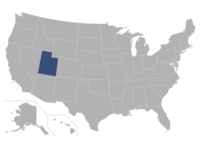
Salt Lake City, UT