Omaha employers can continue paying $13.50 ‘youth minimum wage,’ judge rules
Sep 28, 2026 | 2:11 pm ET
Description
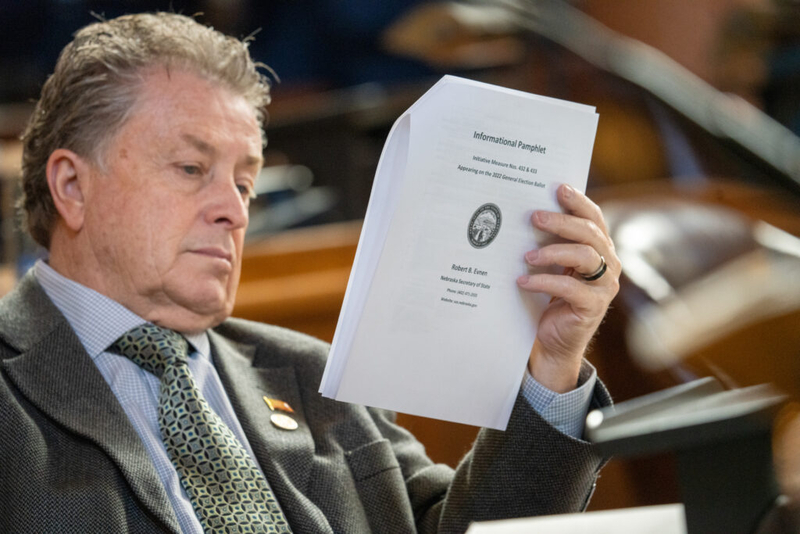
State Sen. Stan Clouse of Kearney reads the voter initiative packet from 2022 that led to voter-approved increases to the state's minimum wage. March 31, 2025. (Zach Wendling/Nebraska Examiner)
OMAHA — A Douglas County district judge blocked part of an Omaha ordinance to require employers in city limits to pay youth workers the same minimum wage as adults as the legal fight plays out.
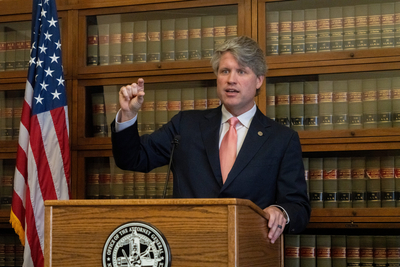
District Judge Timothy P. Burns on Monday wrote that the Nebraska Attorney General’s Office was likely to succeed in part of its effort to overturn the new minimum wage ordinance in Nebraska’s most populous city.

Burns limited his ruling to the half of the Omaha ordinance that prohibited a new “youth minimum wage.” The Legislature authorized paying 14- and 15-year-old workers $13.50, less than the current baseline $15 per hour. That law took effect July 18.
The partly granted temporary injunction will remain in place until Burns or another judge rules otherwise.
“It is therefore ordered, adjudged and decreed that the state’s motion for a temporary injunction is granted in part and denied in part,” Burns wrote.
Omaha’s ordinance had been set to take effect Thursday. The part of the ordinance Burns did not block reinstates part of a 2022 ballot measure that sought to increase the state minimum wage by the change in the cost of living for the Midwest every Jan. 1, beginning in 2027.
Lancaster County District Judge Lori Maret blocked a similar Lincoln city ordinance this summer, one day before the amended state law took effect.
However, Burns differed from Maret by allowing Omaha to increase its minimum wage at a higher rate in January, assuming no other court order before then.
“Because a city ordinance requiring a higher minimum wage is merely more stringent, it can be harmonized with the state statute and is not preempted by conflict preemption,” Burns wrote.
About 59% of voters in 2022 approved increasing the state’s minimum wage from $9 to $15 and providing for cost-of-living increases beginning in 2027 and every year thereafter.
Legislative changes this spring instead locked future wage increases at 1.75% every year, while also allowing the new youth minimum wage. The teen wage would increase by 1.5% every five years.
According to a Nebraska Examiner analysis, the youth wage would stay below $15 until 2065.
Burns’ order means Omaha might be able to increase its baseline minimum wage by 3.6%, which would be 29 cents more than what the current 1.75% law would allow. In that case, the Omaha minimum wage would rise to $15.55, instead of $15.26 next year.
Burns said under Omaha’s home rule city charter, the city is allowed to pass local laws if they are “not inconsistent with the general laws of the state” and are “promoting the public health, safety, convenience, comfort, general interests and welfare of the inhabitants of the city.”
Attorneys representing city officials provided “significant evidence” that Omaha faces higher costs of living, particularly for housing, than the rest of Nebraska, Burns wrote. And so long as the ordinance wasn’t inconsistent with state law, Burns said, the ordinance could stand.
If not inconsistent with state law, Omaha would have the power to enact such an ordinance because the record indicates it was enacted to “protect the welfare of Omaha’s inhabitants,” given the city’s higher cost of living compared to other parts of the state.
“The court finds that the State is likely to succeed on its argument that the city minimum wage ordinance is preempted by state law to the extent that it removes the youth minimum wage exception expressly provided for in the state statute,” Burns wrote.
Nebraska minimum wage will increase next year by 29 cents less than voters called for
Attorneys for Omaha argued that the youth minimum wage and training wage simply prohibit employers from paying less than $13.50, but Burns said he “does not find this argument persuasive in light of the express language of the exception.”
Burns said the city did not supply “any evidence” detailing a local concern that requires overriding the legislative exception allowing a youth minimum wage.
The judge noted that Omaha’s minimum wage ordinance does contain a “severability clause,” meaning if the youth minimum wage prohibition is found unconstitutional, the rest of the ordinance could still stand.
The minimum wage fights in Lincoln and Omaha will continue. Burns, whom former Gov. Dave Heineman appointed in 2011, is retiring Oct. 30.
Lincoln, NE