Michigan school districts, food pantries feel SNAP cut ripple effect ahead of cost shift to states
Description
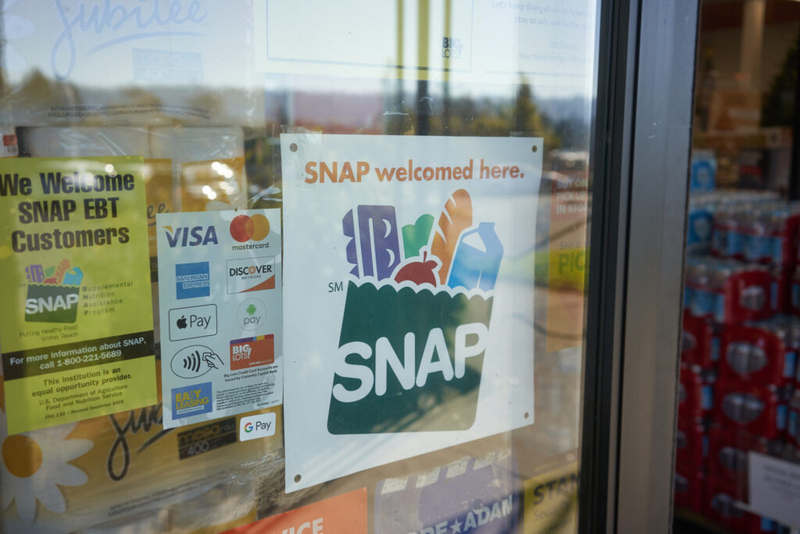
A “SNAP welcomed here” sign is seen at the entrance to a Big Lots store in Portland, Oregon. (Getty Images)
Across Michigan, school districts, food pantries, legal aid groups and nonprofits are preparing for another change in the distribution of SNAP benefits.
Starting Oct. 1, states are required to pick up an increased share of the program’s administrative costs, a shift that analysts at the Michigan League for Public Policy estimate will cost the state about $95 million just for the first year.
The changes to SNAP are coming from H.R. 1, the One Big Beautiful Bill Act, which was signed into law in July 2025, although the impacts of those changes are already being felt around the state as many prior SNAP recipients are losing access to those benefits.
Julie Cassidy, a senior policy analyst at the Michigan League for Public Policy, said that the nation has seen its largest drop in SNAP enrollment in nearly 30 years. In Michigan, she said, more than 167,000 people, including more than 53,000 children, have lost their SNAP benefits.
“Meanwhile, Michigan’s unemployment rate is virtually unchanged from July 2025 and remains higher than the national average, as it has been for years,” Cassidy continued. “This suggests that families aren’t losing SNAP because they’re doing better or the economy is improving.”
Melissa Miles, a graduate student at Eastern Michigan University and a parent of a six-year-old son from Hillsdale County, said there’s “just not enough time in the day to satisfy everything that is required,” and that the requirements are changing more quickly than she can keep up with.
Colleen Sadows, a parent from Washtenaw County and a a nontraditional graduate student at Wayne State University, similarly said that she is currently “precariously qualifying for SNAP” based on practicum, or practical experience, hours for her academic program, but if she picks up a supplemental income, she will be pushed above the threshold to qualify for SNAP — ”even if that income, which is based around the required practicum hours, is lower than a living wage.”
Meanwhile, food pantry leaders like Glori Crowell, the president of Do a Little Good NMI in Elk Rapids, said that the need for access to food — especially in more rural communities in northern Michigan, where access to public transportation and housing insecurity have exacerbated the issues of food access caused by SNAP cuts.
Greta Faworski, the associate director of Kalamazoo Loaves and Fishes, sim
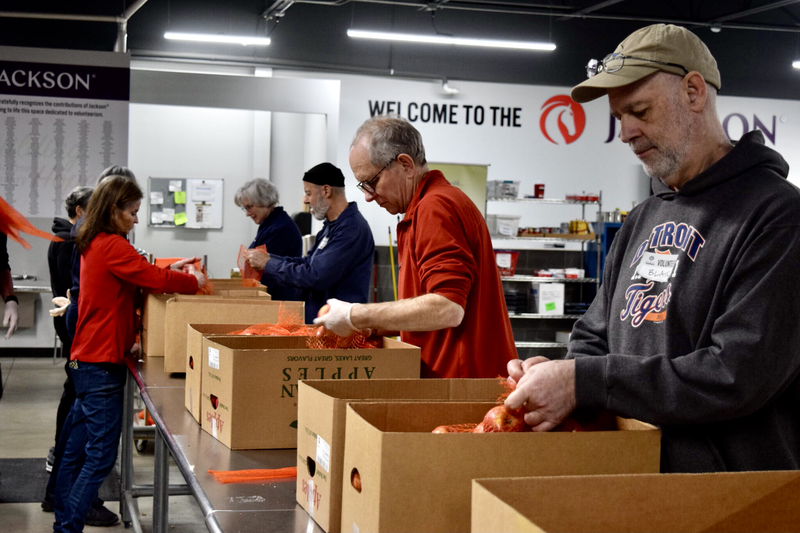
larly said that she has seen a 56% increase in individuals reaching out to the food pantry — almost half of whom have a full-time job but still cannot make ends meet.
“We were barely scraping by being able to meet the need before then. I think we got a really good taste of what is to come in November when the government shutdown caused a delay in SNAP benefits,” Faworski said. “On an average day, we serve about 800 people a day. When there was notification because of the government shutdown that November SNAP benefits would not be released on time, in one week, we saw an increase to where we were serving 1,200 people a day. We had to add capacity. We had to all of a sudden start buying food left and right because our shelves were going empty, and because this was happening all over the country, we were having trouble getting food.”
She also referenced cuts to food aid under the U.S. Department of Agriculture as another factor limiting the amount of food available to distribute to families in need in Kalamazoo County.
Changes to SNAP have also impacted calculations for eligibility for other programs. For example, access sites for the federal Rural Non-Congregate Summer Meals program are based on the economic data from SNAP, and so as that economic data changes and many are pushed off of SNAP, those sites go away.
Dan Gorman, the food service director of Montague Area Public Schools in western Michigan and a member of the School Nutrition Association of Michigan, explained that SNAP cuts are going to have a second wave of impacts in schools.
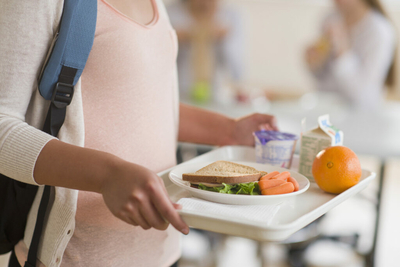
Currently, Gorman’s district qualifies for the Community Eligibility Provision, which provides breakfast and lunch at no cost to all enrolled students and under which “the USDA pays for about 70% of the meals that I serve my kids, and then the state picks up the other 30%,” he explained.
“Community eligibility is determined by the economic picture in our area based on how many people qualify for SNAP, and so right now in my world we qualify for that program,” he said, “As SNAP gets cut, less and less people qualify, and so, in the future, the community eligibility program, I won’t qualify for it, and then what that means is the state will have to pick up more of that burden of those free meals, and it’ll reach a point where that won’t be available anymore for the state to be able to cover that economic burden.”
Michigan’s budget includes $22.9 billion for K-12 schools and higher education and appropriates funding for free breakfast and lunch for all students. But if the state’s share of those costs increases, that could affect how much lawmakers must allocate in future budgets to maintain the program.
“Across the country, districts that don’t have free meals for all, they have tens of thousands in bad meal debt, which needs to be picked up for the schools in the future, and it just becomes a huge economic burden,” Gorman added.
Costs to the state for SNAP administration are already increasing, but they will continue to increase in 2027 if new requirements around error rates are not met — and while Michigan’s fiscal year 2027 budget includes over $184 million to mitigate the impacts of H.R. 1, including changes to Medicaid and SNAP, the amount needed to offset those costs continues to increase — the Michigan League for Public Policy estimated that the state could owe more than $320 million a year in benefit costs as of October 2027.
Elinor Jordan, the public benefits attorney for the Michigan Poverty Law Program, added, “The state agency is also under so much pressure to stand up additional requirements alongside the tremendous pressure to meet an artificially low error rate threshold, and is turning to some automated systems that are difficult to set up in that quick of a time frame, and this is costing Michigan nonprofits as well as the people that they try to serve.”
Lansing, MI