Colorado River stewardship begins in often dry tributaries like Little Badger Wash
Sep 23, 2026 | 3:14 pm ET
Description
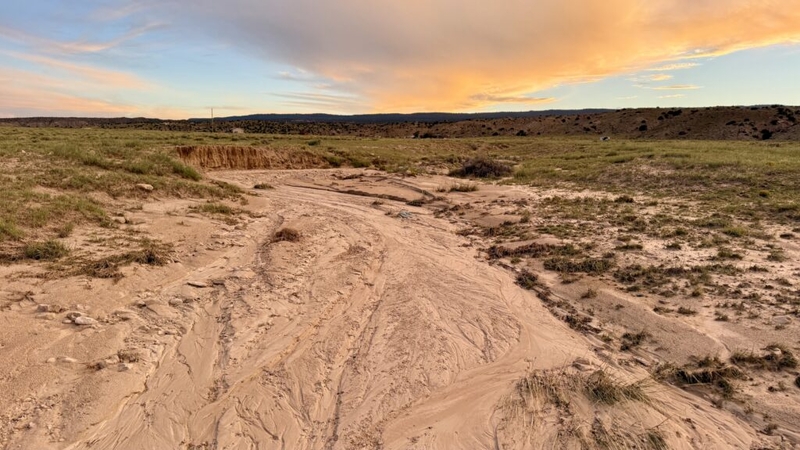
Protecting tributaries like the Little Bader Wash on his land is part of the larger stewardship of the Colorado River, Alastair Lee Bitsóí (Diné) writes. (Photo courtesy Alastair Lee Bitsóí)
Between the September monsoon storms, I waited for a clear stretch of weather before walking into the dry wash that runs through our farm in Naschitti, Navajo Nation, New Mexico. On my daily task to achieve 10,000 steps, I followed it toward the foothills of the Chooshgai Mountains with a question in mind: Where does the water — tó — that floods my cornfield begin?
I was only beginning to explore the wash’s headwaters, which begins on top of the nearly 9,000-foot Chooshgai Mountains. Walking upstream from my 11-acre farm, Near The Water Farms, also meant walking toward dormant farms shaped by a harder history. Colonization in part disrupted Diné relationships to land, while economic pressures and land disputes have left farms in my family’s clan territory dormant. Not just my family, but other families across the Navajo Nation, too. Following the ditch channel made me think about what it would take to care for those farms and grow food there again. This valley could be a place where Indigenous food crops grow in abundance once again.
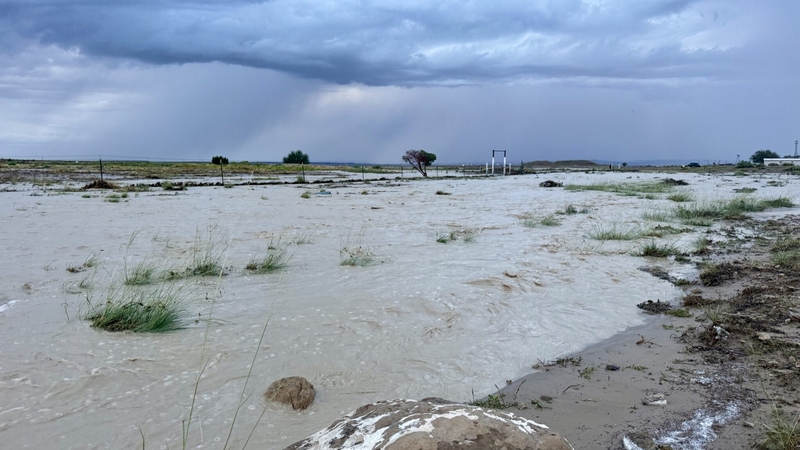
My family’s farm sits below dry channels that can appear empty for much of the year. This summer, floodwater reached the field a historic 10 times between July and September. In an ordinary monsoon season, we might see two or three floods along it. Ten flood events is insane. They bent corn, reshaped the ground and damaged our fence that needed immediate repair from livestock interference. Still, white, yellow and blue Diné corn stands among squash, watermelons, a Hopi sunflower and wild tea. Drought-tolerant Four Corners spuds, an 11,000-year-old food species, have been reintroduced and naturally growing here again. An October harvest lies ahead before the first frost comes.
I asked my mother, who is Tó’áhaní (Near The Water People), whether she remembered a summer like this. She did not.
The latest storms had cut Little Badger Wash deeper. Pools of water remained along its path, with green forage grasses growing nearby and through the dormant farms. Standing there between storms, I could see that this was not an empty ditch. The water had changed the land, and the land was responding.
When the monsoon arrives, the wash carries more than water. It can carry waste dumped in its channel, along with the sediment it moves across the land. At our farm, I watch where the water spreads and what it leaves behind as I learn how to grow food here again. Waste like a plastic chair from the mountains or an illegal trash dump stop by my farm once the floods recede. Sometimes it is big logs, manure from livestock or pine cones and needles.
Writing this piece from my car at the farm, I called my dad to ask what locals call the wash in Diné Bizaad (in the Navajo tongue). He told me, it is known as Nahashch’id Yázh – Little Badger Wash. In fact, Naschitti, geographically as a community, is known as Nahashch’idí or “Badger Springs.”
We need to reconnect with arroyos as allies, not treat them as waste dumps.
My family’s knowledge of the land and virtual maps on my iPhone help me trace the drainage downstream. Three earthen dams attempt to interrupt its flow, including a water basin in my cornfield. From there, it connects to Chaco Wash just east of Naschitti, the San Juan River near Shiprock and, ultimately, the Colorado River at Lake Powell. We talk about the Colorado River’s low flows as if the solutions begin at the big dams, or create new rules by the Bureau of Reclamation for reservoirs along its 1,450-mile path. But here in the San Juan Basin of the Navajo Nation, I am seeing what it means to care for the water before it reaches the river: reconnecting with the arroyos that bring moisture and sediment to our land, and giving our food systems a chance to grow again.
KQRE Chief Meteorologist Grant Tosterud estimated that nearly three trillion gallons of rain fell across New Mexico over seven days, from Sept. 13 to 19. That statewide figure is difficult to picture, but it also is not because of the number of floods I recorded on my iPhone. I can picture the water that came through Little Badger Wash: where it spread across the cornfield, tore through the fence and left sediment behind. It is also just out of habit to document to share with the Bureau of Indian Affairs that my farm is active and beneficially used to prevent any threat of revocation of the legal farm permit. This new week, Tosterud estimates more heavy flooding across the state at least through Thursday.
The floods across the Navajo Nation have since caused damage including the unfortunate drownings of three lives, washed out roads, and water and power outages, but they have also shown the possibility of bringing dormant farmland back into food production with water harvesting methods. Little Badger Wash is part of that work. Its water and sediment shape the field where our crops are growing, particularly as climate and drought tolerant seeds. The waste carried through a channel like this matters, too. What is left in an arroyo does not simply disappear when it dries.
We need to reconnect with arroyos as allies, not treat them as waste dumps. That shift begins with local people caring for the channels, observing where water flows and having resources to clean up waste and repair flood damage. It can help protect local surface water and the land through which water may reach groundwater. It also belongs in the broader work of caring for the Colorado River Basin and the communities downstream.
For the Navajo Nation, that work is an exercise of sovereignty. People who know these washes and farm along them should help decide how they are protected and how water supports local food systems. A river basin map can show where Little Badger Wash leads. It cannot show the work of bringing a field back into production, or the knowledge gained by watching ten floods pass through it.
Now, with flood watches across much of New Mexico, I will stay out of Little Badger Wash. A dry arroyo can fill quickly, even when rain is falling upstream rather than overhead. No walk or photograph is worth entering a channel when flooding is possible. Caring for these waterways begins with respecting their power, and recognizing what they make possible. And the teaching of Indigenous Peoples of New Mexico that Water Is Life.
Santa Fe, NM