Alaska Beacon reporter recognized with national science journalism award
Sep 23, 2026 | 7:13 pm ET
Description
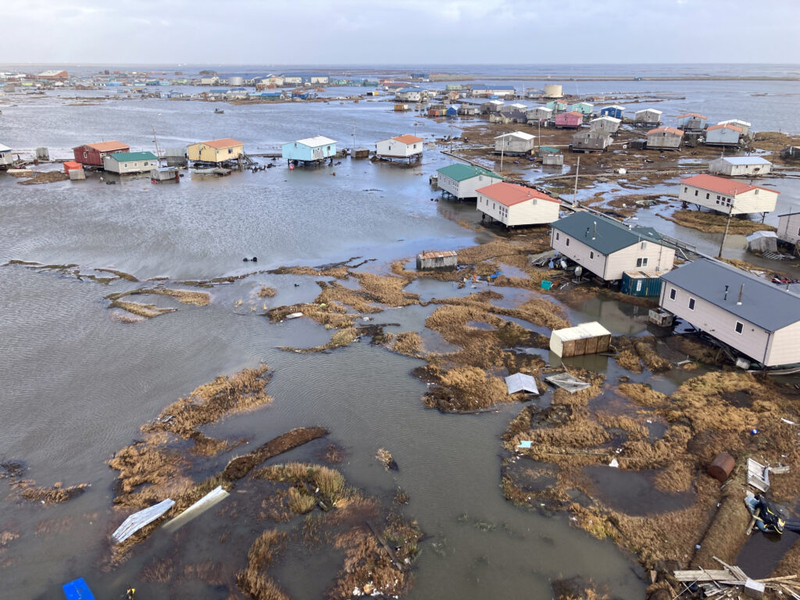
The village of Kipnuk, largely submerged by the remnants of Typhoon Halong, is seen from the air on Oct. 12, 2025. Alaska Air National Guard rescue personnel conducted search and rescue operations there, and the Alaska Division of Homeland Security and Emergency Management has worked with the Alaska Organized Militia and the U.S. Coast Guard in the response. (Photo provided by the Alaska National Guard)
After the latest catastrophic storm hit Western Alaska, displacing more than 1,500 people, killing at least one and leaving villages in ruins, residents face an existential crisis.
Will the wide delta that fans out between the lower Yukon and Kuskokwim Rivers and has supported one of the circumpolar north’s largest Indigenous populations for millennia continue to be a place where Alaska’s Yupik people can live?
So begins Alaska Beacon reporter Yereth Rosen’s award-winning report from 2025, which weaves together regional indigenous knowledge, scientific study findings and political influences to answer a freighted question about the future viability of village life in Western Alaska after ex-typhoon Halong.
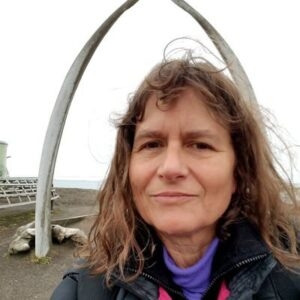
Her story, reported with help from Corinne Smith, was honored most recently with the American Geophysical Union’s Perlman Award for Excellence in Science Journalism. The award is a top honor for science reporting that makes information about science accessible and interesting to the general public.
The award is named for the former science editor of the San Francisco Chronicle.
Rosen’s story was selected as the anniversary of the devastating Western Alaska storms approaches, and as parts of the region are again under flood and storm warnings from ex-Typhoon Dujuan.
Typhoon disaster in Western Alaska raises questions around the region’s future
Her reporting did not stop with the one story — she followed the residents of the two villages hardest hit by the storms as they grappled with whether to leave their ancestral homelands or stay in areas that are vulnerable to catastrophic flooding and storms.
Ultimately, the residents of Kipnuk and Kwigillingok decided to relocate.
Rosen’s story is an example not just of national excellence in science journalism, but a realization of the Alaska Beacon’s mission to report fairly and independently on the people and interests that affect state policy, and to tell stories that aren’t being told, to bring fresh perspectives to state issues and to amplify the voices of Alaska communities that have been marginalized.
Juneau