Allegheny County officials tell Pa. lawmakers that building alone won’t fix housing shortage
Sep 16, 2026 | 6:28 pm ET
Description
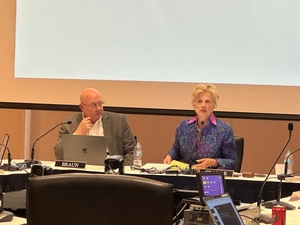
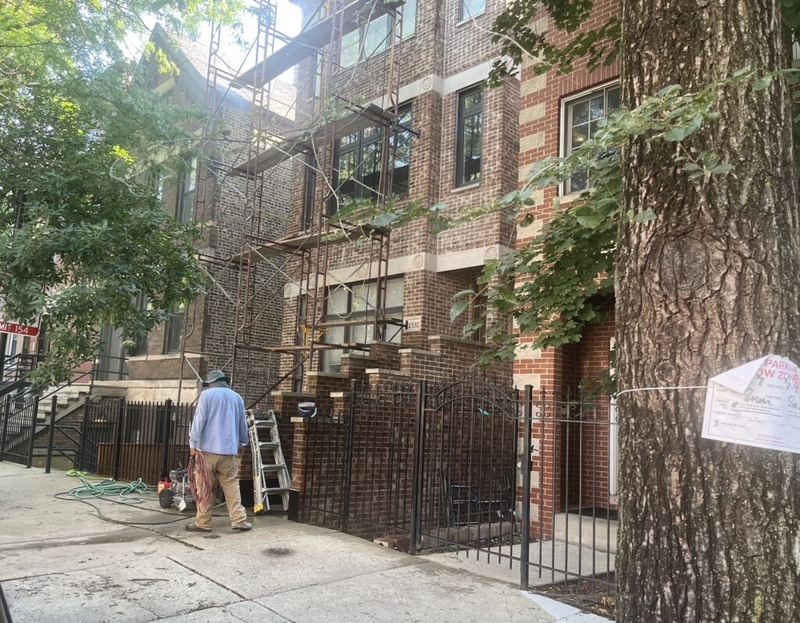
Panelists told lawmakers that addressing Pennsylvania's housing shortage must be focused on affordability and preserving existing homes in addition to building new structures. (Photo by Robbie Sequeira/Stateline)
Government employees and community advocates warned state lawmakers Wednesday that the commonwealth can’t build itself out of the housing shortage, but needed to also focus on preserving existing homes and keeping homes affordable for low-income Pennsylvanians.
“We can build all we want, but if we continue to lose units, we will still wind up in a negative situation,” said Sara Innamorato, the county executive of Allegheny County and a former state representative.
Though the lack of homes impacted people across the economic spectrum, those with limited means — specifically seniors — struggled to afford their homes, she continued.

The county lost more than 44,000 apartments between 2019 and 2024 where the monthly rent was less than $1,000. During that period, it gained 13,000 units where it cost more than $2,000 to live in each month, according to Innamorato.
Over the next decade, the pace of Pennsylvania’s homebuilding is projected to fall short by 185,000 homes. The southwest corner of the state, including Allegheny and eight other counties, will need more than 66,000 homes to keep up with the demand, according to the state Housing Action Plan.
Jen Schuchart, the director of meeting basic needs with the United Way of Southwestern Pennsylvania, said requests for housing assistance were up at the community organization. According to her, just over one-third of the region’s households don’t earn enough to make ends meet and are considered to be Asset Limited, Income Constrained and Employed, or ALICE.
Many ALICE households also spend more than 30% of their income on housing or utilities, cutting into their budgets for other, everyday needs, she continued.
“As the committee discusses the need for increasing our housing supply, we encourage you to keep the full ALICE population, which includes both our most vulnerable neighbors and our working families, at the forefront of your thoughts to create pathways to affordable housing for all Pennsylvania residents,” Schuchart said.
David Dean, the president of the Pennsylvania Association of Realtors, cautioned that affordability couldn’t be addressed until the state increases its inventory.
“We do a disservice when we convince ourselves and others that … any single bill or idea will magically end our affordability woes,” said Dean. “This problem is much bigger and requires a wide range of changes in policy.”
Still a need to speed up permitting
Pennsylvania lawmakers have held several hearings in recent months on the housing shortage and affordability, with many emphasizing the need to reform permitting processes on the state and local levels.
Developers have said that delayed approvals add to the bottom line at a time when other expenses are increasing. On top of other industry woes, the federal crackdown on immigration is driving up labor costs and tariffs add to the price of materials.
To make the process faster and more predictable, Pittsburgh’s newest mayoral administration is overhauling its approach, according to Matt Singer, the deputy chief of staff for Pittsburgh Mayor Corey O’Connor.
Bipartisan coalition of state lawmakers looks to incentivize ‘pro-housing’ communities
“Our permitting system has not kept pace with Pittsburgh’s needs. It was not built for today’s necessary pace of investment,” said Singer. “As a whole, cities must make it easier to build, convert, permit and repair new and existing housing units.”
This includes smaller scale projects for things like accessibility modifications, he added, which the city is trying to speed through with a fast-track pilot program and virtual inspections.
Jon Knudsen, who works on housing projects with Commonwealth Development Partners, said he was “extremely optimistic” about the future despite the challenges, giving the city credit for the improvements.
“Development is difficult everywhere right now. Construction costs are high, interest rates and financing costs remain challenging,” said Knudsen.
His firm is redeveloping the 37-story Grant Building in downtown Pittsburgh. The 1929 structure was the first high-rise in the city and is a recognizable part of the skyline, but transforming some of its floors from empty offices to apartments has been challenging.
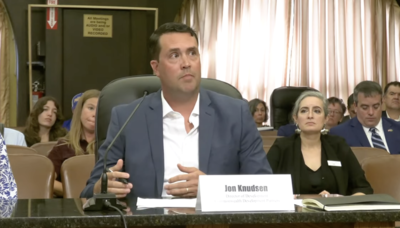
“There is no shortage of buildings that need a new purpose post-COVID … the problem is getting from where they are today to a point where someone can actually invest the tens of millions of dollars necessary to give them that second life,” he added.
He recommended more cities creating “a single point of contact,” pointing to an experience he had in Chicago. One city staffer guided his firm through permitting and coordinated the process across various agencies.
“It was still a lengthy process … but we knew exactly what and where we were going,” he said.
Minority Chair Rep. Rich Irvin (R-Huntingdon) weighed the compromise between increasing the supply of houses at the potential cost of local autonomy, such as proposals requiring municipalities to consider accessory dwelling units or reform their zoning to be friendlier to multi-family homes.
“Something that I have struggled with is how to not be heavy-handed to local governments, but to try to encourage local governments to actually do exactly what you’re trying to do here,” he said.
Innamorato recommended using incentives, rather than penalties. For a local fund, the county prioritizes applications with pro-housing policies that span multiple municipalities.
“It doesn’t mean you’re eliminated from being able to access these funds, it just means that your likelihood of getting this money for your community increases if you’ve adopted some of these best practices,” she added.
A focus on affordability
But Maura Jacob, the policy and community impact officer of The Pittsburgh Foundation, warned that expanding the housing supply without also planning for the poorest Pennsylvanians would be unwise, citing an analysis from the Center on Budget and Policy Priorities.
“While expanding housing supply can reduce average rents, it isn’t enough by itself to help people with the lowest incomes afford housing,” read the post. “Supply-only strategies — even those designed to create affordable housing — won’t create housing options affordable enough for them.”
The paper argues in favor of expanding rental assistance programs, noting that existing rental efforts don’t reach the majority of qualifying households.
“In 2024, the median extremely low-income renter household could afford about $308 a month in rent. The median national rent was close to five times that,” said Jacob. “No amount of construction closes a gap that wide without sustained, targeted support.”
Jacob supported efforts to expand tenant protection, prevent evictions and preserve affordable housing — the last of which was the goal of the short-lived Whole Homes Repair Program.
Using one-time federal funds designed to offset economic losses from COVID-19, Pennsylvania devoted $125 million for homeowner grants, workforce development and more. The popular program has repeatedly failed to get enough support from legislators for state funding, however, though a national version inspired by Pennsylvania’s model is in development.
“The impact of the program was incredible,” Lena Andrews, the CEO of ACTION-Housing Inc., told lawmakers. Her organization oversaw Allegheny County’s portion of the funds and was able to meet just 3% of the application demand.
Sometimes aging properties can be more expensive to fix than building something new “because they’re in such bad shape,” Andrews shared, noting that Pittsburgh has some of the oldest housing stock in the nation.
“Often, when we look at doing renovations, the cost per square foot is more than new construction. Which seems crazy, but it is true,” she continued.
“We’re trying to fundraise for continuing that work and we’re piecing together local sources of funds, but the state investment in that program was just hugely important,” she continued.
State lawmakers are set to reconvene in Harrisburg at the end of the month.
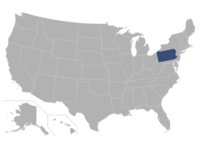
Harrisburg, PA