Effort to honor first Native American physician expands in Walthill
Sep 15, 2026 | 6:45 am ET
Description
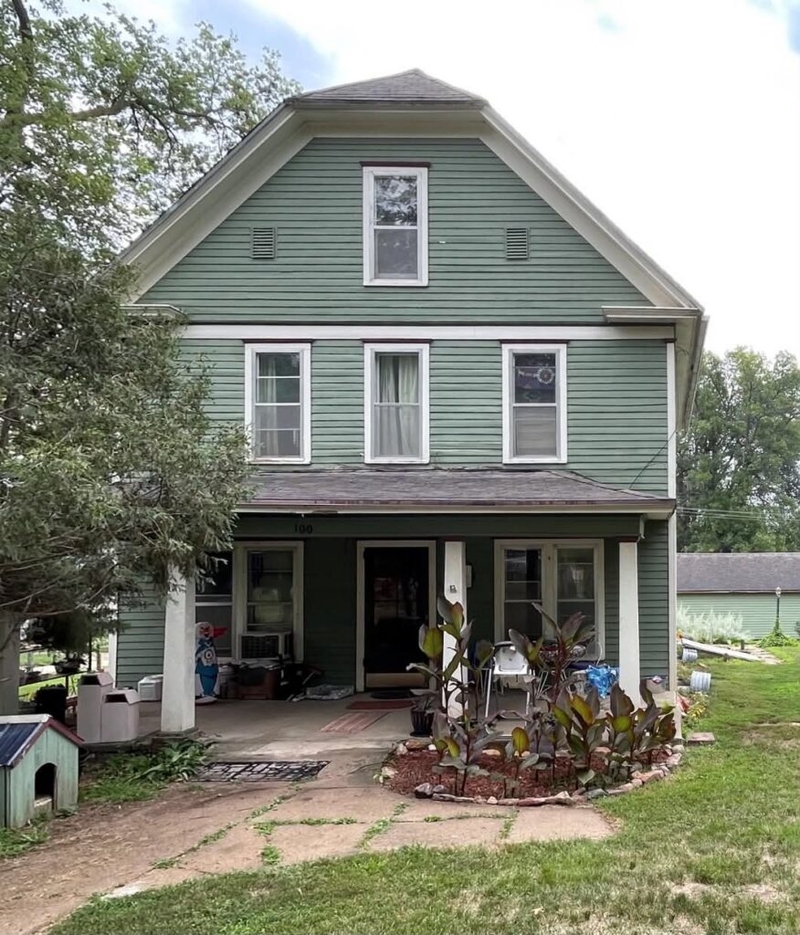
Dr. Susan La Flesche Picotte clashed with carpenters several times over the construction of her home in Walthill. She wanted to make sure the home had plenty of natural light and circulation — for health reasons — according to Joe Starita, who wrote her biography. (Courtesy of Gary Bowen)
WALTHILL — For 37 years, Vida Stabler raised a family and carefully maintained a two-and-a-half story, Folk Victorian home in this reservation town.
It was a fixer-upper, she said, but ideal for her and her husband, newly married.
“I loved every morning here,” Stabler said. “Sitting out on the porch. Being surrounded by all the trees. We have a multitude of birds.”
But the house also had a presence, she said. Not a ghost, but the original occupant of the home — a physician and leader in the Omaha Tribe — whom Stabler could visualize walking up stairs, holding tribal meetings or seeing patients in the living room.
The first occupant was Dr. Susan La Flesche Picotte, the nation’s first Native American doctor and a fighter for the rights of her tribe. Stabler said knowing that La Flesche Picotte had once lived in the home was an inspiration to her throughout her life.
“I always felt a warmth from this home … a healing,” she said.
Now, the home is, in a way, heading home.
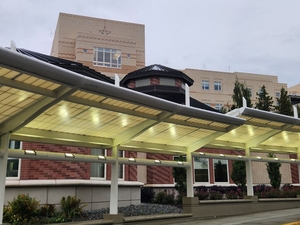
Stabler, now 69, recently sold the 119-year-old residence to the nonprofit that purchased and restored the hospital built by La Flesche Picotte on a high hill in Walthill in 1907.
The purchase of Dr. Susan’s home, according to those associated with the Picotte Center, will help complete the amazing story of the doctor, who insisted on good hygiene and sanitation and quality medical care for hundreds of patients on the Omaha Indian Reservation in northeast Nebraska.
“Once we got the hospital restored, we always had our eye on the house,” said Gary Bowen, a member of the Picotte Center board. “They go together. You can’t leave one of them out.”
The Dr. Susan home was built in 1907 by her family. Until she was able to get a hospital built, the house served as the center of her medical practice. In 2010, the home was added to the National Register of Historic Places due to its role in the physician’s life.
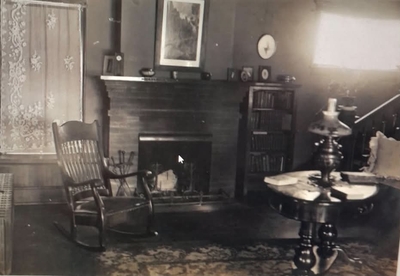
Above the fireplace is an inscription, “East West – Hame’s the best.” (“Hame” is an old Scottish term for “home.”)
“She loved that home,” said Joe Starita, author of the biography of Dr. Susan, “A Warrior of the People.”
He called it the “spiritual comfort center” of Dr. Susan’s life.
“It anchored her emotionally, it anchored her spiritually … it served many purposes for this beloved doctor,” Starita said.
According to his book, which has an entire chapter devoted to the home, “she began leaving a lighted lantern in the window each night, a beacon to guide the sick and the injured and the desperate through storms and darkness, a light to guide them to her door.”
After a long fight with bone cancer, Dr. Susan died in an upstairs bedroom in the home in 1915. She was 49.
Dozens of tribal members visited the home to view her body, which lay in state in the living room, according to Starita.
In one of the closets, Stabler said, she found the inscription “deliver to Dr. Susan’s house” written on one of the boards.
The doctor saw patients at the home before the opening of the hospital, according to Liz Lovejoy Brown, the executive director of the Picotte Center. Surgical procedures were done across the street, in an outbuilding near her sister’s home.
“She had no other place to go,” Lovejoy Brown said.
It also served as a place where fellow Omaha tribal members could seek Dr. Susan’s help in navigating government regulations and programs. She could interpret for those who didn’t speak or read English.
Typical of her help was this entry in her diary: “White Horse came in to see me about the plans for the new house … Dan Wolf and his wife came in. He wanted me to interpret for him in his will. His wife asked me to look after her lands; that she had received no rent for 2 years.”
Other diary entries included “Tended to Noah who is almost well — drafted letter for Emma H. Guitar,” “Nellie Springer wants her heirship interest looked up. Did so,” and “Got baby’s breakfast and gave him his medicine …”
In 1911, over 60 members of the Omaha Tribe gathered to meet with three members of a Nebraska legislative committee to discuss a proposed bill that attempted to protect the inheritance rights of Native American wives and their children.
During the meeting, Dr. La Flesche Picotte chose to address her fellow tribal members in their native language, rather than in English, which reportedly served to avoid interruptions by the committee chairman, who opposed the proposal, the Gallagher Bill.
Her status and abilities as a local leader were highly valued, according to Lovejoy Brown. Dr. Susan was the youngest child of Chief Joseph La Flesche (“Iron Eye”), the last traditionally recognized chief of the Omaha Tribe, and she advocated and testified for the rights of her tribal members.
“When you’re recognized as a resource in your community, people would come to you,” Lovejoy Brown said. “People trusted you.”
Stabler, who heads up the Omaha Nations Public School cultural and language program in Macy, portrayed Dr. Susan, in period dress, in presentations for local schoolchildren for several years.
That role began after the dedication of the Picotte hospital as a museum, at which Stabler presented a play that highlighted the amazing life of the doctor.
“One day, I was at a Sioux City grocery store when a kid came up to me: ‘I know you. You‘re Dr. Susan,’” Stabler said.
For years, Stabler served on organizations dedicated to preserving the story of Dr. Susan. She is currently the treasurer of the Picotte Center Board.
At 69, Stabler said, she was getting to the point that she could no longer maintain her home, thus the sale to the Picotte Center. It’s been hard to leave, she said, but she expects that Dr. Susan would approve.
“I believe what’s to come will be beneficial for all,” Stabler said.
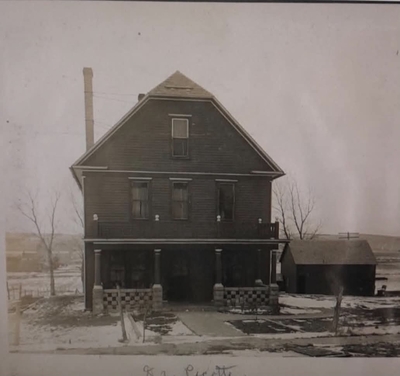
Just how the Dr. Susan home will be used has not yet been determined. There are plans to hold town hall meetings with local residents to gather their input on possible uses.
A Lincoln architect, Dan Worth, is doing an assessment of the condition of the home.
Lovejoy Brown said maybe it could become a cafe for visitors to the Picotte Center; Stabler wants the home to be a place of “healing”; Bowen said perhaps a caretaker would live there.
A fundraising campaign would be necessary to finance any renovations to the home. Private donations covered the $100,000 purchase of the house.
Whatever is determined to be the future of Dr. Susan’s house, Bowen said it should be something the Omaha Nation can be proud of.
“That’s the whole purpose of this exercise,” he said. “To honor Dr. Susan and the Omaha people.”
Lincoln, NE