New Mexico outdoor recreation officials seek more funding to meet demand for youth programs
Oct 29, 2026 | 11:29 am ET
Description
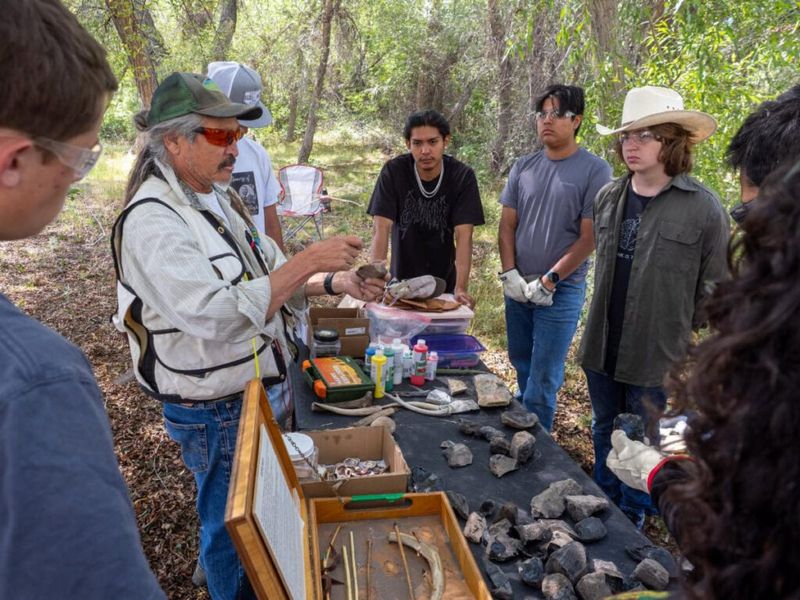
Officials from the New Mexico Outdoor Equity Fund requested additional funds during an interim legislative committee hearing on Oct. 27, 2026, saying that high demand and limited funds left nearly half of program applicants without funding. Above: Mesa Prieta Petroglyph Project summer youth interns build archaeology skills alongside traditional skills and knowledge. (Photo courtesy of New Mexico Outdoor Recreation Division)
Officials for New Mexico’s outdoor youth grant program told lawmakers this week that at its current budget level, the program could only fund approximately half of the proposals during a recent grant cycle. They hope to receive more funding during next year’s legislative session to meet growing demand.
The Outdoor Equity Fund, a program of the state’s Outdoor Recreation Division, has awarded $12.8 million in grants for various outdoor youth programs across 25 of the state’s 33 counties since it began in 2019.
Originally, the program capped grants at $40,000, but in May began awarding up to $100,000 to larger programs. In September, the program announced eight $100,000 awards in the first round of FY27 grants spread among 54 total recipients — totaling $2.2 million. Some examples of those awards include $100,000 to Friends of Organ Mountains-Desert Peaks in Doña Ana County for outdoor education, afterschool mountain biking and other youth programs; to just over $30,000 to Adaptive Sports Program New Mexico in Sandoval County to provide adaptive ski and snowboard instruction to students with disabilities; and $15,000 to the Northern NM R.O.C Foundation in Rio Arriba County for The Fly With Me program to connect Chama Valley middle school students with free fly-fishing lessons and other types of outdoor education.
However, demand has outpaced available funding, Outdoor Recreation Division Grants Coordinator Evan Pilling told lawmakers on the interim Water and Natural Resources Committee during its Tuesday meeting, with applications increasing more than 140% in FY26. In total, the program received $7.8 million in requests but had only $4.2 million in funding, Pilling said, leaving 48% of applicant requests unmet.
“We do the best we can to provide funding to the highest quality and highest impact programs,” Pilling said, “while also taking into account factors like rural and tribal communities.”
Chas Robles, executive director of Ancestral Lands Conservation Corps, presented the Coalition of Outdoor Equity Fund New Mexico’s request to increase program funding to $10 million annually for the next three years. Robles said the proposed increase would make outdoor programs more “visible and accessible, rather than leaving a young person to figure it out alone.”
One of the existing grant-funded programs is Sugar Hill Pathways in Mescalero, which offers bike mechanic training and a cycling program for Mescalero Apache Tribe youth. Sugar Hill Pathways received a $40,000 grant from the program last year.
Leerae Lester, a 17-year old member of the Mescalero Apache Tribe, told lawmakers that while his peers spend their time “on their phones and gaming,” he recently started bike mechanic training with Sugar Hill, which has taught him “how to use tools, solve problems and work with other people.” He added that he and seven other Sugar Hill members now hope to open their own community-run bike shop when they are older.
“When New Mexico invests in programs like this, you’re not only paying for an outdoor experience — you’re investing in young people who could become the mechanics, guides, business owners, trail workers and community leaders of the future,” Lester said.
Sen. Linda López (D-Albuquerque) praised Lester, calling him a “leader” and said she “looks forward to seeing what we can do to make sure that $10 million is recurring” during the next legislative session.
Santa Fe, NM