Western Alaska voters asked to weigh familiar state House candidates with similar stances
Oct 29, 2026 | 9:30 am ET
Description
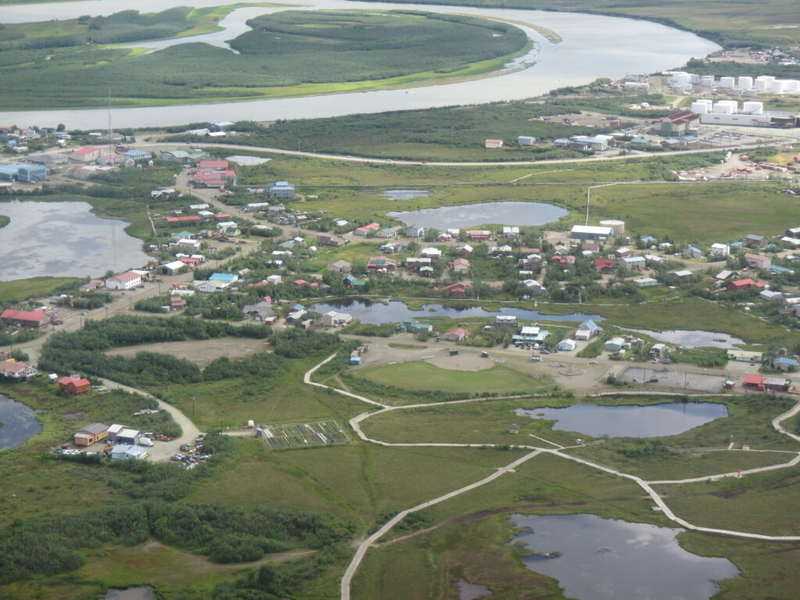
The Yukon-Kuskokwim hub of Bethel is seen from the air on July 13, 2015. It is the biggest community in sprawling Alaska House District 38, where voters are deciding whether to keep the current incumbent or return a previous lawmaker to office. (Photo by Rachel Loehman/USGS Alaska Science Center)
In a tightly fought Alaska legislative race, voters in one of the state’s most rural districts will be choosing between familiar candidates in a contest unlikely to change the balance of power in the state House.
The leading candidates are current Rep. Nellie Jimmie of Toksook Bay and the incumbent she beat two years ago, former Rep. CJ McCormick of Bethel. Both are Democrats, so a victory by either is unlikely to change the balance of power in the legislature.
In the Aug. 18 primary, McCormick edged Jimmie, winning 32% of the vote to her 29%.
Also in the race is another familiar candidate, Willy Keppel of Quinhagak, running as a Republican. He has mounted legislative campaigns since 2002, and in the last election ran as a member of the Veterans Party of Alaska. He took 24% of the primary vote.
A fourth candidate, Joseph Amik of Napaskiak, ended his campaign on Monday, citing health reasons, and endorsed Jimmie. Another Democrat, he had won 14.7% of the primary vote.
Jimmie and McCormick have similar views on issues like fishery management, public safety, infrastructure needs and fiscal policy.
The one issue that differentiated the candidates in the last election — their positions on the controversial Donlin Gold mine proposed for the region’s uplands — no longer distinguishes them.
The project would be one of the largest open-pit gold mines in the world, providing revenues and jobs in what is currently one of the lowest-income regions in Alaska. It would also be an economic boon to Alaska Native corporations; the site is on land with surface rights owned by the village Kuskokwim Corporation and mineral rights owned by the regional Calista Corporation. Both corporations are owned by the region’s Yup’ik people.
But there is deep opposition to the mine among many in the region because of potential environmental harm, affecting salmon and natural resources at the heart of people’s diets, lifestyles and Indigenous cultures.
McCormick said he has always opposed the mine and that opposition seems to be growing in the region. That is a contrast to Jimmie’s position of neutrality in 2024.
“I think people want someone who will stick up against Donlin,” McCormick said during an interview last week at the Alaska Federation of Natives convention in Anchorage. “I think there is a difference between saying you’re neutral and saying you’re against something, especially when, you know, there’s kind of momentum in one direction.”
Jimmie, in an interview during the AFN convention, said she is no longer neutral and now opposes the mine, as well. Her experience in the devastating storms in Western Alaska around ex-Typhoon Halong was the catalyst that changed her mind, she said.
“After Halong, we’re not the boss of the water. The water says how much it comes. The storms say when they’re going to come,” she said. “I can’t support a mine that doesn’t have a guaranteed 100% that it’s safe. Mining jobs cannot protect our fish, you know.”
Along with the ex-typhoon, a new supplemental environmental impact statement issued by the U.S. Army Corps of Engineers helped turn her opinion against Donlin, she said. That environmental study, ordered by a federal court, described the potential damages of a large though unlikely breach of the 471-foot dam that Donlin’s developers propose to build to contain mine waste.
Keppel, the Republican candidate, is also against the Donlin project.
“The first time I ran for office was in 2002 against Senator Lyman Hoffman, and I ran because I was opposed to Donlin mine. I’m still opposed to the Donlin mine. I’ll always be opposed to the Donlin mine,” he said at a Sept. 30 candidate forum broadcast on public radio station KYUK.
A non-Native, he has repeatedly criticized Calista and its leaders for supporting the Donlin project.
Gubernatorial candidates
While the Donlin mine controversy is a top issue in House District 38, it has not gotten much attention in the statewide campaign.
A rare mention came during an Oct. 19 forum in Anchorage, when a question about Donlin was posed to the two candidates attending the event: former state Rep. Jonathan Kreiss-Tomkins, D-Sika, and former Anchorage Mayor Dave Bronson, a Republican.
Kreiss-Tomkins said he will defer to whatever is the consensus of the people in the region, where there are currently deep divides over Donlin.
“I can’t say I know the answer right now,” he said in a response to the Donlin question, posed at a Justice Organizing Interfaith Network candidates event held at St. Anthony Catholic Church in Anchorage.
Kreiss-Tomkins said he has had conversations with people both in favor and opposed and will continue those conversations. “Basically, my commitment would be to spend time in the region and hear the voices of the people in the region and get a sense of where they are. And that is a major variable for how I would respond as governor,” he said.
Bronson said he supports the mine “as long as it’s done correctly.”
“I think the mine is a good idea,” Bronson said at the forum. “We’re in a situation where we’re short on money. And the single best way to create wealth in the state is to extract. That’s going to create wealth.”
Another gubernatorial candidate, former Attorney General Treg Taylor, a Republican, is a strong supporter of the Donlin project, according to his campaign.
“Treg Taylor is definitely in favor of the Donlin Gold Mine. He believes it will provide good paying jobs in an area that needs these opportunities. It will benefit the area and Alaska greatly!” April Gettys, Taylor’s campaign manager, said by email.
A query to Republican candidate Bernadette Wilson about her position on Donlin did not receive a response. However, she has generally favored resource-extraction proposals in the state.
Jimmy said the region “went through one of the toughest times (with) the Halong disaster displacing 1,700 of my people — my cousins, my relatives, my friends I grew up playing sports with,” she said. Beyond the villages that were evacuated, other communities suffered severe damages, she said.
“My office has been working around the clock with our constituents, you know, making sure they get the right help,” she said.
McCormick said he supports a proposal by the Association of Village Council Presidents to set up what it has called a Western Alaska Public Safety Emergency Response System, an idea that grew out of the 2022 ex-Typhoon Merbok disaster and has now become more prominent in the wake of ex-Typhoon Halong.
“It is really top of mind for both people responding to that disaster, but I think also really being equipped when they inevitably come again, because I think it’s just part of the life out there,” he said.
Keppel, 72, differs sharply from his Democratic competitors on almost all issues except for the Donlin Gold mine.
He has spent much of his campaign attacking Democrats in general and Jimmie in particular. He claims legislative Democrats killed hopes for a massive natural gas pipeline project because they did not approve Gov. Mike Dunleavy’s plan to provide tax breaks to project sponsor Glenfarne.
He has criticized Democrats’ environmental policies. “The Democrats’ platform is they want to do away with oil and gas in Alaska,” he said in the KYUK forum. “I don’t know how the heck they plan on heating their houses. Fairy dust and solar panels are not going to cut it in Alaska.”
And he has hurled personal accusations against Jimmie, including a claim he made during the KYUK forum that she “had an emotional breakdown” at one point.
That statement drew a rebuke from moderator Evan Erickson of KYUK.
“That’s a derogatory comment, Willy, can you please just rein it in on that?” Erickson said.
It was not the first time Keppel, who is not Native, has made a questionable comment. Last year, in comments on a conservative talk radio program, Keppel said he would “counter” the Native voice in a district that is overwhelmingly Yup’ik.
“I really believe it’s going to take somebody from out here to be able to go in and counter the Native voice from Western Alaska that wants to continue what we have going,” he told Michael Dukes, the talk-show host.
Different personalities
For Yukon-Kuskokwim voters who can no longer distinguish candidates by their Donlin stances, decisions may come down to personalities.

Though not Native himself, he has experience working for tribal organizations, both the Yukon-Kuskokwim Health Corp. and the Association of Village Council Presidents.
Born and raised in Bethel, the region’s hub community, he does not believe his non-Native heritage will be a minus, he said.
“I don’t really think it’s about identity. I think it’s about who supports you and who is that you are,” he said. “I’m doing this because I know people that I respect want me to do this, not because of who I am.”
Jimmie, 47, had never served in elected office before becoming the region’s House member over the past two years. Her previous public service experience was as a local representative for the Alaska Village Electric Cooperative.
However, in the legislature she secured a position on the powerful House Finance Committee. The last Yup’ik representative on that committee, she noted, was Democratic U.S. Senate candidate Mary Peltola, a former state legislator.
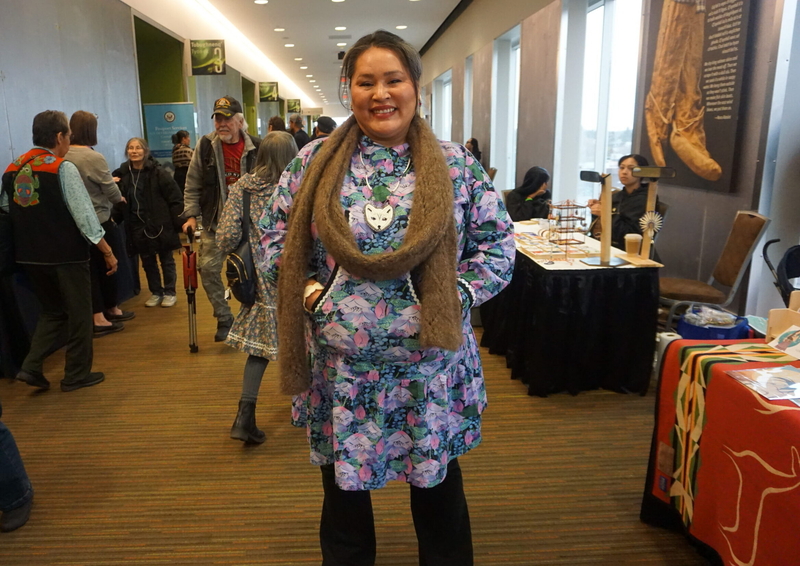
Of Yup’ik, Ojibwa and Lakota heritage, Jimmy practices a traditional Indigenous lifestyle. She is an accomplished artist and artisan, and she often wears traditional clothing and jewelry that she made herself or that relatives made.
Amik, whose name will remain on the ballot, highlighted Jimmie’s Indigenous heritage when he endorsed her.
“I will be voting for Nellie Jimmie. We need a Yup’ik voice. And I endorse Nellie Jimmie for District 38,” he said in a Facebook message posted Monday.
Beyond policies and personalities, the campaign in the Yukon-Kuskokwim region is colored by rural Alaska conditions and culture.
Traveling around by plane is expensive, so alternatives are employed, such as river travel by boat, McCormick said.
On one boat trip from Bethel to the nearby village of Napakiak, McCormick brought along 200 burritos to serve to the locals.
“Thankfully, my mom knows some catering tricks, and so we were able to keep them warm,” he said.
Jimmie faces similar cost challenges, but she has also made some fun discoveries in her travels.
“The one thing I love about campaigning is when I go to any of the communities, the villages, it’s like I end up finding out somebody’s my relative. Like, ‘You’re my aunt. You’re my cousin,’” she said. “It’s just beautiful.”

Juneau