Providers raise concern about patient privacy during public hearing on MaineCare oversight
Sep 10, 2026 | 2:18 pm ET
Description
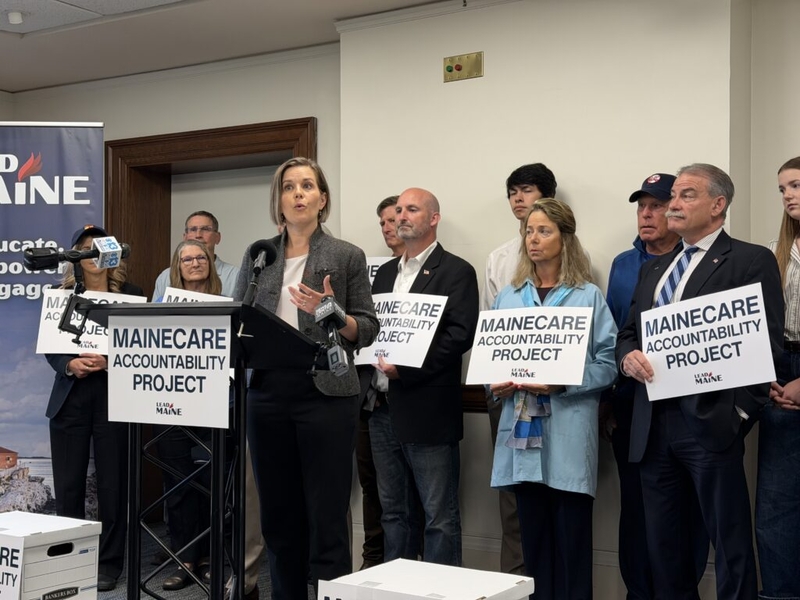
Rep. Laurel Libby at a June 23, 2026 press conference announcing a petition to prompt Maine's health department to change Medicaid oversight rules. (Photo by Eesha Pendharkar/Maine Morning Star)
At a public hearing Thursday, the Maine Department of Health and Human Services heard from more than a dozen legislators and members of the public who said they would like to see stricter oversight of Medicaid providers.
While agreeing with the need to crack down on intentional wrongdoing, providers and advocates cautioned that the proposed rule changes may put patients’ privacy at risk and make it difficult for healthcare agencies to stay in business.
Driven by concerns of widespread fraud, which has become a key issue for the Trump administration, a Republican-led group has been pushing for more accountability in the MaineCare system. Last month, the department announced that it suspended payments to five providers based on allegations of fraud.
A petition initiating the rule-making process proposed requiring in-person visits from the health department when investigating a provider for potential fraud. It also proposed suspending payments to providers suspected of improper billing, instead holding their reimbursements in an interest-bearing escrow account until investigations are complete, and requiring those providers to continue offering medically necessary services.
Lead Maine, a group run by state Rep. Laurel Libby (R-Auburn), submitted more than 3,500 signatures in June. Since a Portland-based healthcare provider was put under payment suspension last December, state and national Republican lawmakers have claimed that the state’s Medicaid program is rife with fraud and that Democratic leaders are ignoring the issue.
“We all know that accountability should start at the top, and we haven’t seen that from Governor Mills or the Legislature,” Libby said on Thursday. “So here we are today.”
Assistant House Minority Leader Rep. Katrina Smith, a Republican from Palermo, said the proposed rule changes would help expand healthcare access.
“If these funds were not being wasted, we would see increased opportunities for healthcare for others, increased opportunities even for mental health care or addiction care,” she said. “This is a serious chance for us to change the way things are going.”
Rohen Brown, a University of Southern Maine sophomore and Lead Maine employee, said she believed the proposed changes are reasonable, given recent discoveries of fraud and improper payments.
“I’m not asking for fewer MaineCare services, I’m not asking legitimate providers to face unnecessary barriers,” she said. “I’m asking for a system where accountability is built into the process instead of being something we try to achieve after money has already been lost.”
Providers wary of proposed rules
However, providers and advocates for healthcare agencies were more cautious in their public comments, wondering how implementation of the proposed changes might affect providers, who they said are already struggling.
Bev Uhlenhake, a consultant at Pierce Atwood who spoke on behalf of the Maine Association of Personal Care Agencies, said the two changes “would do serious harm to the good agencies.”
“This first requirement for in-person on-site reviews and inspections at any location where MaineCare services are delivered means that in personal care, someone receiving just a couple hours of care a week has their privacy and dignity invaded,” she said.
“So at some point, we need to decide: Do these folks — who we’ve determined are deserving of care and are qualified for care — have to give up their privacy and dignity to receive care.”
Erin Wilson, a provider for Back to Basics Behavioral Health, echoed those concerns. She also spoke about the proposed funding freeze, which she said would “cripple any agency.”
“We rely on those funds to pay our staff,” Wilson said.
Nicholas Grover, who also works for Back to Basics, said he has experienced delays of up to 12 months when interacting with the state’s MaineCare office, and that he’s concerned if payments are frozen, they may take a long time to start back up, jeopardizing jobs and patients.
“What I would recommend is to take a careful look at how this is being implemented to protect the good faith providers that are doing a wonderful job,” he said.
Augusta, ME