Conservative business group’s multi-PAC strategy flops as General Assembly incumbents prevail
Sep 10, 2026 | 4:02 pm ET
Description
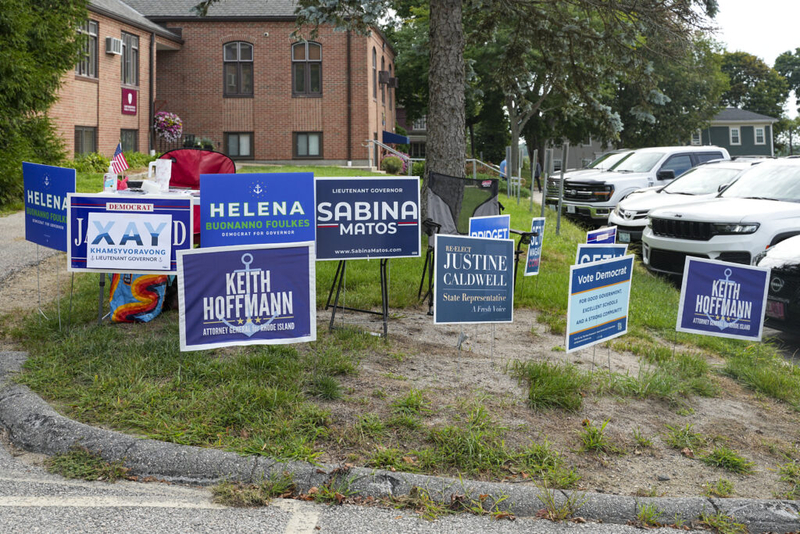
A concentration of campaign signs for Democratic candidates in Wednesday's primary are shown outside the Swift Community Center in East Greenwich. (Photo by Laura Paton/Rhode Island Current)
In contrast to the stunning primary day upsets in which Democratic challengers dethroned Rhode Island’s governor and the mayors of Providence and Pawtucket, every sitting state lawmaker seeking reelection won Wednesday night.
Incumbents typically hold an advantage, especially in Rhode Island, where the rigor of the job coupled with low pay and a dominant Democratic party suppresses competition. Nearly two-thirds of the 113 General Assembly seats featured a single candidate this election cycle, with just 13 sitting lawmakers — all Democrats — facing primary challengers (excluding open seat contests).
“It’s very hard to go against General Assembly leadership,” said John Marion, executive director of Common Cause Rhode Island. “They put a lot of resources into protecting their members.”
But a new political group with an unconventional campaign finance strategy to unseat progressive lawmakers focused more attention on the few contested races by endorsing conservative-minded candidates. The League of RI Businesses champions gun rights, lower taxes and business-friendly policies, and backed a slate of challengers by circumventing the state law capping political action committee donations at $2,000 per candidate per year.
Yet The League’s 40 PAC strategy — one for every city and town plus a statewide organization — and open solicitation of anonymous donations failed to notch any wins on primary night.
All seven of the Democratic challengers endorsed by The League in state legislative races lost, some defeated by a 50- or 60-point margin.
“Not only did we not win, we just got clobbered,” said Dave Levesque, co-founder of The League. “It’s an embarrassment.”
The problem, as Levesque sees it, is not with The League’s candidates, nor its strategy. Instead, he blamed the voters who sat out the primary despite voicing support for The League’s platform and candidates.
“The people on the left came out and voted,” Levesque said. “The people in the middle and the right didn’t.”
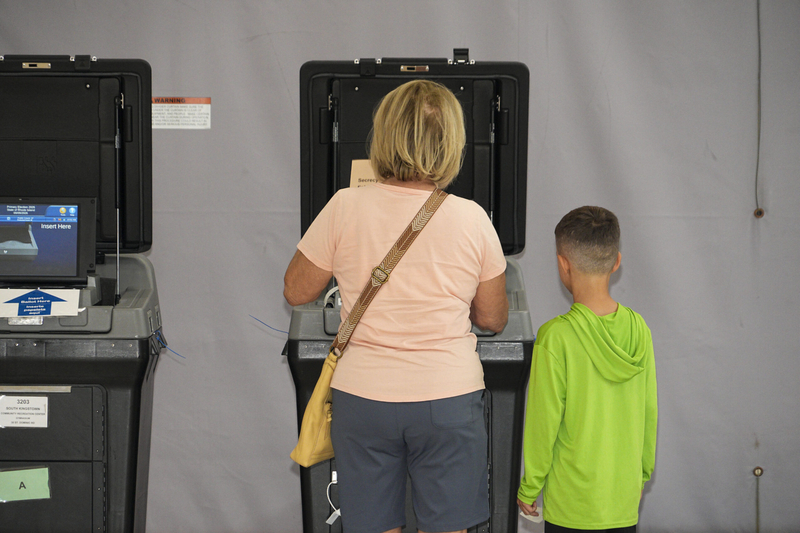
More than 19% of registered voters cast ballots across the state Wednesday, with the highest primary participation since at least 2018, according to preliminary turnout results from the Rhode Island Department of State. A breakdown by political party, and ideological factions within each, was not available.
Progressive victories in the Providence mayoral and city council races, along with upsets of Pawtucket Mayor Don Grebien, a moderate Democrat, and Gov. Dan McKee, could suggest higher turnout among younger and more left-leaning voters. The League did not intervene in those races — focusing on state legislative seats only — but the more moderate candidates Levesque would have preferred lost anyway.
“That has nothing to do with us,” he said. “The left movement is just strong.”
But the victorious challengers — Helena Foulkes for governor, David Morales for Providence mayor and Adam Greenman for Pawtucket mayor — offer three very different ideologies and backgrounds. What they share, in Marion’s view, is a strong ground game rooted in hyperlocal issues like rent stabilization in Providence, and the Washington Bridge in the governor’s race.
“My big conclusion is that campaigns matter,” Marion said.
Money can’t buy everything
Money may not be as important, evidenced by Smiley’s substantial spend against Morales in the Providence mayoral race.
While The League promised it could donate up to $1 million per candidate based on its 40 PAC cycle, no one actually got a seven figure boost — because donors didn’t come through. The League received just under $110,000 in donations across its PACs during the primary cycle, according to campaign finance reports.
Levesque estimated 1,000 individual donors contributed.
“You can’t make change on that few people,” he said.
And despite a heavy social media marketing campaign, The League’s messaging did not seem to break through with its target audience of conservative and moderate voters.
“I had people call me [on primary day] who didn’t know about The League,” Levesque said. “The average person isn’t paying attention to us.”
Not only did we not win, we just got clobbered. It’s an embarrassment.
Sen. Alana DiMario, a Narragansett Democrat who beat back League-endorsed challenger Mark Mesrobian in the Senate District 36 primary, offered a different take.
Many of the voters she spoke with during neighborhood door-knocking and campaign events had heard of The League. And their impression was not positive.
“People were aware of how much money was being pumped into my opponent’s campaign, and they did not like that,” she said.
Campaign finance reports show The League funneled $10,500 into Mesrobian’s campaign leading into the primary. But the entrepreneur and Bonnet Shores Beach Club general manager also secured donations on his own, raising more than double what DiMario brought in during the three months that ended June 30.
Mesrobian said he made “great inroads” as a first-time candidate and may try again in a future election cycle.
“It’s hard to understand what voters want,” Mesrobian said, adding that he will vote for DiMario in her unopposed general election bid on Nov. 3.
While Mesrobian proved to be one of The League’s best independent fundraisers, the race for the Senate seat spanning North Kingstown and Narragansett was not even close. DiMario received nearly 72% of the vote, according to preliminary, unofficial results. Lopsided losses resulted for League races in Pawtucket’s Senate District 15, where incumbent Sen. Meghan Kallman led challenger Vanessa Lopez by 40 points; and House District 36 spanning parts of western Rhode Island, where Rep. Tina Spears of Charlestown beat challenger Leah Bosclair by more than 60 points.
A few matchups were closer. Sen. Ryan Pearson of Cumberland won the Senate District 19 primary against League-backed challenger James Metivier by under 4 points, while Rep. Enrique Sanchez of Providence fended off Santos Javier for the House District 9 seat by a 5-point margin. Both are still outside the window that allows for recount requests.
More incumbent wins
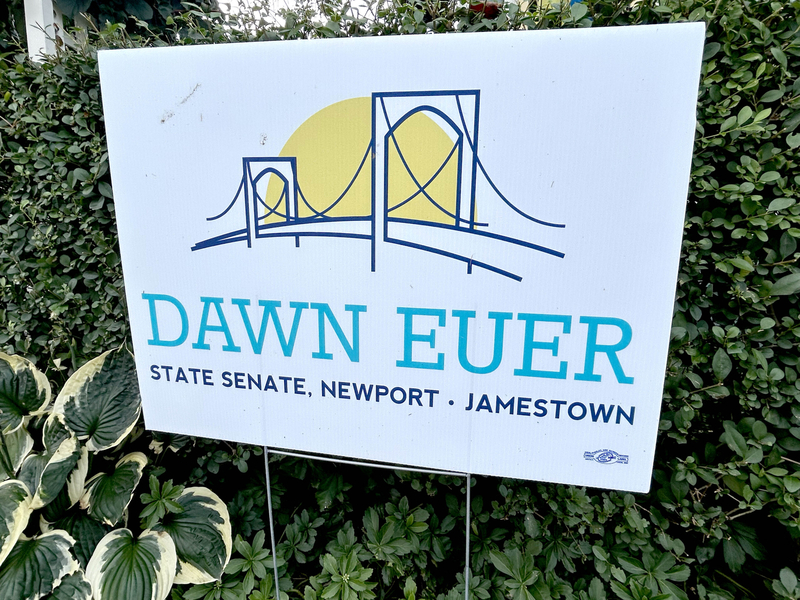
Incumbents also prevailed in races outside The League’s scope of influence, though not all were the more progressive choice. Sen. Lori Urso defeated progressive challenger Gena Felix by nearly 20 points in the primary for Pawtucket’s District 8. In Senate District 13, spanning Newport and Jamestown, Sen. Dawn Euer notched a commanding 35-point victory over Angela Lima in a matchup between two progressives.
In several of the open seat races, the progressive choice prevailed, including Providence’s House District 7, where Working Families Party-backed candidate Amy Santiago defeated Providence Councilwoman Jo-Ann Ryan, and Warwick’s House District 22, where Zakary Pereira defeated charter school advocate Janie Lee Segui. In the open House District 32 in North Kingstown, Robert Craven Jr. defeated League-backed candidate Kevin Hoyle for the seat last held by Craven’s father.
But, in the three-way primary for the open seat representing North Kingstown’s House District 31, former Sen. Jim Sheehan got nearly twice as many votes as his progressive opponent, Matthew McCoy, and the more conservative leaning Thomas Menec. The matchup between moderate Democrats Brian Patrick Kennedy and challenger Stephen Moffitt for House District 38 in Westerly and Hopkinton also ended with a win for Kennedy, the senior ranking member of the chamber who has served since 1988.
Despite its lack of success with primary challengers this time around, Levesque said The League is not going away. The group is backing a dozen challengers in the Nov. 3 general election — mostly Republicans but a few independents. And there’s always the next election cycle.
But, the multi-PAC strategy might not be available in two years. Marion is planning to reintroduce legislation next session to close the loophole in state law by explicitly stating that connected PACs are subject to the $2,000 per candidate annual donation limit —- mirroring language in federal campaign finance laws. The bills failed to advance out of committee in both chambers in 2026.
“It’s not designed to protect incumbents, it’s designed to preserve the sanctity of contribution limits, which were really blown to shreds by the creation of a 40-PAC situation,” Marion said.
Providence, RI