Virginia college students shine in national democracy innovation anthology
Sep 09, 2026 | 5:28 am ET
Description
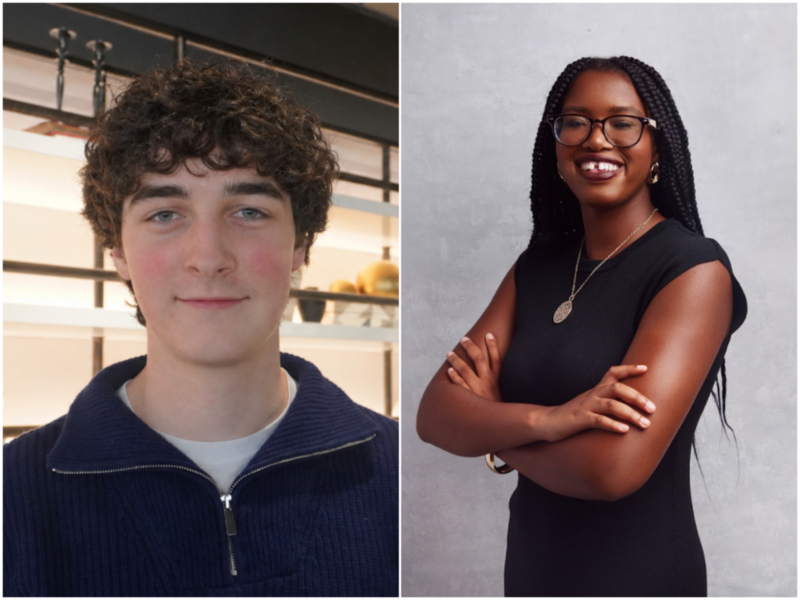
Pictured from left are Virginia college students, Imre Huss from the University of Virginia and Imani Laird from Hampton University. (Photos courtesy of Democracy Defenders Fund)
Students Imre Huss of the University of Virginia and Imani Laird of Hampton University are among 11 national winners in an anti-authoritarian legal defense fund’s Future of Democracy anthology, a public collection of ideas by Gen Z Americans for strengthening democratic ideals, policy and practices.
Democracy Defenders Fund — whose organizational mission is to defend the rule of law, fight corruption among elected leaders and powerful institutions and safeguard elections in America — launched the contest to give people ages 18 to 30 a national platform to divulge their ideas for improving U.S. democracy.
Eleven people from across the country received a $1,000 award for answering one question: What will it take for U.S. democracy not only to survive, but to thrive
In their winning entries, Huss explored the media’s role in democracy, and Laird examined civics education. Their entries are featured in the digital anthology, which includes an introduction by DDF Executive Director Susan Corke.
“This anthology shows that young people are not passive observers of our democracy’s challenges, but thoughtful emerging leaders with bold, concrete ideas for restoring trust in our civic institutions,” Corke said in a statement.
In a release about the publication, the organization said the winning entries show that “democracy is experienced where people live their daily lives.” The anthology shows that American democracy is an “ongoing, unfinished project,” the group said, offering a “shared roadmap built on community, imagination and persistence.”
In his essay, “Making Media Work for Democracy: Lessons from the Past, a Vision for Our Future,” Huss argued that America can strengthen democracy by giving people more control over their online algorithms, promoting more humanizing interactions across political divides, and rebuilding shared cultural experiences — all without the government dictating what Americans consume.
“For democracy to thrive, we must preserve the gains made by digital media while rebuilding commonality, agency, and human understanding,” Huss wrote.
In her video documentary, “Civics Class for a Country in Crisis,” Laird argued that American democracy weakens when citizens don’t understand its history, institutions, or their civic responsibilities.
As evidence that the country’s democratic system can adapt and improve, Laird pointed to achievements such as the abolition of slavery, the expansion of voting rights, free press protections and citizens’ ability to fairly select and remove their elected leaders.
“Required civic education should not assign a political identity or turn the past into mythology,” Laird wrote. “It should teach students to follow power from a public complaint to an official decision.”

Richmond, VA