Study finds Oregon had the second highest rate of state lawmakers leaving office early
Sep 04, 2026 | 5:55 pm ET

Description
The Oregon State Capitol (Photo by Laura Tesler/Oregon Capital Chronicle)
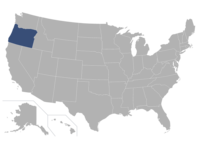
Oregon between 2020 and 2025 had the second highest rate of state lawmakers leaving office before their term ended, according to a new study.
A collaborative study between the Center for Tech and Civic Life and the Institute for Responsive Government examined how often lawmakers across all 50 states left office before the end of their term between 2020 and 2025.
Behind Arizona at 33%, the study found that 30% of Oregon lawmakers between 2020 to 2025 left office before the end of their term.
The most common reasons lawmakers across the country left office early were to take on nonelected government positions or because of their deaths. But their departures had another effect. Their replacements were more likely to be women or people of color, the study found.
The most common reasons lawmakers departed office early
Leaving office early to take on a nonelected government position made up 15% of early legislative departures across the country.
When an Oregon lawmaker leaves their position early, county commissioners of that lawmaker’s district must appoint someone in the same political party in their place, choosing from a list provided by local party officials.
In Oregon, a recent example includes former Sen. Daniel Bonham, a Republican from The Dalles who left his seat in late 2025 after the Trump administration picked him to assist the U.S. Department of Labor. Current gubernatorial candidate Sen. Christine Drazan, R-Canby, left her seat in the Oregon House to replace him.
Death was the second most common reason for leaving office early, making up 12% of legislative vacancies across the country. Three Oregon lawmakers died while serving in office between 2020 and 2025: Rep. Mitch Greenlick, D-Portland, in 2020, and Sen. Aaron Woods, D-Wilsonville, and Rep. Hòa Nguyễn, D-Portland, in 2025.
Washington and Multnomah County commissioners appointed Maxine Dexter, now a U.S. Representative for Oregon’s 3rd Congressional District, to fill Greenlick’s former seat before the Portland pulmonologist and Democrat officially won the general election for the seat in 2020.
Clackamas, Washington and Yamhill County commissioners in May 2025 appointed Courtney Neron-Misslin, a Wilsonville Democrat who was serving in the Oregon House at the time, to fill Woods’ seat in the Senate.
Clackamas and Multnomah commissioners appointed labor advocate Lamar Wise to fill Nguyễn’s seat in Nov. 2025.
Other lawmakers left public service early to take nonprofit jobs, which made up almost 10% of legislative vacancies. Only 5% of lawmakers who left office early nationwide cited caregiving as their reason for leaving. Safety concerns made up 0.3% of early departures.
Barbara Smith Warner, a senior adviser at the Institute for Responsive Government and a former Oregon state representative from 2014 to 2022, said Oregon’s Black, Indigenous, and People of Color Caucus grew every year because of the appointment process.
“The truth is that often the appointment process gives women and people of color just a better stage and a shortcut in,” Smith Warner said. “And then once you’re in there, it’s easier to get reelected… I would argue a lot of policies would not have been introduced without those folks being in the legislature.”
For example, Wise and Portland-based Democratic Reps. Travis Nelson and Shannon Isadore are all Black and were originally appointed to their positions.
Legislators leaving office before the end of their term means a loss of representation for communities for weeks, months to years, said Sarah Berlin, the director of civic information for the Center for Technology and Civic Life.
“Even when they are filled by an interim appointment, that can really disrupt the important legislative work that state legislators do,” she said in an interview.
But what Smith Warner described about more women and people of color filling in the gaps is true across the country, Berlin said.
“We found that women were actually filling offices more often than they were leaving offices,” she said.

Former Oregon lawmaker talks sustainability of lawmaking
Smith Warner said not every lawmaker has the same support to sustain being a lawmaker. Although she completed her term, she said she understands why many people resign or choose not to run for reelection.
“I had a spouse whose job and whose income made it possible that I could take that very low-paying job and do it for nine years,” she said.
Not all her colleagues had that privilege, she said, saying some of her colleagues were single parents or healthcare workers.
“It really is hard to kind of manage that life, whether it’s your family, full-time job or whatever it is, and be able to afford to do it when you are not making very much money,” she said.
Smith Warner made $22,000 a year when she left the Oregon Legislature in January 2023. Lawmaker salaries have since increased to $44,000. The speaker of the House and Senate president make $89,000. State lawmakers also get a per diem allowance of $178 each day the legislature is in session.
Though lawmaking is considered a part-time job, many lawmakers consider it a full-time job having to work sometimes more than 80 hours a week during legislative sessions.
In 2022, then-Reps. Karin Power, D-Milwaukie, Rachel Prusak, D-Tualatin, and Anna Williams, D-Hood River, announced they wouldn’t seek reelection because they couldn’t afford to support their families with the low salaries.
In late 2025, Gladstone Democrat Rep. Annessa Hartman said she also wouldn’t seek reelection, citing the need to spend more time at home and to raise her kids.
Lawmakers do a combination of things to juggle their personal lives while also having to commute to Salem every day for once a month on even years or every day for six months on odd years. They rent homes together, stay with a relative or in hotels, or buy homes in the Salem area to later rent it out, Smith Warner said.
But it’s not always sustainable, especially for those who are commuting more than an hour a day during the legislative session, she said.
To ease the gap of having to stay far from their families, many hire their family members to work for them full-time, Smith Warner said. At least five legislative aides in late 2025 were related to their bosses in the Oregon Legislature, the Oregonian/OregonLive reported.
“I watched folks who left for a combination of reasons,” Smith Warner said. “They felt like they were suffering in their professional career because they weren’t able to still do what they used to do or they were stretched too thin geographically.”
Much like jury duty job protections, Oregon lawmakers have legal protections keeping them from being fired or penalized by their regular employers for taking a leave of absence to attend legislative sessions.
Smith Warner said lawmaking can be more sustainable if lawmakers join caucus groups outside their party, such as the coastal caucus, a newly elected member caucus or the Black, Indigenous, and People of Color caucus for additional peer support.
Salem, OR