‘It works if you want it’: People charged with crimes find hope in county diversion programs
Sep 04, 2026 | 6:04 pm ET
Description
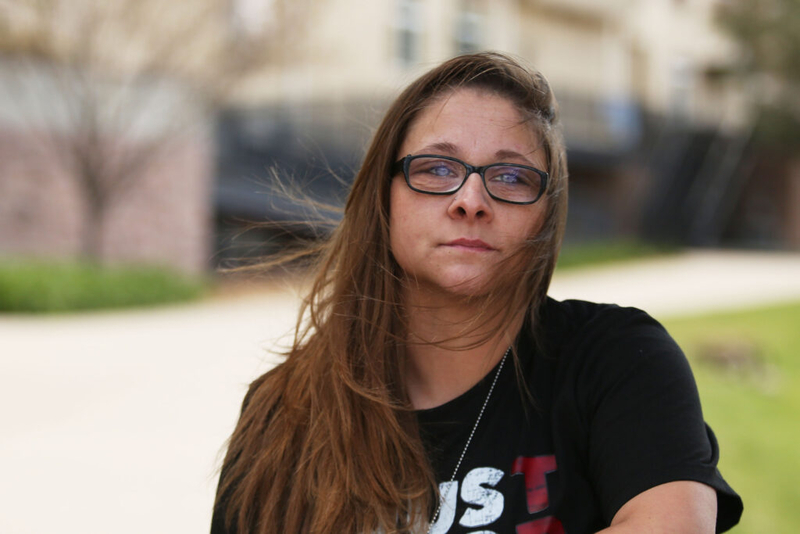
Sioux Falls resident Kayla Essen poses for a photo underneath the Eighth Street bridge downtown. Essen participated in the Minnehaha County adult diversion program to dismiss drug-related charges. Over a year after her arrest, Essen is sober and leads Narcotics Anonymous groups in the city. (Photo by Makenzie Huber/South Dakota Searchlight)
Kayla Essen prayed she’d get arrested.
The 32-year-old from Sioux Falls said she had been on and off drugs since she was in high school — fentanyl, cocaine, heroin and meth. Addiction was the only thing she was destined for, she believed, after seeing family members struggle.
Years of drug use frayed her self-confidence and robbed her of stability. Her partner left, taking her two children. She fell into an abusive relationship and overdosed in 2024.
Maybe jail would be enough to “scare me straight,” she thought, to loosen the control drugs had on her life.
It was, and it wasn’t. Beyond a jail stay, she ultimately found help in a program that’s available in some South Dakota counties.
Essen was at a city park in June 2025 when a police officer stopped her and asked to search her purse. She confessed she had drugs in it. She faced a felony charge for meth possession and a misdemeanor charge for drug paraphernalia, with a possibility of years in prison and thousands in fines.
Diversion programs for youth increase after boost to county funding
After a night in the Minnehaha County Jail, Essen said she still craved meth. While on bail, she placed herself into an inpatient treatment center at Lewis and Clark Behavioral Health Services in Yankton and went through crippling withdrawal.
When she returned home a month and a half after her arrest, Essen’s attorney told her to call the Minnehaha County State’s Attorney’s Office. Becky Brown, the adult diversion coordinator, had an offer: get the charges dropped by enrolling in and completing the county’s adult diversion program.
Minnehaha’s program is one of at least four in the state, including Pennington, Yankton and Brookings counties. The total number is unknown because of a lack of central coordination. While officials say the programs are effective, they’re difficult to expand within those existing counties and to additional counties since the state doesn’t support it with funding like it does for youth diversion.
The programs are run by each county’s state’s attorney and offer people accused of crimes an opportunity to take responsibility for their actions while avoiding jail or prison time. Eligibility for the programs varies by county, from marijuana and underage alcohol crimes in Brookings County to first-time, nonviolent crimes in Minnehaha County, and beyond that to some violent crimes in Pennington County when victims consent and other conditions are met. Program graduates can get their case expunged if they remain arrest-free for 13 months, according to state law.
Essen took the offer. It was a challenge “to be better, to do better,” she said.
She graduated in March, has a job handling packages at a distribution center in Sioux Falls and said she is 13 months sober. The charges can be expunged from her record in October.
“Diversion helped me grow in a way that made me realize what I want and put boundaries up for myself,” Essen said.
The diversion program Essen completed has been offered in Minnehaha County since 2021 and primarily serves young adults. State’s Attorney Daniel Haggar said he wanted to have an impact on people who’ve committed their first criminal offenses.
“It’s really having the opportunity to change lives early on and really give people a purpose in life that’s free from substance abuse where they can be productive members of our community,” Haggar said.
State’s attorneys see impact, cost savings
Brookings County, the home of South Dakota State University, has had an adult diversion program since 2019, focusing on people of college age who are charged for underage drinking. The county added marijuana-related offenses in 2020.
The program requires 10 hours of community service and a three-hour class through Brookings Behavioral Health. Brookings participants pay the $120 cost so the program doesn’t involve taxpayer funds, said State’s Attorney Dan Nelson. Yankton has similar requirements and requires participants to pay the $75 fee, unless they can’t afford it.
State-ordered study says opioid settlement money should target treatment for incarcerated people
Nelson said diversion isn’t a soft-on-crime approach. It’s about setting young adults up for “success rather than failure.”
“There’s this misconception that spending time in jail for marijuana or alcohol sends the message for people not to do it again,” Nelson said, “but in my experience, it just sends a nonviolent first-time offender to jail and slaps them with a conviction so they can’t get a professional job.”
Nelson estimated that Brookings County’s program has saved it nearly $1 million over its history. Underage drinking and marijuana-related cases are the top two crimes in the county, Nelson said, and the program avoids costs for court, judges and law enforcement involved in a formal court proceeding.
In Minnehaha County, Brown screens cases on the court docket and sets up meetings with potential participants. They make an individualized diversion plan that meets their needs.
In 2022, Brown had 80 clients. That more than doubled by 2025, with 181 clients. The expungement rate in 2024, which is how Minnehaha County measures its success, was 85%.
Brown attributes the success to the individualized nature of diversion. Essen does too.
“I don’t like to be bossed around, and I have a problem with people telling me what to do,” Essen said. “But they let me take ownership of it, that this was my plan and what I think is best for me.”
My obligation is not just to victims and the community at large, but there is an equal obligation to the defendant too. I know that when we bring someone into the criminal justice system there are huge consequences — it affects housing, employment, relationships, that person’s entire life.
Essen determined that she needed to attend intensive outpatient counseling sessions, live in a sobriety house and pay for urinalyses three times a month at about $13 apiece. Even though she wasn’t craving meth after inpatient treatment, the regular testing kept her accountable and was proof of her success.
In Pennington County, 13.6% of criminal cases went to adult diversion in 2025. The county has expanded its program since starting it in 2016 with people younger than 25 who were accused of nonviolent crimes.
The program now includes older nonviolent adults, a traffic-related program offering safe driving classes, and diversion options for violent cases when the victim agrees and it’s a first-time offense in which the person “acted out of character,” said Pennington County State’s Attorney Lara Roetzel.
Attorneys charging a case must pause to consider if diversion is appropriate, Roetzel said, which avoids “cookie cutter criminal justice.”
“My obligation is not just to victims and the community at large, but there is an equal obligation to the defendant too,” Roetzel said. “I know that when we bring someone into the criminal justice system there are huge consequences — it affects housing, employment, relationships, that person’s entire life.”
Shallow vs. deep end: Youth diversion, probation and treatment courts
There are several types of intervention used across the state, including diversion, probation and treatment courts.
Adult diversion mirrors juvenile diversion programs throughout the state.
In juvenile diversion, state’s attorneys pull a low-level, nonviolent minor offender into diversion programming to avoid formal court proceedings. The youth will get a temporary internal case file, but it’s separate from a formal court case.
The state has reimbursed counties for successful juvenile diversions through court-approved programs since 2016. The state pays $750 per successful diversion.
In fiscal year 2024, 31 counties participated in the juvenile program with a nearly 82% success rate. In fiscal year 2025, the success rate increased to nearly 85%, according to the latest report from the state Unified Judicial System, and the state’s cost was $1.47 million.
Pretrial monitoring could reduce missed court appearances and improve outcomes, court officials say
Probation is similar to diversion — it’s a judge-ordered supervision plan (involving fine payment, treatment or community service) often offered to people who admit to first-time or low-level crimes to avoid incarceration. But it occurs after a guilty plea or conviction, meaning it can show up on a person’s record and still involves the costs of going through the court system.
Another related program, the state Unified Judicial System’s 17 treatment courts — consisting of drug, DUI, mental health and veterans courts spread across the state — are for repeat offenders on the “deep end of the court system,” Roetzel said. Participation in specialty courts occurs after sentencing. Participants receive an individualized treatment plan and supervision by court services officers.
In the state’s 2025 fiscal year, treatment courts served 759 people and administered about 91,000 drug tests, at a cost of roughly $8,000 per participant, according to a presentation earlier this year by state Supreme Court Chief Justice Steven Jensen. He said the program had served 2,970 people since its inception in 2008, with 73% of participants avoiding a further felony offense in the first five years after graduating.
Haggar said each intervention tool is necessary, and he believes diversion programming in Minnehaha is “one of the best uses of taxpayer money.”
Statewide funding push
A 2023 legislative task force recommended unsuccessfully that the state pay counties for successful adult diversions as the state does for youth diversions. An earlier attempt to do that in 2019 failed.
Yankton County’s State’s Attorney Tyler Larson said more prosecutors would be open to expanding adult diversion or starting their own program with state funding that mirrors the juvenile diversion program. Right now, his county is “doing the minimum,” he said, and has a diversion coordinator managing juvenile and adult programming.
Lincoln County State’s Attorney Tom Wollman said his county, which includes the southern part of Sioux Falls, doesn’t have the caseload to justify a full time adult diversion coordinator. His juvenile diversion coordinator is “saturated” with cases. If state funding was an option, he would consider adult diversion.
Roetzel approached lawmakers last year during a summer task force meeting meant to research ways to lower prison recidivism rates. She asked them to expand the statewide diversion program to adults, but lawmakers didn’t take her up on the proposal.
“We’re going to continue to face increasing incarceration at the local and state level if we don’t work harder on the front end,” Roetzel told South Dakota Searchlight.
Local control meets needs, other state’s attorneys say
For juvenile diversion, the state sets standards and determines successes while each county’s state’s attorney’s office determines which programs youth participate in and other details.
Nelson said he’d be “open to the discussion” of state adult diversion funding, but he wants to retain local control. He likes what he’s doing and thinks it fits with Brookings County’s needs.
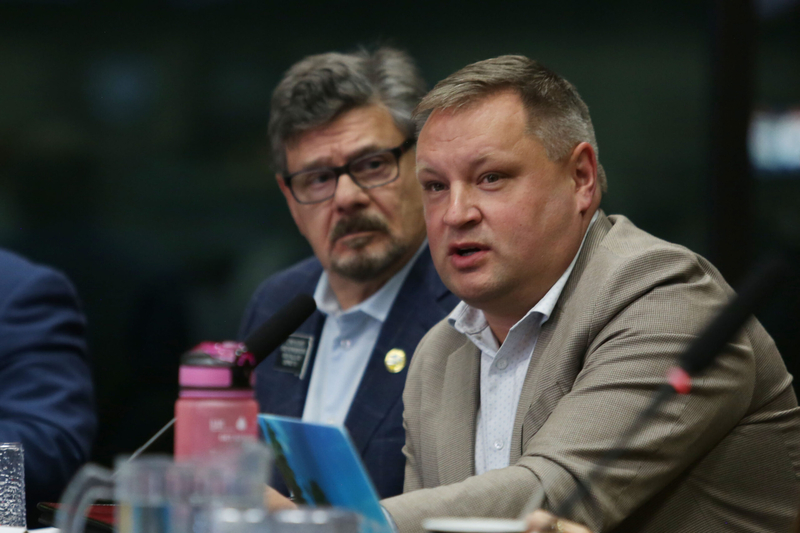
Haggar is also hesitant about state involvement in adult diversion.
“One of the reasons you see the success here and you see buy-in from prosecutors is because they can tailor the program to fit their county and their office,” Haggar said.
Haggar added he wouldn’t want to “lose the good parts of programs we’ve set up in Minnehaha at the expense of getting state money.”
Since Essen’s graduation from the Minnehaha County program in March, she has attended Leaders of Tomorrow in Sioux Falls and chairs two Narcotics Anonymous meetings weekly, including one at the Minnehaha County Jail. She attends Narcotics Anonymous meetings at least five days a week herself, calling the community her “safe space.”
She sees her children weekly, and she hopes to find work in a treatment center or become a drug and alcohol counselor working with adolescents, so she can offer the kind of help she received. Next year, Essen hopes to work at The Glory House, a residential addiction treatment, counseling and drug testing nonprofit.
The most difficult part about her sobriety, she said, was separating herself from relationships, spaces and patterns that were connected to drug use.
“It works if you want it. I wanted it more than anything,” Essen said. “I fight hard for my sobriety and recovery, and anything that jeopardizes it has no place in my life now.”

Pierre, SD