Trump has widened scope of anti-immigrant policy in second term
Aug 27, 2026 | 11:33 am ET

Description
U.S. Transportation Secretary Sean Duffy speaks during a news conference on May 20, 2025, in Austin, Texas. Duffy spoke about a policy to require English language proficiency for truck drivers, one of several regulations the second Trump administration has pursued that penalize immigrants. (Photo by Brandon Bell/Getty Images)
WASHINGTON — The U.S. Department of Treasury’s recent proposed regulation to limit refunds for certain tax credits based on immigration status is the latest move by the Trump administration to restrict noncitizens’ access to federal benefits.
In President Donald Trump’s return to the White House, he has employed a governmentwide approach to fulfilling his immigration agenda that includes not only the central campaign promise of mass deportations, but curtailing what few federal benefits some immigrants had.
Those actions include pushing out foreign-born workers from the trucking industry, barring noncitizens from accessing government-subsidized housing even for families that include U.S. citizens, and pressuring banks to restrict immigrants' access to opening accounts or borrowing money.
Previous presidents generally restricted management of immigration to the departments of Homeland Security, State or Justice. But in Trump’s second term, several unrelated federal agencies have undertaken initiatives meant to disadvantage immigrants.
“What's been unique about this administration is beginning to incorporate agencies that have never before been involved in immigration,” Colleen Putzel-Kavanaugh, an analyst with the immigration think tank Migration Policy Institute, said.
In Trump’s second term, the Department of Transportation, Department of Housing and Urban Development, Small Business Administration and Federal Communications Commission are among the agencies that have sought to carry out the president’s immigration crackdown.
Administration officials have said the benefits of federal programs should be reserved for U.S. citizens.
An executive order Trump signed in February 2025 to limit immigrants from receiving benefits, said it was necessary to “prevent taxpayer resources from acting as a magnet and fueling illegal immigration to the United States, and to ensure, to the maximum extent permitted by law, that no taxpayer-funded benefits go to unqualified aliens.”
In an Aug. 26 statement to States Newsroom, White House spokeswoman Taylor Rogers said the “Trump Administration is putting Americans first.”
“As promised, President Trump secured the border, cracked down on illegal immigration, and put Americans first,” Rogers said.
Pace accelerating
Trump’s first administration was partially defined by its aggressive immigration policy, including visa restrictions, a travel ban from certain countries, a higher bar for asylum cases in immigration court, and forcing asylum seekers to remain in Mexico while their asylum cases were pending.
But the rate at which the second Trump administration is pursuing immigration-related actions is far surpassing the first, according to an analysis from the Migration Policy Institute.
In its first year, the administration took more than 500 immigration actions, including executive orders and regulations, compared to 472 actions in all four years of the first administration, according to MPI’s analysis.
Welfare restrictions
Federal public benefits are generally denied to “not qualified” immigrants, under a welfare reform law enacted during the Clinton administration known as the Personal Responsibility and Work Opportunity Reconciliation Act, or PRWORA.
The law limits certain public benefits for individuals who do not meet a specific immigration status or eligibility requirements.
Over the years, Congress has expanded certain immigrant categories and federal agencies have interpreted which programs are covered under PRWORA.
But Trump reversed that trend.
Last February, he signed an executive order directing federal agencies to review any programs that benefit immigrants and reverse any expansions.
Following the order, the departments of Health and Human Services, Agriculture, Education, Labor, HUD and the IRS either rescinded notices that clarified eligibility or issued reinterpretations of PRWORA.
HHS in July 2025 designated 13 additional programs, including the early-childhood Head Start program, that are subject to PRWORA qualifications.
HUD in October restricted certain housing programs and grants based on immigration status.
USDA now considers certain licenses, grants, payments and loan programs to fall under the law’s requirements.
The Labor Department updated a policy that now forces noncitizens with temporary work authorization to go through reverification every three months in order to participate in a program to help access employment or education.
And the Department of Education issued a notice that certain higher education programs, such as Pell grants, loans and workforce programs fall under “federal public benefits.”
A preliminary injunction currently prevents the Trump administration's new interpretation of PRWORA from taking effect.
The FCC, which is supposed to operate as an independent federal agency but has shown a deference to Trump during his second term, issued a proposed rule in April that would limit the Lifeline program, which provides a discount on phone services for low-income consumers, to U.S. citizens and immigrants with a “qualified” status.
That group includes lawful permanent residents, refugees, people granted asylum, certain survivors of trafficking and victims of abuse. All other immigrants, including those with some form of legal status, are considered “not qualified.”
Livelihoods at stake
While the second Trump administration has expanded efforts to limit benefits, it has also moved to restrict access to the workforce in a couple of policies.
The SBA in March banned noncitizens from applying for small business loans.
And the DOT issued a rule that limits the types of visas which can be used to obtain a Commercial Driver's License for foreign-born truck drivers while pushing for veterans to fill the void.
That approach was novel, David Bier, the director of immigration studies of the libertarian think tank the Cato Institute, said.
“There were certainly some benefits that they attempted to restrict more on the welfare side of things,” Bier said of the first Trump administration.
“But I can't think of an instance where they attempted to try to use their regulatory authority to prevent people from being able to engage in certain occupations that they would otherwise be eligible for if they were authorized to work.”
Restrictions in GOP megabill
The massive tax cuts and spending package that the Republican-controlled Congress passed last year also limits safety net programs for immigrants.
The “big, beautiful” law restricted eligibility for immigrants in Medicaid, Medicare, the Children's Health Insurance Program, Affordable Care Act coverage, and the Supplemental Nutrition Assistance Program, or SNAP.
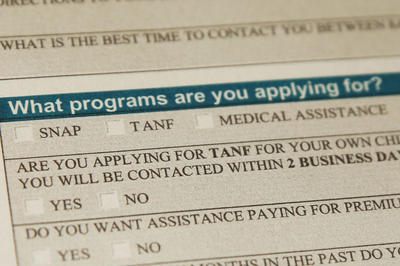
The bill struck several categories of non-citizens who were previously eligible for SNAP, such as immigrants with longstanding humanitarian status like refugees, asylees, parolees and those with suspended deportation status.
It also implemented tighter proof-of-citizenship or immigration verification requirements for Medicaid and the Children’s Health Insurance Program, while also discouraging states from covering insurance for immigrants until that status is verified.
The law also bars several other groups of immigrants from ACA subsidies.
Immigrants with asylum or a pending claim, in the country on a humanitarian basis, who hold Temporary Protected Status or Deferred Action for Childhood Arrivals status, or who an immigration judge has deemed their home country too dangerous to return are ineligible, under the law.
The Trump administration’s focus on limiting safety net programs to noncitizens has produced a chilling effect.
An estimated one in ten adult immigrants stopped participating in government benefits for food, housing or healthcare because they were afraid to enroll in benefits they qualified for, according to a report from the Migration Policy Institute.
All States Newsroom content is free to republish. Read our republishing policy for more information.