Board approves hiring powerhouse law firm to defend Moore in defamation case
Oct 07, 2026 | 5:32 pm ET
Description
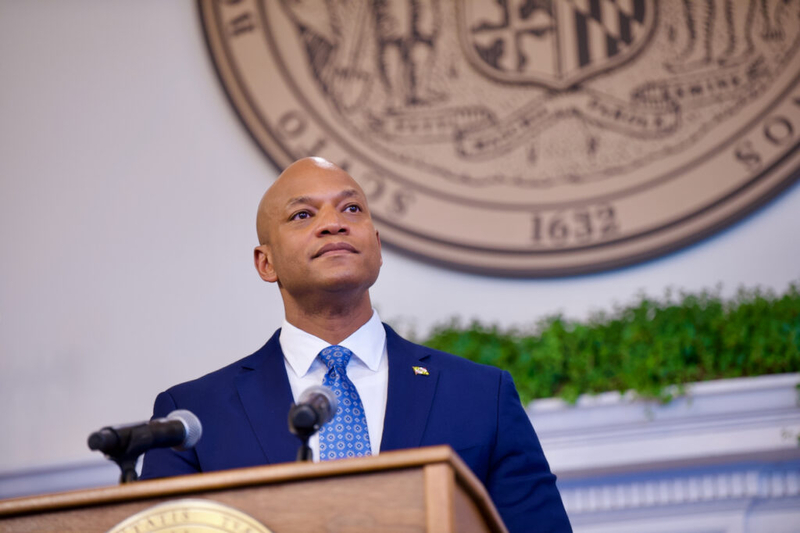
Maryland Gov. Wes Moore (D) will be represented by a DC law firm in a defamation lawsuit filed against him by David Smith, owner of the Baltimore Sun and executive chairman of Sinclair Broadcast Group. Moore is seeking a dismissal citing immunity protections. (File photo Bryan P. Sears/Maryland Matters)
The Maryland Board of Public Works Wednesday approved a $50,000 contract to hire a powerhouse outside law firm to defend Gov. Wes Moore (D) against a defamation lawsuit filed by the owner of the Baltimore Sun.
David Smith, who is also executive chairman of the Sinclair Broadcast Group, filed the lawsuit in Anne Arundel County Circuit Court in July. Smith, in a court filing, alleges defamation and false light invasion of privacy for comments made by Moore during a June interview on MSNOW.
The Office of the Attorney General asked for approval of the contract, saying outside counsel was needed “because representation by the Attorney General or an assistant is impracticable.” The office retained Foley Hoag, a Washington, D.C., firm with experience in First Amendment and defamation claims.
“I just want to be clear that the state is covering this representation because the law says that when a public employee is sued in the course of performing their official duties, the state will defend them,” said Comptroller Brooke Lierman (D), one of the three members of the Board of Public Works. “That holds for a state trooper, park ranger, professor, and for a governor.
“Courts across the nation have agreed that speaking to the press about matters of public interest is well within a public official’s job,” Lierman said. “So when Gov. Moore goes on the TV networks, he is speaking to the people of Maryland, and he is speaking as our governor, elected by 1.3 million voters.”
Smith filed the lawsuit this summer, a month after Moore made comments about Smith on the MSNOW show “The Weeknight.”
In the interview, Moore linked Smith to Jeffery Epstein saying the owner of Sinclair “had been invested in” by the New York financier who was charged with sexual abuse and trafficking underage girls.
Moore, in that same interview with Michael Steele, the former Maryland lieutenant governor, said Smith was using the Baltimore Sun “to do Donald Trump’s work and to spread his message.”
According to Smith’s lawsuit, investment firms controlled by Epstein did purchase shares in Sinclair, a publicly traded company. But Smith’s filing said he was unaware of the connection — his suit said the “allegedly Epstein-related entities” held, at most, 0.063% of Sinclair’s Class A stock — and that such purchases do not establish a personal relationship with any stockholder.
Moore’s comments about Smith promoting Trump’s agenda tie back to a 2018 article in The Guardian detailing a meeting between Trump and Smith. The Guardian quotes Smith as saying that during a 2016 meeting with Trump, who was running for president, he told Trump that Sinclair was “here to deliver your message.”
In his lawsuit, Smith notes that those comments were made years before he purchased The Baltimore Sun.
Smith is seeking unspecified damages.
Attorneys representing Moore last week asked for a dismissal of the lawsuit, saying the governor’s statements “are absolutely privileged” and that Moore has legal immunity.
The contract approved by the board Wednesday caps fees for the firm representing Moore at $50,000.
“If that motion [to dismiss] succeeds, which I think it probably will, that’s where the cost ends,” Lierman said during the meeting.
Lierman went on to defend the hiring of outside attorneys and, to some degree, Moore’s comments saying it was “important that we vociferously defend the governor in this case because we believe in protecting free speech and the free speech of our public officials.”
“We don’t want a country, I certainly don’t want a country where anyone with a big legal budget can sue a public servant into silence, or can even chill public servants’ speech,” she said. “I don’t want a country where you cannot speak your mind, even when powerful people and corporations disagree. In this country, the answer to speech that you don’t like has always been more speech, not enforced silence.”
Moore himself did not attend the meeting. Lt. Gov. Aruna Miller chaired the panel in his absence.
Lierman and Treasurer Dereck Davis voted to approve the contract. Miller recused herself from voting on the contract, but did not give a reason. A senior member of Miller’s staff who attended the meeting was not immediately able to provide an explanation.
The two Foley Hoag attorneys who filed the motion to dismiss for Moore have extensive experience in media and defamation law.
Michael J. Grygiel is chair of the firm’s First Amendment and Media Practice Group. His practice has focused on First Amendment law including defending news organizations from newsgathering and publication claims as well as defamation and invasion of privacy lawsuits, according to the firm’s website.
Kelly L. McNamee is a partner in the firm’s First Amendment and Media Practice Group.
Annapolis, MD