KY legislators legalized hunting bobcats at night. Experts worry about ‘overharvesting.’
Aug 10, 2026 | 5:30 am ET
Description
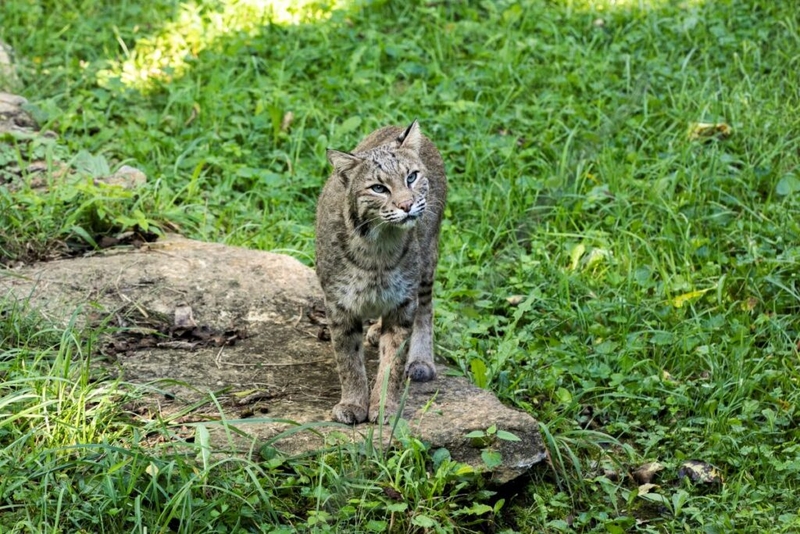
A bobcat is seen at the Kentucky Department of Fish and Wildlife Resources' Salato Wildlife Center in Frankfort. (Provided by Kentucky Department of Fish and Wildlife Resources)
Chet Hayes thinks Kentucky has a decent bobcat population.
Hayes, a district director for the United Trappers of Kentucky, an organization representing fur trappers throughout the state, said it’s difficult to get solid information on the elusive animal.
“It’s still growing,” Hayes told the Lantern in July. “It’s not in a position where it needs to be overharvested or eradicated. It’s still a population under growth and development.”
Protecting that growing bobcat population is a part of the reason why he has misgivings with a state law passed by the GOP-controlled state legislature this year allowing for the first nighttime hunting of bobcats, including the use of nighttime goggles and thermal scopes.
Hayes wasn’t the only one with concerns. Two state wildlife biologists and some members of the Fish and Wildlife Commission expressed their concerns at a specially-called meeting of the commission in May. Like Hayes, they were worried about expanding bobcat hunting without enough knowledge about the current population.
Despite those concerns, the leader of the state’s wildlife management department had the idea “on behalf of commission members and the department” to allow for hunting bobcats at night, a spokesperson for Kentucky House GOP leadership said in a statement to the Lantern.
Rich Storm, the commissioner of the Kentucky Department of Fish and Wildlife Resources, worked with a powerful backer — Kentucky House Speaker Pro Tem David Meade — to make it happen in the final days of this year’s legislative session.
Lisa Jackson, the department spokesperson, said members of the Fish and Wildlife Commission, the volunteer board overseeing the department, and the “hunting public” had requested opportunities to hunt bobcats and beavers at night, among years of requests from hunters to broadly expand nighttime hunting.
The Kentucky legislature changed state law through Senate Bill 39 to allow for the nocturnal hunting of bobcats and beavers. That law also overrode efforts by the state wildlife management agency’s board to regulate wakeboats on local lakes and gave the Kentucky Senate future control on who leads the agency.
Jackson said the department had supported a different bill that would have given the department more flexibility to consider what specific species to allow for nighttime hunting, but it failed to pass the legislature.
In her emailed statement, House GOP spokeswoman Laura Goins said the nighttime hunting language builds on existing nighttime hunting provisions that have yielded “positive results” and provides wildlife management officials “with the flexibility to move forward with the addition of bobcat hunting if they determine it is beneficial, while preserving the legislature’s authority to make any future changes after careful consideration, public input, and discussion.”
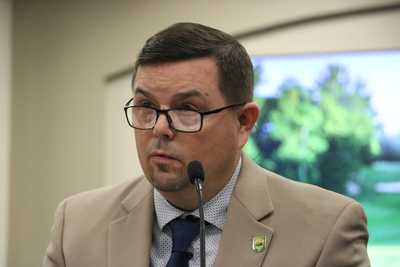
It’s not clear why Storm recommended allowing for nighttime bobcat hunting when the department’s own wildlife biologists had concerns with the proposal. Jackson did not respond to Lantern questions asking why Storm recommended the proposal despite those concerns, nor if wildlife biologists were aware of Storm’s work on the issue during the session. Jackson also said Storm was unavailable for a phone interview Thursday and Friday.
At least one member of the Fish and Wildlife Commission, the volunteer board that oversees the department and creates hunting regulations, suggested earlier this year there would be backlash from the legislature if they didn’t approve nighttime bobcat hunting.
A wildlife biologist from another state said the process raises many questions.
Tim Hiller, the executive director of the Wildlife Ecology Institute in Montana, said “a lot of folks would wonder, want to know what’s the motivation behind the very detailed changes proposed for a statute.”
He said if biologists had concerns about the nighttime hunting language and its potential impacts to bobcats, along with the perception of there being a legislative directive, then “that seems like the process probably isn’t going the way it ideally would go.”
Hayes, the trapper, said he believes specific management decisions on wildlife should be left to the experts within Kentucky Department of Fish and Wildlife Resources and the commission.
“We don’t support wildlife management by the legislature,” Hayes told the Lantern.
Still, the department and commission have created and approved proposed regulations this summer to be reviewed by state lawmakers in a legislative committee on Aug. 11.
Not enough data
In May, Ben Robinson had plenty of concerns.
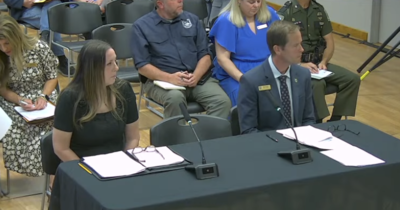
During a specially-called Fish and Wildlife Commission meeting in May, Robinson, the director of the department’s wildlife division, said his division was concerned about increasing opportunities for killing bobcats while having insufficient data on how many bobcats there were in the state. He said it could lead to the potential of “overharvesting” bobcats. The department and commission had also approved last year increasing the number of bobcats allowed to be taken during the bobcat hunting season — from five to 10 bobcats — from November through February.
“Anytime you go to expanding seasons without adequate data, that is a risk that you run. So, we just want to make that clear, especially now that you’re talking the new technologies like thermals and other night vision technologies, hunters are much more efficient,” Robinson told the commission members
Robinson said there were also hunter safety concerns with nighttime hunting — seen in other states with “shooting higher-powered firearms into the water at night” — and concerns with overnight poaching of other animals.
Laura Palmer, the state’s furbearer program coordinator, who manages the hunting and trapping of animals ranging from raccoons to bobcats, sat next to Robinson. She told the commission they haven’t received enough voluntary jawbone submissions from hunters and trappers to get a good estimate of the bobcat population.
She said to estimate the bobcat population, they would need samples from at least 20% of killed bobcats; she said they average around 7% of killed bobcats reported to the department.
Palmer also said there’s evidence in other states showing the use of thermal technology at night “can double or even quadruple the effectiveness of taking coyotes.” Bobcats can hide in the brush during the day, she said, but with thermal technology “there is the concern of overtake.”
She said she’d like to get a handle on enforcement issues with poaching and safety issues of nighttime hunting. She pointed how Illinois had to close its hunting season on grey foxes early because numbers were so low and how a North Dakota trapper was shot and paralyzed by someone using a thermal scope.
Fish and Wildlife Commission member Jay Smith said during that meeting he didn’t want to vote on something that would “decimate the bobcat population”, saying the bobcat was a “tough critter” to get data on.
But department deputy commissioner Gabe Jenkins told the board it was the “intention” of Senate Bill 39 that the board move forward with regulations for hunting bobcats at night.
Matt Rhodes, another member of the commission, said during the meeting he did not think “we want to get crossways with the legislature at this point.”
In July, Jackson also declined to make Ben Robinson and Laura Palmer available for an interview about their concerns.
Todd Blevins, the state director for the animal rights group Humane World for Animals, who attended the May meeting and echoed many of the biologists’ concerns, told the Lantern he believed the meeting showed “this wasn’t a policy that any of the parties wanted to see.”
“It just makes you question the necessity of the policy,” Blevins said.
Regulations to go before lawmakers
Despite those concerns, the commission voted at their next meeting in June to move forward with regulations allowing the nighttime hunting of bobcats and beavers with some restrictions.
Under the regulations, bobcats can only be hunted at night from December through February, a timeframe when hunters could already trap and hunt bobcats during the day. The regulations also limit the type of equipment — bows, crossbows or a shotgun — that can be used to hunt bobcats at night, along with allowing the use of night vision and thermal technology.

Each hunter is limited to killing only one bobcat at nighttime during the bobcat’s hunting season. Each hunter is still allowed to only kill three bobcats with a firearm during the overall hunting season, both daytime and nighttime hunting.
Jackson said in a statement that the department decided to “maintain a conservative management approach while additional biological information is collected” by limiting the number of bobcats that can be killed at night and with firearms.
The state legislature’s Administrative Regulation Review Subcommittee is now set to consider those regulations in its August 11 meeting, where it can approve a regulation, recommend changes to it, or find a regulation as “deficient.”
“A big argument is wildlife management can be very complex, and so we need to leave it to the experts,” said Hiller, the wildlife biologist from Montana. “I can totally see why the director and the agency biologists are expressing concerns the way they are.”
Frankfort